Is Museveni Quietly Preparing The Presidency For His Son Muhoozi? Why M7 Is Silent
By Uwesa Bruhan
Something deeply troubling is unfolding within Uganda’s political establishment, and the country cannot afford to watch silently as questions about the future of its leadership become increasingly entangled with family interests. The possibility of a father-to-son transfer of power is no longer a subject that can simply be dismissed as political gossip. It deserves serious public scrutiny.
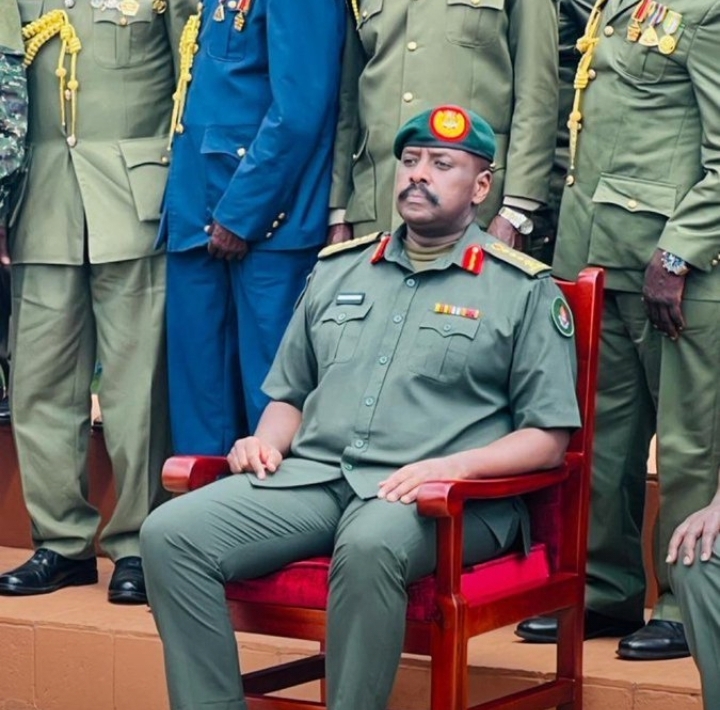
At the centre of this growing debate are President Yoweri Museveni, his son and Chief of Defence Forces, General Muhoozi Kainerugaba, and Vice President Jessica Alupo.
The most disturbing question is whether Uganda is gradually being prepared for a political arrangement in which Muhoozi moves from the military establishment into the civilian leadership, potentially positioning himself for the presidency.
Recent public remarks attributed to Muhoozi about leaving the military and Jessica Alupo allegedly warming his seat have intensified speculation. His choice of language has raised eyebrows, particularly because the Vice Presidency is a constitutionally established office, not a vacant family inheritance.
But why should a military commander speak as though the country’s second-highest political office is already waiting for him?
That question deserves an answer.
Museveni’s unusual silence amid the continuing political controversies surrounding his son has also attracted attention. However, silence alone cannot establish presidential approval or prove the existence of a succession agreement. What it does is create room for legitimate questions about the boundaries between family influence, military authority and constitutional government.
The first possibility attracting public discussion is Muhoozi’s appointment as Vice President, potentially replacing Jessica Alupo. No publicly established evidence currently proves that such a decision has been reached. Nevertheless, the political implications of such an appointment would be enormous.
A Vice President Muhoozi would represent a significant transition from military leadership into the civilian constitutional structure. He would gain a formal position within government, greater political visibility and an opportunity to build a national leadership profile.
That is precisely why Ugandans must demand transparency rather than wait until political decisions have already been made.
The second concern is the future of the military itself. Uganda’s armed forces belong to the Republic, not to an individual, political party or family. Any perceived attempt to turn military influence into a vehicle for hereditary political succession would raise fundamental questions about democratic accountability and civilian control of the security institutions.
Then comes 2031.
If Museveni seeks another political transition at the end of his current term, will Uganda witness a genuinely competitive democratic process, or will the ruling establishment attempt to consolidate power around a preferred successor?
The Constitution does not provide for automatic inheritance of the presidency. Any aspiring president must meet constitutional requirements and obtain power through the legally established electoral process.
Uganda is not a family estate. Its presidency is not an inheritance, and its citizens are not spectators in a private succession arrangement.
Jessica Alupo, Muhoozi Kainerugaba and every other political actor must operate within constitutional boundaries. Parliament must demonstrate independence, the NRM must clarify its position, and the military must remain subordinate to constitutional civilian authority.
The greatest danger is not merely the possibility of Muhoozi becoming president. It is the possibility that Ugandans could gradually become accustomed to political arrangements that weaken democratic competition before they realise what has happened.
Museveni must clarify his position. Muhoozi must explain his political ambitions. And Parliament must stop treating questions about succession as though they are forbidden conversations.
Uganda deserves institutions stronger than individual personalities and a future determined by citizens rather than family connections.
Power belongs to the people. It is not a father’s gift to his son.
ABOUT THE AUTHOR
Uwesa Bruhan is a journalist, activist, teacher and human rights advocate.
📩 Email us: kamunyereports@gmail.com
📲 WhatsApp us: +256705569885
Your story matters—share it with us today! 🗞️🔥