Museveni Orders Silence: Muhoozi, Top Officials Barred From Discussing US–Iran War
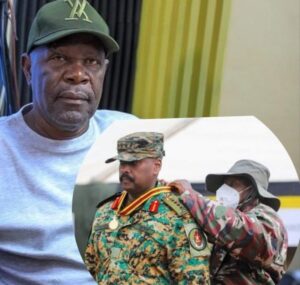
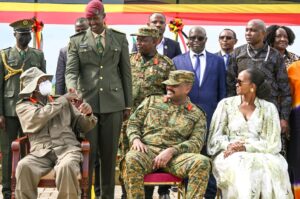
President Yoweri Museveni has reportedly issued a firm directive to senior government leaders, including his son and Chief of Defence Forces Muhoozi Kainerugaba, instructing them to immediately refrain from making public comments about the ongoing war involving the United States, Israel, and Iran.
According to sources within State House, the president delivered the directive during a recent cabinet meeting, emphasizing that the conflict is extremely sensitive and that Uganda must approach it cautiously to avoid unnecessary diplomatic complications.
Escalation of the conflict
The current crisis erupted on February 28, 2026, when the United States and Israel reportedly launched coordinated aerial assaults across Iran. The large-scale operation resulted in the death of Ali Khamenei, the Supreme Leader of the Islamic Republic, along with several senior government and military officials.
The attacks followed months of rising tensions and a heavy American military presence in the Middle East. Negotiations between Washington and Tehran over Iran’s nuclear programme had repeatedly failed, further escalating hostilities between the two long-time adversaries.

Speaking about the decision to launch the operation, Donald Trump, the president of the United States, defended the move and insisted it was necessary after diplomatic options were exhausted.
> “Massive and ongoing military operation” was launched now because Iran had “rejected every opportunity to renounce their nuclear ambitions.”
The joint US–Israeli campaign involved extensive bombing raids and missile strikes targeting cities, military bases, and strategic infrastructure across Iran. Reports indicate that more than 750 people lost their lives during the wave of attacks.
Iran’s retaliation spreads conflict
In response, Iran retaliated with missile and drone strikes targeting American allies throughout the Gulf region. Several military installations, oil facilities, and civilian locations were hit.
Countries affected by the retaliatory strikes included Saudi Arabia, Bahrain, Qatar, the United Arab Emirates, Kuwait, Jordan, Cyprus, and Iraq.
The confrontation rapidly widened beyond Iran and the Gulf states. In Lebanon, Israeli airstrikes killed dozens after rockets were fired toward Israel by the Iran-backed Hezbollah militia.
Museveni urges caution
As chairperson of the Non-Aligned Movement (NAM), President Museveni’s position on the escalating war had been eagerly anticipated by observers and diplomats alike. However, highly placed sources say the president believes the matter must be handled carefully.

One insider who attended the discussions revealed that Museveni delivered the message in a serious tone, warning officials against making statements that could entangle Uganda in global geopolitical tensions.
> “The president was very serious when commenting on the matter, he directed all top government officials not to comment on it. I was told that the directive was first issued to military commanders. Gen Muhoozi was also stopped from discussing the matter on social media even Charles Rwomushana has been asking him to do so as Gen David Sejusa is doing on his X handle,” a source said.
The directive reportedly applies to ministers, senior military leaders, and other top government figures who often comment publicly on international issues.
Trump predicts prolonged war
Meanwhile, President Donald Trump has suggested that the conflict may not end quickly. According to his remarks, the military campaign could last for more than four weeks.
Trump also urged the Iranian military to surrender in order to avoid further destruction and loss of life.
Concerns about regional stability
State House insiders indicate that Museveni is worried the war could create unnecessary diplomatic enemies for Uganda if government officials make careless statements.
The concern comes at a time when security challenges are already affecting the East and Central African region, making the situation even more delicate for Kampala’s foreign policy.
Uganda is also currently facing criticism from several Western governments over allegations of mistreatment of opposition politicians. Following the 2026 presidential election, the United States and some European nations reportedly declined to congratulate President Museveni on his victory.
Wider regional tensions
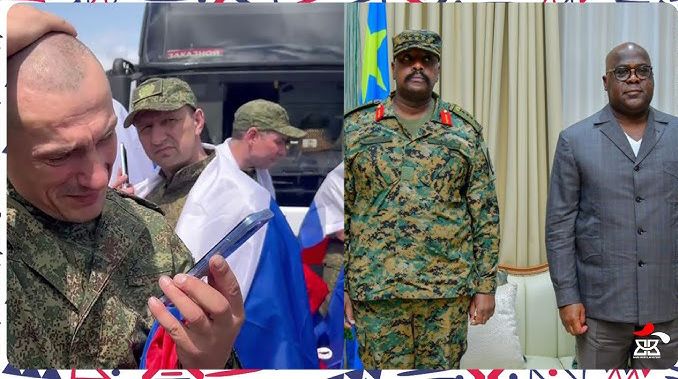
The global diplomatic environment has also been complicated by recent actions taken by Washington against Rwanda. The United States recently imposed sanctions on senior Rwandan military commanders, accusing them of supporting military activities against the government of Felix Tshisekedi in the Democratic Republic of the Congo.

Observers say these developments have made regional leaders even more cautious about taking sides in international conflicts.
Ministers decline to comment
When contacted by this reporter, three senior ministers declined to offer any remarks regarding the war. Instead, they referred all questions to the president, indicating that the directive not to comment was being strictly followed.
This is not the first time Museveni has imposed such communication restrictions on government officials.
During the diplomatic standoff between Uganda and Paul Kagame’s government in Rwanda, the president similarly instructed ministers and other officials to remain silent publicly on the dispute.
The tensions between the two neighbouring countries eventually eased after mediation efforts led by Gen Muhoozi Kainerugaba, which resulted in a peace agreement and the reopening of the Gatuna Border, a key crossing point that had been closed during the conflict.
For now, according to insiders, Museveni appears determined to keep Uganda neutral and cautious as the war in the Middle East continues to unfold.
📩 Email us: kamunyereports@gmail.com
📲 WhatsApp us: +256705569885
Your story matters—share it with us today! 🗞️🔥