I Killed The Ggaba School Kids But It Wasn’t Intentional!! Okello Fully Explains Why And How He Was Tortured To Confess
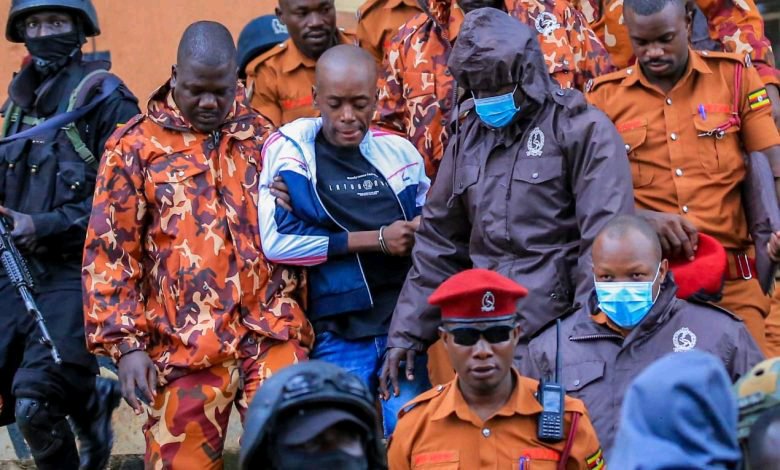
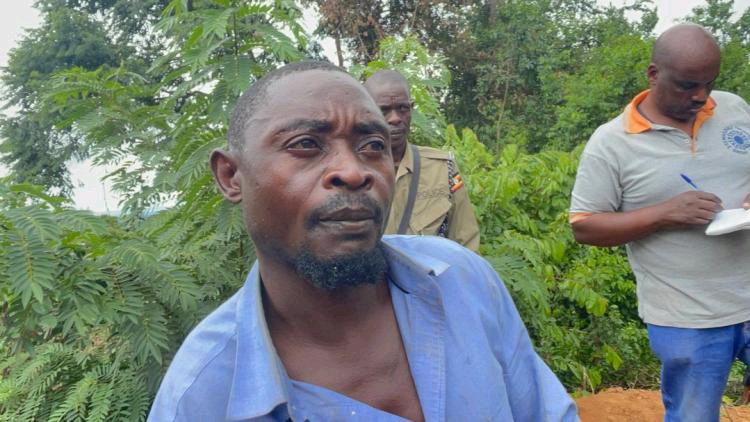
Christopher Okello Onyum on Friday denied intentionally killing four toddlers in Ggaba, telling the High Court that key statements attributed to him were obtained under pressure and do not reflect the truth of what happened.
Okello, the prime suspect in the widely publicised Ggaba daycare killings, formally opened his defence in proceedings stemming from the April 2, 2026 attack at a daycare centre in the Kampala suburb. The incident, in which four young children were killed, sparked nationwide outrage and prompted an intensive police investigation.
According to investigators, Okello had earlier visited the facility under the pretext of making inquiries before returning on the day of the attack.
Prosecutors say he was arrested shortly after the incident by security personnel and members of the public, some of whom attempted to assault him before police intervened. He was later taken into custody as detectives reconstructed the sequence of events surrounding the killings.

During earlier hearings, the court received testimony from multiple prosecution witnesses, including police officers who claimed the accused confessed and apologised. The state also presented physical exhibits—among them knives allegedly recovered from his residence—in a bid to demonstrate planning and intent. Following that phase, the court ruled that Okello had a case to answer.
Appearing before the High Court during his defence at the Ggaba Community Church grounds, Okello maintained that while the children died, he should not be held criminally responsible for intentional murder.
“I am not guilty of the offences because I did not intentionally cause the death of the four children,” said Okello. “I can explain how the children died, but I did not do it intentionally, and the charges should not stand.”
He challenged earlier statements presented by the prosecution in which he reportedly admitted to the killings, saying they were made involuntarily.
“Those statements were made under pressure,” he submitted. “I was not allowed to question what was happening and I had no choice but to say what pleased them.”
Okello further argued that prosecutors had failed to establish intent, insisting that the evidence on record does not support claims of premeditation.

“[State prosecutors] did not make a strong case to show that I acted deliberately,” he said. “Taking all the evidence together, it does not support the claim that I intentionally killed the four children.”
He also rejected allegations that the killings were motivated by ritual practices or a desire for wealth.
“The claim that I killed for riches is not true,” he told the court. “I said those things because I was coerced.”
Responding to other strands of the prosecution’s case, including digital material and online activity, Okello said his actions were influenced by external pressures.
“There were factors that were forcing me. I did not do those things willingly,” he said.
In a bid to present his character to the court, Okello described himself as a responsible and forward-looking individual with personal and business prospects.
“I am a person of generally good moral character, hardworking, focused and resourceful,” he said. “I had a bright future, people to look after and a business in the making. I could not do such a thing.”
He told the court that he had experienced a period of fear and psychological distress in the months leading up to the incident.
“In mid-January to late March, I entered a distressing period. Certain people began threatening me, demanding money and following me,” he said.
According to his account, those alleged threats forced him into hiding.
“They would park and watch me. I was always on the run or hiding somewhere because I feared for my life,” he explained. “I stayed away from my house and lived on the streets because I did not feel safe.”
Okello suggested that these circumstances may have affected his mental condition.
“It is possible there were mental challenges that went undetected and contributed to what happened,” he said.
His defence follows the court’s earlier ruling that he had a case to answer after hearing testimony from several prosecution witnesses. The trial is continuing before Justice Alice Komuhangi Khaukha.
Prosecutors have previously told the court that they are relying on CCTV footage, phone records and online search history, which they say indicate the accused had identified multiple schools—reportedly six others—prior to the Ggaba daycare attack, in an effort to link Christopher Okello Onyum to the killings.
📩 Email us: kamunyereports@gmail.com
📲 WhatsApp us: +256705569885
Your story matters—share it with us today! 🗞️🔥