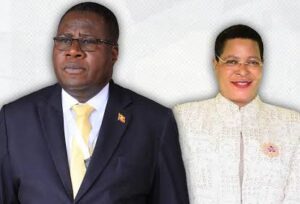
NRM Under Pressure as Court Asked to Halt Among, Tayebwa Endorsement

A fresh political and legal storm is brewing within Uganda’s ruling National Resistance Movement (NRM) after a party member moved to court to challenge the early endorsement of Parliament’s top leadership ahead of the next legislative term.
At the centre of the dispute is a petition questioning the decision by the party’s top organ to back the current leadership of Parliament—Anita Annet Among and Thomas Tayebwa—to continue serving as Speaker and Deputy Speaker in the anticipated 12th Parliament.
Petition filed at High Court
The petition was filed on Friday, March 6, 2026, by Apollo Kibira at the Civil Division of the High Court. Through the application, Kibira seeks a judicial review to nullify the party’s endorsement, arguing that the process violated both party procedures and constitutional provisions governing leadership selection.

According to the petitioner, the endorsement of the incumbents by the NRM’s powerful Central Executive Committee (CEC) was done without offering other eligible NRM Members of Parliament a fair chance to declare interest in the positions.
Kibira contends that such a move undermines internal party democracy and denies other party legislators an opportunity to compete for the influential parliamentary offices.
The endorsement resolutions, passed in late January and February, were later communicated to the party Secretariat and the NRM parliamentary caucus. The move effectively signalled the party leadership’s preference for Among and Tayebwa to continue presiding over the House when the next Parliament is constituted.
However, Kibira argues that the process through which the endorsements were reached was neither transparent nor inclusive.
He maintains that the Central Executive Committee endorsed the incumbents without allowing other eligible NRM Members of Parliament a fair opportunity to express interest in the positions.
In the court documents, Kibira named the National Resistance Movement as the first respondent. The current Speaker, Anita Annet Among, and Deputy Speaker, Thomas Tayebwa, are listed as the second and third respondents respectively.

Through the petition, the applicant is asking the court to intervene and halt the implementation of the endorsement.
He is seeking orders to quash the CEC decision, prohibit its implementation, and compel the party to conduct a fresh internal process consistent with the Constitution, the Political Parties and Organisations Act, and the NRM’s internal rules.
Kibira further warns that failure by the court to intervene in time could render the application moot if the endorsement is allowed to stand and influence the eventual election of parliamentary leadership.
In addition to the legal remedies, the petitioner is also seeking general damages alongside court costs.
### Constitutional procedure
Under Article 82 of the Constitution, the Speaker and Deputy Speaker must be elected by Members of Parliament from among themselves through a secret ballot supervised by the Alfonse Owiny-Dollo, the Chief Justice, or a judge designated by him.
This constitutional requirement means that while political parties may internally discuss or propose candidates, the ultimate decision rests with Members of Parliament voting by secret ballot on the floor of the House.
The case now places the ruling party’s internal decision-making process under judicial scrutiny, setting the stage for what could become a significant legal and political contest over how parliamentary leadership is determined ahead of the next term.
📩 Email us: kamunyereports@gmail.com
📲 WhatsApp us: +256705569885
Your story matters—share it with us today! 🗞️🔥