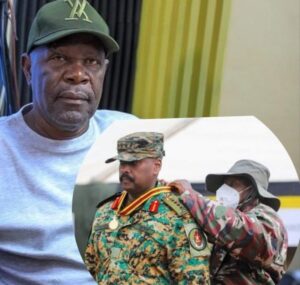
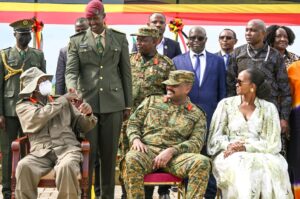
“Next Time We Shall Break Your Legs And Burn Your Cars” Kiruhura LC5 Boss Celebrates Attack On Bobi Wine In Kiruhura
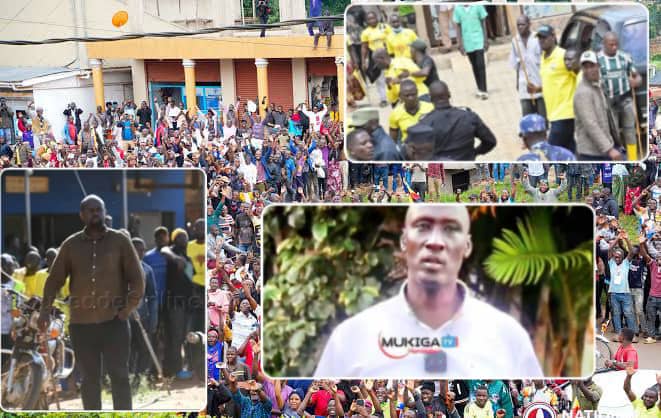
The Kiruhura District LC5 Chairman, Mukago Rutetebya, has squarely placed the blame for Wednesday’s violent clashes in Kiruhura District on opposition leader Robert Kyagulanyi Ssentamu, widely known as Bobi Wine, and his supporters.
The chaotic scenes, marked by shouting crowds, flying stones, and police sirens, disrupted campaign activities and left the district gripped by tension for much of the day.
The confrontations erupted between supporters of Bobi Wine’s National Unity Platform (NUP) and those of the ruling National Resistance Movement (NRM), throwing what was meant to be a peaceful campaign stop into disorder. Bobi Wine had been campaigning in Kiruhura—the home district of President Yoweri Museveni—when violence broke out in Sanga and Rushere towns, both considered strongholds of the NRM.

What began as an enthusiastic turnout for the opposition candidate quickly escalated into a street confrontation. According to eyewitnesses, verbal taunts between rival supporters soon turned physical, prompting police officers stationed in the area to move in and try to restore calm.
Chairman Rutetebya attributed the unrest to what he described as deliberate provocation by NUP supporters along Bobi Wine’s campaign trail.
“When he reached Sanga Town, chaos broke out as his supporters attacked NRM supporters wearing yellow T-shirts. They also looted shops along the way. Some were armed with hammers and gloves fitted with sharp nails, which they used to beat and injure people,” Rutetebya said.

His comments paint a grim picture of the clashes, which reportedly left several people nursing injuries and caused significant property damage. Security forces were forced to call for reinforcements as the unrest spread through parts of Sanga and Rushere, paralyzing movement and forcing businesses to shut down.
Bobi Wine was unable to proceed with his planned rallies in Kiruhura, cutting short what his campaign team had described as a critical outreach in the president’s political backyard.
Rutetebya also accused the opposition leader of ignoring established campaign procedures and moving without notifying authorities in several areas.
“After Sanga, he went to Biharwe in Mbarara, then took Rubaya Road, passed through Kyenshama and Kashongi, and entered Kitura without notifying the authorities. In Rushere, his supporters even assaulted a journalist covering the campaign,” he added.
The LC5 Chairman condemned what he called “unlawful acts” by Bobi Wine’s team, stressing that all candidates must uphold discipline and ensure peaceful conduct during the campaign period. He warned that political violence undermines the democratic process and endangers the very citizens candidates seek to represent.
In response, Bobi Wine rejected the accusations and turned the blame toward local authorities and ruling party loyalists. Speaking later in neighboring Kazo District, the opposition leader insisted that his team had been attacked rather than being the aggressors.
“We shall continue to campaign peacefully, but the authorities must treat all candidates fairly, even in Museveni’s home area,” Bobi Wine said.
He urged the Electoral Commission and security agencies to act impartially, accusing the state of using intimidation tactics to discourage opposition activity in regions considered politically sensitive.
The violent scenes in Kiruhura have since become a major talking point in Uganda’s charged political environment. With the 2026 general elections fast approaching, observers warn that the incident exposes the fragile nature of political tolerance in the country.
Kiruhura’s significance as President Museveni’s birthplace and political stronghold has made it a symbolic battleground for opposition movements seeking to challenge decades of NRM dominance. For many Ugandans, Bobi Wine’s visit was seen as both bold and risky—a test of how far opposition voices can reach into the heart of the ruling party’s support base.
Security agencies have since stepped up their presence in the district, assuring residents that further unrest will be prevented as campaigns continue nationwide.
The Kiruhura clashes stand as yet another reminder of the deep divisions that define Uganda’s electoral landscape—where political competition is often overshadowed by confrontation, and where calls for peace are repeatedly tested by the realities of power, loyalty, and defiance on the campaign trail.
📩 Email us: kamunyereports@gmail.com
📲 WhatsApp us: +256705569885
Your story matters—share it with us today! 🗞️🔥