Museveni Warns Ugandans Against Sectarian Politics, Cites Sudan’s Collapse as a Stark Lesson
President Yoweri Kaguta Museveni has once again issued a strong warning against sectarian politics rooted in religion, ethnicity, or race, cautioning that such divisions have been responsible for the destruction of otherwise powerful nations across Africa.
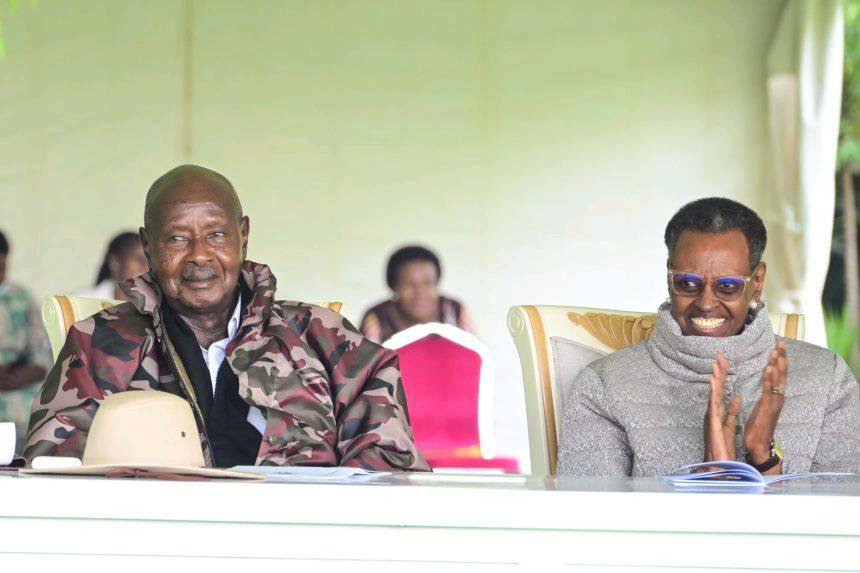
The President made the remarks on Friday while addressing guests at the annual End-of-Year Thanksgiving Prayers held at State House, Entebbe. Together with the First Lady and Minister of Education and Sports, Janet Kataaha Museveni, the President hosted a high-profile gathering that included religious leaders from various faiths, members of the Diplomatic Corps, legislators, Cabinet ministers, judicial officers, and senior military officials.
In his address, President Museveni emphasized that Uganda’s relative stability and steady progress under the National Resistance Movement (NRM) are anchored in a deliberate rejection of sectarian politics—long before the establishment of the Inter-Religious Council of Uganda (IRCU) in 2001.
“I reminded them that the Inter-Religious Council came long after the NRM had already rejected sectarianism. When you come to me and waste my time with sectarianism of religion or tribe, nkugambirawo sitani nvako,” Museveni said, drawing applause from the audience.
Lessons from Africa’s Conflicts
The President drew sobering lessons from conflicts across the continent, singling out Sudan as a tragic example of how sectarianism based on religion and race can unravel a once-strong state.
“Some countries in Africa have been destroyed by sectarianism of religion and race. Sudan was once a very powerful state, but it disintegrated because of sectarianism. We advised their leaders to stop it, but they didn’t listen—and you can see where the country is now,” he noted.

Museveni warned that similar forces continue to threaten stability in parts of Africa, often driven by external actors exploiting internal divisions. He described these forces as “parasite groups” whose actions are fueled by foreign interests seeking chaos and violence.
“Many of the problems in Africa are caused by parasite groups backed by foreigners who want to create violence. Nobody will create chaos in Uganda. Whoever tries will end up badly,” the President warned firmly.
Self-Reliance and Economic Resilience
Linking political stability to economic independence, Museveni underscored the importance of self-reliance and indigenous economic systems in safeguarding Uganda’s future. He cited government initiatives such as the revival of traditional cooperatives, including the Emyooga program, as key pillars of economic resilience.
According to the President, African societies had functional systems that ensured productivity and employment long before colonial disruption.
“The traditional Emyooga system ensured zero unemployment. Colonialism disrupted it, but the NRM revived and modernised these capacities. That is why Uganda today has food security, industries, and a resilient economy,” he said.
He noted that strengthening household incomes and community-based production remains central to the government’s broader strategy of wealth creation.
President Museveni also called on leaders at all levels to fully utilize Local Council (LC) structures to combat corruption and improve service delivery across the country. He stressed that effective grassroots leadership is essential in protecting public resources and ensuring accountability.

“Issues like corruption and poor service delivery can be solved if we properly use the elected LC structures to protect public resources,” he emphasized.
Call for Unity Ahead of 2026 Elections
As Uganda gradually moves toward the 2026 general elections, the President reiterated his long-standing appeal for unity, discipline, and a focus on wealth creation rather than divisive politics.
“This region is a culture of wealth creators who depend on their own effort. We must reject those trying to revive sectarianism and remain focused on unity and progress,” Museveni concluded.
The End-of-Year Thanksgiving Prayers once again highlighted the President’s consistent message: that Uganda’s future lies in national cohesion, self-reliance, and the rejection of politics that divide citizens along religious or ethnic lines. As the country looks ahead, Museveni urged Ugandans to draw lessons from Africa’s troubled regions and safeguard the peace and stability they currently enjoy.
📩 Email us: kamunyereports@gmail.com
📲 WhatsApp us: +256705569885
Your story matters—share it with us today! 🗞️🔥