Muhoozi, Saleh or a Surprise Candidate? Inside the High-Stakes Race to Succeed Museveni
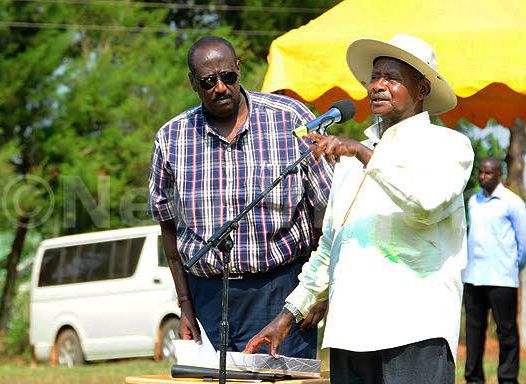
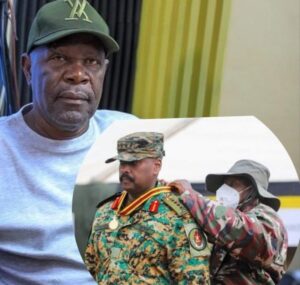
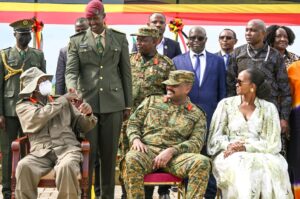
Veteran journalist Andrew Mwenda has revealed that discussions about who could eventually succeed President Yoweri Museveni are already underway within the first family and among influential political actors. According to Mwenda, the president has quietly begun preparing the ground for a political transition, with members of his family reportedly focusing on two key figures: his son, Muhoozi Kainerugaba, who currently serves as the Chief of Defence Forces (CDF), and his younger brother, Salim Saleh, who also doubles as the president’s chief adviser on security and defence matters.
However, the issue of succession remains complex and layered. In recent months, Gen. Muhoozi stirred debate when he posted on what many believe to be his official X (formerly Twitter) account. In the message, he acknowledged that many people assume he is the most likely person to replace his father as Uganda’s next head of state. Despite those expectations, he suggested that his uncle, Gen. Saleh, would actually be the most suitable candidate for the job.
Mwenda, however, says his personal interactions with Gen. Saleh paint a different picture. The veteran journalist explained that during several conversations he has had with the general, Saleh appears largely uninterested in the idea of becoming president. Ironically, Mwenda noted, this is despite the fact that within President Museveni’s alleged succession calculations, Gen. Saleh reportedly sits high on the list of potential successors.

While family dynamics appear to play a central role in the conversation, Mwenda also pointed to another figure he believes could complicate the president’s succession strategy: the flamboyant Speaker of Parliament, Anita Annet Among. Mwenda warned that Among’s growing political influence could pose a serious challenge if it is not carefully managed.
According to Mwenda, the Speaker has accumulated significant power in recent years, to the point where she exerts influence across multiple arms of government. He argued that Among effectively commands authority within Parliament, wields influence within the ruling National Resistance Movement (NRM), and even holds sway in sections of the judiciary. Because of this expanding reach, Mwenda cautioned President Museveni to ensure that such influence does not eventually stretch into the military establishment.
Mwenda further claimed that it has become extremely difficult to win legal battles against Among in Ugandan courts. He alleged that a number of judges are beholden to her, partly because she played a role in vetting them or facilitated employment opportunities for their relatives and associates within Parliament. According to him, the Speaker presides over more than 2,000 parliamentary jobs, which has strengthened her patronage network.

The ongoing debate about succession is also expected to influence another key political position in the country: the Speaker of Parliament. Mwenda, together with prominent journalists Charles Onyango-Obbo and Robert Kabushenga, agreed that the individuals who will most likely determine who occupies the next Speaker’s seat are President Museveni, Gen. Muhoozi, and Gen. Saleh.
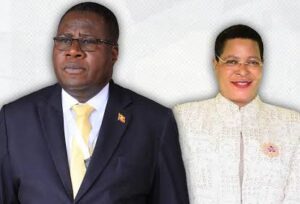
As things stand, they suggested that Norbert Mao—the president of the Democratic Party and Minister in charge of Justice and Constitutional Affairs—still has a realistic chance of capturing the influential position, which is widely considered the third most powerful office in the country.
All three journalists agreed that whoever becomes the next Speaker will play a crucial role in shaping President Museveni’s eventual transition from power. Kabushenga warned that if Among’s ambitions are not carefully monitored, she could use her influence and networks to position herself as a serious contender to succeed Museveni as Uganda’s next president.
Kabushenga highlighted that Among’s political reach is further strengthened by her marriage to Moses Magogo, the president of the Federation of Uganda Football Associations. He explained that FUFA possesses a well-established structure both locally and internationally, with individuals occupying influential leadership and decision-making roles. Many of these actors, he said, have significant financial resources and possess what he described as the “mafia-style” organizational skills often associated with the management of highly popular sports.
According to Kabushenga, Magogo’s prominence on both domestic and international football platforms gives Among an additional advantage. Combined with the extensive NRM structures she already commands—from village-level networks up to national leadership—this could allow her to mount a formidable challenge in any succession contest.
Sources also claim that the combination of political influence, financial resources, and institutional power partly explains why Among and Magogo managed to secure their parliamentary seats unopposed—Among as Bukedea Woman Member of Parliament and Magogo as Member of Parliament for Budiope East. The same networks reportedly helped several of their allies win positions without facing challengers.

These dynamics have also fueled a strong campaign to ensure that Among retains her seat. Observers say she has been moving from one political talk show to another, vigorously defending her record and appealing to voters.
Those who have attempted to challenge her influence, sources say, have often faced significant political setbacks. During the run-up to the 2026 general elections, several figures who were perceived to have crossed her path reportedly suffered political defeats. Among them was Hamson Obua, who serves as the government Chief Whip in Parliament.
Norbert Mao—who is also contesting against Among for the position of Speaker—and Haruna Kasolo, the minister for Microfinance, are said to have narrowly survived politically in contests where her influence was believed to be a factor.
Sources suggest that Obua’s difficulties stemmed from disagreements with Among over who should act as master of ceremonies during President Museveni’s campaign rallies in Northern Uganda. As the NRM national vice chairperson for that region, Obua reportedly felt he should oversee those activities. Kasolo is said to have attempted something similar in Buganda, where he also holds a regional party leadership role.
Political analyst Leonard Egesa believes Speaker Among is well aware of the threats facing her political career. According to him, this awareness may explain why she has recently adopted a more assertive and sometimes ruthless political approach, seeking to demonstrate that she still firmly holds power.
Egesa cited what he described as Among’s “invisible hand” in ensuring that both President Museveni and NRM Secretary General Richard Todwong signed her endorsement letter, a move interpreted by many as a show of strength within the party.
Despite this, Egesa argues that President Museveni may eventually find it difficult to accommodate Among’s expanding influence. He suggested that there is a strong possibility she could face a political setback similar to that experienced by former Speaker Rebecca Alitwala Kadaga when she attempted to establish what some viewed as an alternative power center within the government.
Other insiders warn that Among and her husband Magogo must tread carefully as the succession debate intensifies. Their political careers have previously been overshadowed by controversies and scandals, which resulted in sanctions being imposed on them by governments including the United States, United Arab Emirates, and United Kingdom, along with some of their allies, over allegations related to corruption and abuse of office.
Speaker Among has strongly defended herself against those accusations. She maintains that the sanctions were imposed because she stood firm in defending Uganda’s sovereignty. She has also accused some Western countries of targeting her because she played a leading role in spearheading the passage of the controversial anti-homosexuality legislation, which she claims they supported in order to undermine Ugandan cultural values.
Meanwhile, Ofwono Opondo—who represents elderly persons from Eastern Uganda in Parliament and has also been accused by critics of benefiting from Among’s unopposed political strategy—acknowledged that the Speaker may have made mistakes earlier in her tenure. However, he insisted that she has since learned valuable lessons while in office.
Opondo also argued that it would be difficult for the NRM to fully support Norbert Mao for the Speaker’s position. He noted that Mao spent many years criticizing President Museveni before eventually signing a cooperation agreement with him, a move that continues to generate mixed reactions within the ruling party.
Even though many observers believe that President Museveni, Gen. Muhoozi, Gen. Saleh, and Speaker Among currently represent the most influential power centers in Uganda, veteran journalist Peter Kibazo suggests the picture may be more complicated. He pointed out that the first family itself could play a decisive role in shaping the final outcome.
According to Kibazo, figures such as the president’s daughter Natasha Karugire Museveni and the First Lady Janet Kataha Museveni may have significant influence over key political decisions behind the scenes.
Highly placed diplomatic sources also told Ono Bwino that while much public attention has focused on Gen. Muhoozi and Gen. Saleh as potential successors, other names are quietly being considered in elite circles. Among them are Odrek Rwabwogo, the president’s son-in-law, and Charles Peter Mayiga, the Prime Minister of Buganda Kingdom.
According to those sources, these figures are viewed by some international observers as individuals who could potentially guide Uganda into what they describe as the country’s next political phase—one that might emphasize a more structured democratic transition.
📩 Email us: kamunyereports@gmail.com
📲 WhatsApp us: +256705569885
Your story matters—share it with us today! 🗞️🔥