Inside the NRM Cash Machine: UGX 100M and the Fight for Control
A high-stakes political contest is quietly unfolding behind the walls of Uganda’s Parliament, where influence, loyalty and strategy are converging — and where, analysts say, money has become a central instrument in shaping outcomes.
The debate intensified after President Yoweri Museveni confirmed that National Resistance Movement (NRM) Members of Parliament received UGX 100 million each, a move officially framed as facilitation for MPs-elect. However, the disclosure has shifted public discourse from questioning the rationale behind the payments to examining their potential political implications — particularly in the race for Speaker of Parliament.
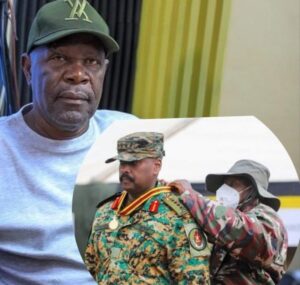
At the center of this interpretation is Prof. Venansius Baryamureeba, a former Vice Chancellor of Makerere University and a seasoned political commentator, who describes the UGX 100 million payout as a calculated political tool rather than a routine facilitation.
He characterizes it as a “master strategy,” arguing that the funds are not merely distributed but deployed to influence allegiance within Parliament. In his assessment, the same financial leverage used to consolidate support could equally be used to dismantle it, depending on how political alignments evolve.
The Three-Installment Theory
According to this line of analysis, the UGX 100 million is structured not as a lump sum, but as a phased disbursement designed to guide behavior at critical political moments.

Under what has been described as the “three-installment theory,” an initial UGX 30 million is reportedly issued once an MP signals interest in the Speaker or Deputy Speaker race. This stage, it is claimed, often involves engagements outside Parliament, including at State House, where preferred candidates within the NRM Caucus are communicated.
A second tranche of UGX 30 million is said to follow after the NRM Caucus vote, again accompanied by political direction. The final UGX 40 million, according to the theory, is contingent on the outcome of the full parliamentary vote for Speaker and Deputy Speaker.
Failure to align with the indicated positions at any stage, the analysis suggests, could result in the suspension of subsequent payments — effectively turning the process into what observers describe as conditional political support.
A Crucial Political Moment
The timing of the reported payouts has drawn particular scrutiny. The Speaker of Parliament wields significant institutional power, overseeing legislative business, influencing committee assignments, and shaping oversight priorities.
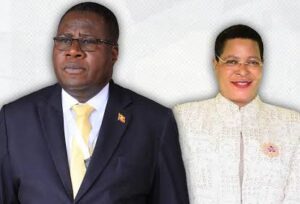
Incumbent Speaker Anita Among is seeking to retain her position, but political circles have also mentioned alternative figures, including Justice Minister Norbert Mao, as possible contenders backed by sections within the ruling establishment.
Against this backdrop, Museveni’s description of the UGX 100 million as “small” has been interpreted by Baryamureeba as a strategic signal rather than a literal assessment.

In his reading, the remark underscores a broader message: continued political alignment could unlock further state-backed facilitation, while dissent could carry consequences, including reduced access to political and financial support structures.
The “Tooth-for-Tooth” Argument
One of the more striking elements of Baryamureeba’s analysis is the suggestion that financial influence in Parliament is inherently fluid. He argues that if monetary incentives were instrumental in building support for the current leadership, they could just as easily be redeployed to shift that support.
In this view, political loyalty is not fixed but transactional — shaped by competing interests and resources.
The argument frames the unfolding Speaker race as less about ideology and more about strategic positioning, where alliances can be recalibrated in response to changing incentives.
Diverging Interpretations
The developments have sparked varied interpretations among political observers and stakeholders.
One perspective sees the process as a potential “power reset,” with the executive leveraging financial control to reshape parliamentary leadership and assert greater influence over legislative priorities.
Another view suggests continuity rather than change — arguing that if financial inducements remain central to political decision-making, any leadership transition may simply reproduce existing dynamics under new actors.
A third line of thought points to the possibility of internal resistance within the NRM Caucus. Some analysts note that overt associations between financial incentives and voting behavior could generate unease among MPs, raising the risk of quiet defiance during key votes.
What Comes Next
Attention is now turning to the upcoming NRM Caucus meeting, which is expected to play a decisive role in determining the party’s preferred candidates for Speaker and Deputy Speaker. This stage is widely seen as critical in shaping the eventual outcome in the full House.
The subsequent parliamentary vote will provide a clearer indication of whether party cohesion holds or whether alternative alignments emerge.
If Baryamureeba’s assessment proves accurate, the trajectory of the Speaker’s race may already be largely determined. If not, the vote could reveal shifting dynamics within Parliament and test the extent to which financial influence translates into political outcomes.
For now, the UGX 100 million payout has taken on a significance that extends beyond facilitation. It has become a focal point in Uganda’s evolving political landscape — symbolizing the intersection of power, strategy and governance in the country’s 11th Parliament.
📩 Email us: kamunyereports@gmail.com
📲 WhatsApp us: +256705569885
Your story matters—share it with us today! 🗞️🔥