Exclusive!! Why Museveni Isn’t Happy With Zohran Mamdani Becoming The New York City Mayor
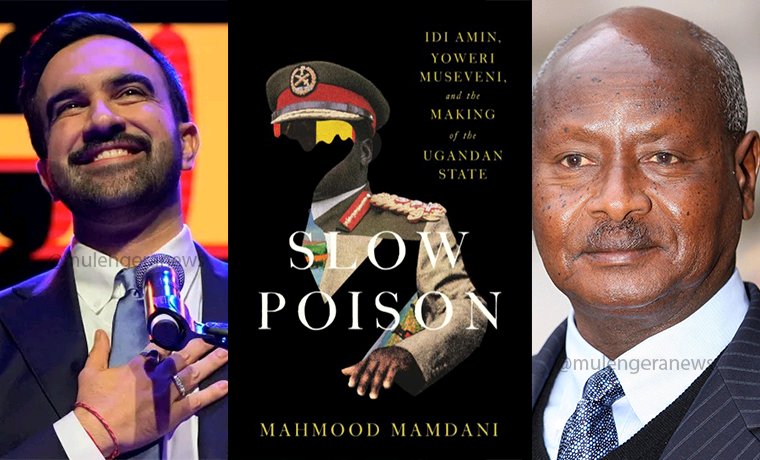
In his latest 329-page publication, Idi Amin, Yoweri Museveni & the Making of the Ugandan State – Slow Poison , celebrated 79-year-old Columbia University professor and anthropologist Mahmood Mamdani delivers one of his boldest critiques yet. The book contemptuously explores what he considers the striking similarities between the governance style of Uganda’s long-serving president, General Yoweri Kaguta Museveni, and that of former military ruler Idi Amin Dada — the man who infamously made Uganda globally known for his cruelty, impulsive decisions, and buffoonery on the world stage.
Barely three weeks since its release, the book has shaken Kampala’s political corridors, with insiders describing it as “an uncomfortable mirror” held up to Museveni’s four-decade rule. The Kampala establishment has reportedly been appalled by its contents. The reaction was swift and fierce: Uganda’s Permanent Representative to the United Nations, Ambassador Adonia Ayebare, took to X (formerly Twitter) to personally attack the respected scholar.
In a series of sharp tweets, Ayebare — a known loyalist of President Museveni — went as far as branding Mamdani “ungrateful.” He alluded to the occasions when the Ugandan government had, in his words, “been there for the aging professor when it mattered most.” Ayebare’s digital outburst underscored how deeply the Kampala regime had been stung by the book’s revelations.
Observers say Museveni himself, a leader famously intolerant of public scrutiny, must have been deeply hurt by Mamdani’s bold comparisons. Yet, true to his political sophistication, the president has chosen to respond indirectly — letting loyal surrogates like Ayebare lead the counterattack rather than personally entering the fray.

For years, Mahmood Mamdani was widely perceived as a sympathizer of the Museveni government. During his decade-long tenure as Director of the Makerere Institute of Social Research (MISR), many at Makerere branded him a “Musevenist,” citing his reluctance to engage in critical media interviews. His silence during that period was interpreted as tacit support for the regime. Mamdani left the post only a few years ago to return to his teaching duties at Columbia University in New York.
Interestingly, Mamdani and Museveni share a long history that dates back to Uganda’s turbulent 1970s. During the years of exile, the two men interacted closely. Museveni, then building his rebel networks through FRONASA and later the Uganda Patriotic Movement (UPM), even attempted to recruit Mamdani — but the scholar, cautious and analytical as ever, stayed noncommittal.
The new book suggests that Mamdani’s quiet demeanor masked deep-seated reservations about Museveni’s leadership. He reportedly chose silence out of convenience — maintaining it for as long as he held the influential and well-funded MISR directorship, a position that came with both prestige and access to multimillion-dollar research grants.

The timing of Slow Poison has made its impact even more explosive. Its release coincided with a major milestone for the Mamdani family — the election of Mahmood’s son, Zohran Kwame Mamdani, as Mayor of New York City. His victory, on Tuesday, November 4th, was historic: the 34-year-old became the first Muslim ever to lead the world’s most influential metropolis — the global financial, cultural, and diplomatic capital.
Zohran’s political rise was celebrated worldwide, with his victory being likened to the “Obama moment” of 2008. In Uganda, initial reports in the state-owned *New Vision* had portrayed his success as a national triumph, emphasizing his Ugandan roots and how his ascent could inspire hope among citizens. The Museveni establishment, ever conscious of its need for positive stories, viewed the young Mamdani’s success as an opportunity to project Uganda’s image favorably abroad.
But Slow Poison complicated that narrative. The same paper that had planned to champion Zohran’s victory has now reportedly scaled back its coverage, fearing that excessive celebration might appear as a tacit endorsement of Mahmood Mamdani — whose book has cast a long shadow of discomfort over State House. As one senior editor put it privately, “Running the Zohran story with excitement right now would feel like bowing before the Mamdani family at a time of political provocation.”
Yet, analysts note that the fallout is unfortunate. Zohran’s Ugandan heritage could have provided Kampala with powerful diplomatic and economic opportunities — from tourism promotion to investment partnerships. Officials at KCCA might have even explored “city twinning” initiatives between Kampala and New York. However, those prospects now appear unlikely as relations between Museveni’s camp and the Mamdani family grow colder.
Born in Uganda in 1991, Zohran is the son of Mahmood Mamdani and acclaimed Indian filmmaker Mira Nair, known for her award-winning films and mentorship of Ugandan creatives such as Philip Luswata and Alex Mukulu. The couple raised their son with deep values of social justice, equality, and activism — principles that underpin Zohran’s political ideology.
At university, Zohran pursued Africana Studies, later becoming a housing counselor working among New York’s underprivileged. His firsthand experience with housing injustices inspired him to run for political office, championing affordability, inclusion, and equitable taxation. His campaign emphasized taxing the wealthy to fund social programs — a model reminiscent of Kampala’s reformist opposition figures like Erias Lukwago.

Zohran’s personal life has also captured public interest. He is married to Rama Sawaf Duwaji, a 28-year-old Syrian-American artist known for her paintings and activism. Her works have featured in publications like *The New Yorker* and *The Washington Post*, and she is recognized for her vocal support of humanitarian causes, including Palestine — a stance that has drawn criticism from conservative circles. The couple’s modest wedding, reportedly costing just $72 per guest, reflected Zohran’s aversion to material excess.
Zohran’s mother, Mira Nair, actively participated in his campaign, organizing volunteers and mobilizing grassroots support — a testament to the family’s deep belief in people-centered leadership. Meanwhile, Zohran’s close alliance with U.S. Congresswoman Alexandria Ocasio-Cortez (AOC) has made him one of the most watched young leaders in global progressive politics.
However, not everyone in Washington is celebrating. Former U.S. President Donald Trump has already branded Zohran “a Communist,” accusing him of harboring “anti-American” sympathies. He has hinted at plans to cut federal funding to New York City — a move seen as political retaliation against the new mayor’s left-leaning platform.
Back in Uganda, Slow Poison continues to reverberate. Mamdani’s sharp comparison of Museveni to Idi Amin has unsettled the political establishment, especially given the book’s global reach and scholarly depth. It also criticizes rampant corruption and the growing impunity among regime officials — issues the president has increasingly struggled to contain.
For many observers, the book’s title could not be more apt. Like a slow-acting toxin, Mamdani’s revelations may not kill instantly, but they are bound to linger — gnawing at the image and legitimacy of Uganda’s aging leader as he approaches the January 2026 elections.
And somewhere between Kampala’s discomfort and New York’s celebrations, the Mamdani name has once again forced Uganda to look in the mirror — and reckon with what it sees.
📩 Email us: kamunyereports@gmail.com
📲 WhatsApp us: +256705569885
Your story matters—share it with us today! 🗞️🔥