EXCLUSIVE!! U.S. Embassy Accused Of Silently Training Ugandans Ahead of 2026 Elections – Billions Allegedly Spent in Shadow Campaign
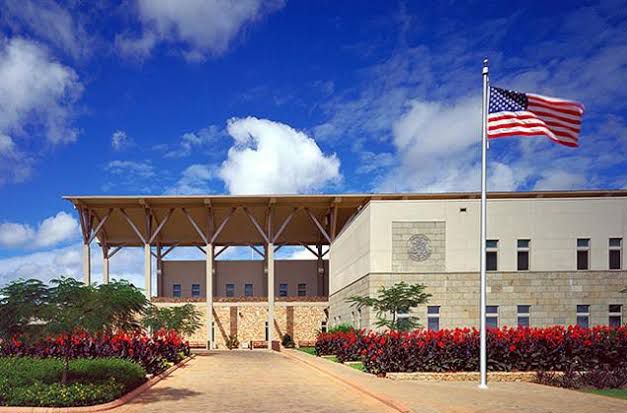
Allegations have surfaced suggesting that the U.S. Embassy in Uganda is quietly steering a shadow campaign to subtly influence the country’s political trajectory and societal values ahead of the 2026 general elections. The claims, based on leaked intelligence from government sources, paint a picture of discreet but deliberate foreign intervention.
Leading the embassy’s operations is Ambassador William W. Popp, whose leadership is now under growing scrutiny amid revelations of what officials have termed “undercover influence-building” efforts across the country.
Leaked reports accessed by this publication reveal a covert recruitment strategy orchestrated by the embassy. Influential Ugandans from diverse sectors—media, civil society, sports, and business—are being selectively approached to act as quiet partners in promoting U.S. interests within Uganda’s borders.
Sources close to the matter describe the recruitment drive as carefully veiled. Chosen individuals allegedly receive confidential invitations, often routed through encrypted or private communication channels, inviting them to take part in “specialized training” programs. But these are no ordinary training sessions.
Several major Ugandan media outlets—including NTV, NBS, and New Vision—are reported to have been targeted as key platforms in the strategy. The development has unsettled media watchdogs and political analysts, many of whom now warn that public opinion could be slowly but deliberately swayed toward U.S.-favored narratives.

At the center of this quiet operation is the American Centre in Kabalagala, a well-known fixture in Kampala’s diplomatic and cultural scene. While long associated with educational outreach, the facility is now said to serve as a discreet venue for these behind-the-scenes sessions.
Among the flagship programs is the “Global Executive Education Programme.” Publicly presented as a four-week leadership development course, the program reportedly has a more strategic—and controversial—agenda. According to an internal document leaked to this publication, the initiative is designed to mold a new cadre of Ugandan thought leaders trained to echo and amplify U.S. foreign policy positions.
The curriculum, according to the same source, covers U.S. diplomatic strategy, military power projection, and methods of sustaining economic dominance. It also delves into so-called “soft power” tactics—scholarships, foreign aid, media grants, and trade deals—deployed to foster long-term loyalty and structural dependency.
Even more provocatively, training modules reportedly discuss how the U.S. has historically managed to manipulate conflicts in resource-rich developing nations—by funding insurgencies and wars, then positioning itself as a peace broker. Critics argue this pattern enables Washington to later dictate political settlements and economic restructuring in its favor.
The program’s first intake—30 Ugandan participants—began on June 6, 2025, with graduation slated for October 31. A second group was quietly brought on board in mid-August, signaling that the operation is not only ongoing but expanding. Coordinating the entire training effort is Dr. Ahmed Hajji, a Ugandan-born academic originally from Katwe, now based in the United States, where he built a formidable diplomatic network.
Sources claim U.S. embassy staff are hands-on throughout the process—from selecting participants to approving facilitators and overseeing the curriculum.
But it is the political ambitions of some trainees that have triggered the most alarm.
Yvonne Mpambara, one such participant, has already picked up nomination forms to contest in Uganda’s 2026 presidential elections. The move, described by critics as unprecedented, is now being cited as confirmation of the program’s deeper goal: political reengineering under the veneer of leadership training.
“This is not just a professional training program,” a senior government official told this publication. “It is a calculated attempt to build a network of local proxies who can realign Uganda’s policies with U.S. strategic interests.”
For many, these developments bear a striking resemblance to historical patterns of U.S. interference across Africa.
In Libya, a once-stable nation under Muammar Gaddafi plunged into chaos following a 2011 NATO-led intervention backed by the U.S.—an operation that ended with Gaddafi’s death and left the country fragmented and war-torn.
In the Democratic Republic of Congo, American corporate interests in cobalt and coltan have repeatedly been linked to ongoing conflict, instability, and sustained proxy warfare.
Somalia continues to suffer from the residual chaos of decades of U.S. military involvement, while Sudan’s fragile transition has been undermined by foreign-backed rivalries and shadowy funding streams from the West.
Now, with Uganda on the cusp of a potentially transformative election season, the emerging picture of U.S.-orchestrated influence campaigns has ignited a national debate—one focused on the principles of sovereignty, the integrity of democracy, and the opaque powers possibly shaping the country’s future from behind the curtain.
📩 Email us: kamunyereports@gmail.com
📲 WhatsApp us: +256705569885
Your story matters—share it with us today! 🗞️🔥