“Bobi Wine Isn’t Young , He Should Stop Misleading Youths” Museveni Reveals
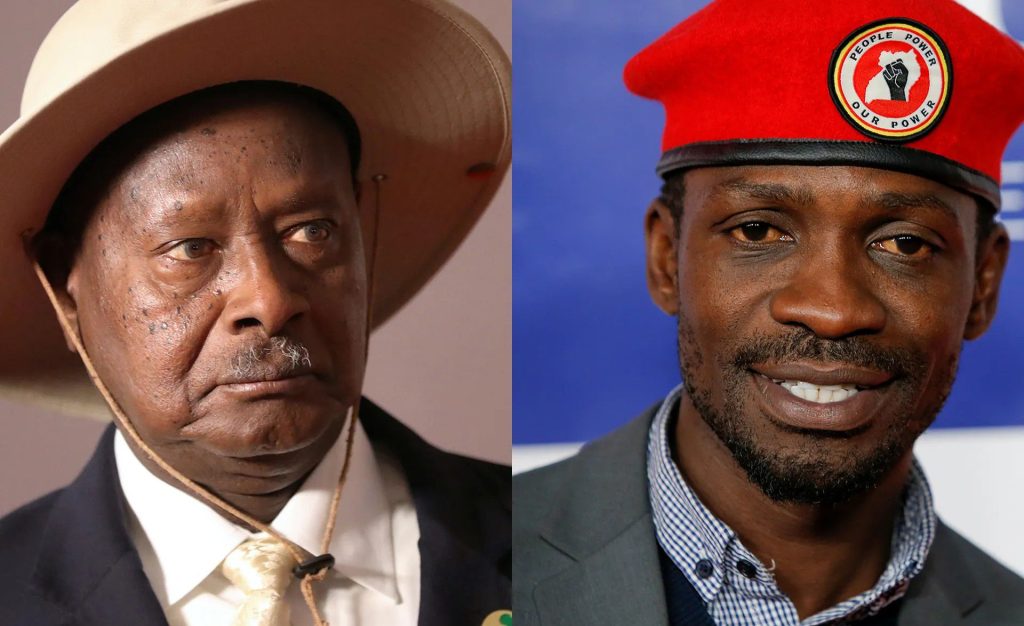
President Yoweri Museveni has strongly challenged persistent claims by opposition figure Robert Kyagulanyi Ssentamu—widely known as Bobi Wine—that he embodies Uganda’s youthful majority standing up to an ageing political order.
While meeting a group of social media influencers at his farm in Kisozi on Sunday, Museveni openly questioned the logic behind describing someone in their 40s as “young.” His remarks appeared to directly counter Bobi Wine’s frequent criticism of the President’s age and his decades-long leadership.
For years, Bobi Wine, now 41, has positioned himself as a generational alternative to Museveni, who is 81. The opposition leader has repeatedly argued that Uganda’s future belongs to young people, who make up the largest share of the country’s population. As head of the National Unity Platform (NUP), he has maintained that younger leaders are more in tune with modern realities and better equipped with innovative ideas and strategies to dismantle what he characterizes as an outdated political system.
Museveni, however, countered this narrative by revisiting key chapters of his own early life, presenting them as evidence that age should not be simplified into a political slogan.
“I bought Rwakitura when I was 22 years old. I was a temporary teacher, and when I earned my first salary, I went and bought Rwakitura,” Museveni said.
“I left my colleagues in Mbarara learning how to dance with girls. I went and bought Rwakitura. It was a bush,” he added.

Through this recollection, the President sought to illustrate how his priorities at a young age were focused on long-term investment rather than leisure. He suggested that his early decision to acquire land—then undeveloped bush—shaped his understanding of wealth creation, patience, and strategic planning. In his telling, the transformation of that land over time reflects the results of foresight rather than youthful symbolism.
Museveni went on to explain that by the time he purchased land in Kisozi in 1990, he was already in his 40s—an age he insists cannot reasonably be branded as youthful in political discourse.
“When I bought this land here in Kisozi in 1990, this was a bush, but by that time I was already in my 40s,” Museveni said.

“I see Bobi Wine is in his 30s or 40s. He says he is a young man also. You are still young at 40? You can’t say, ‘I am young’ at 40,” he remarked.
The President used these personal milestones to reinforce a broader argument he has consistently emphasized, particularly during election campaigns: the distinction between wealth and development.
“What I have been telling you in the elections is the difference between wealth and development. By that time there was tarmac in Mbarara, but in Rwakitura it was bush, no roads — but there was wealth, the pastures for my cows. So, I went and bought the land,” he explained.
In Museveni’s framing, visible infrastructure such as paved roads represents development, while productive assets like land and livestock signify wealth. By drawing this contrast, he aimed to demonstrate that true economic empowerment begins with resource ownership and long-term planning, not merely outward signs of modernization.

The exchange underscores a deeper national conversation unfolding across Uganda—one centered on age, generational transition, and the meaning of leadership in a rapidly changing society. With a significant majority of Ugandans under the age of 35, demands for greater youth participation in governance continue to resonate strongly. At the same time, Museveni maintains that leadership should not be defined solely by birth year, but by experience, ideological grounding, discipline, and a sustained vision for national progress.
As political debate intensifies, the contrast between generational identity and institutional continuity remains a defining feature of Uganda’s evolving democratic landscape.
📩 Email us: kamunyereports@gmail.com
📲 WhatsApp us: +256705569885
Your story matters—share it with us today! 🗞️🔥