Why Museveni Appointed Amama Mbabazi’s Wife As Minister ?
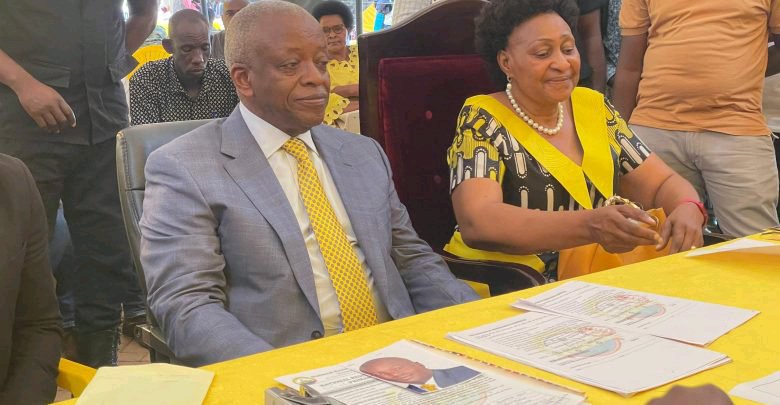
In a development that neatly captures the fluid, forgiving, and deeply strategic nature of Ugandan politics, President Yoweri Museveni has officially appointed Jacqueline Mbabazi as the Minister of State for Gender, Labour and Social Development in charge of Elderly Affairs. The appointment represents a massive political resurrection for one of the country’s most formidable political households and cements a long-simmering reconciliation within the ruling National Resistance Movement (NRM) establishment.
Jacqueline’s return to the upper echelons of the cabinet comes nearly a decade after a high-stakes, bitter political divorce shook the NRM to its core. Her husband, former Prime Minister and NRM Secretary General Amama Mbabazi, broke ranks with the state machinery to directly challenge President Museveni in the contentious 2016 presidential elections. The fallout at the time felt permanent; a decades-long partnership forged in the bush war seemed entirely shattered. Today, that history reads like a temporary detour.
From the Wilderness Back to the Center of Power
For years, the Mbabazi family’s sprawling influence across Uganda’s governance structures quietly receded following the failed 2016 presidential bid. To casual observers, it appeared to be the quiet end of an era. However, the appointment of Jacqueline Mbabazi is the clearest signal yet of a methodical, multi-step rehabilitation process that has been playing out behind closed doors.
Before she stepped back from the active political frontline, Jacqueline Mbabazi was never merely a political spouse; she was a powerhouse in her own right within the revolutionary establishment.
- The Military Business Connection: She previously served as the head of the National Enterprise Corporation (NEC), the commercial and business arm of the Uganda People’s Defence Forces (UPDF).
- The Powerhouse Status: In that capacity, she managed high-value military-linked corporate ventures and strategic state investments, cementing her reputation as an astute administrator with deep roots in the security apparatus.
The Personal Crisis That Changed the Political Playbook
The trajectory of the family’s political defiance took a sharp turn during the height of the tense 2016 campaign season. Behind the scenes of the fierce electoral battle, a quiet medical crisis was unfolding. Jacqueline reportedly fell seriously ill with cancer, a diagnosis that altered everything. The gravity of her health situation forced Amama Mbabazi to fundamentally scale back his schedule, eventually abandoning a vast chunk of his presidential campaign trail to care for his ailing wife.
Political insiders close to both camps recall that this severe illness became a defining personal crisis during an otherwise unforgiving political standoff. Yet, it also unexpectedly opened the door for a hidden avenue of diplomacy.
Despite the intense public friction and the high-stakes intelligence battles of the elections, President Museveni reportedly stepped in. Highly placed sources indicate that the President quietly extended financial backing and facilitated critical medical logistics during the peak of Jacqueline’s treatment period. This behind-the-scenes compassion in a time of vulnerability effectively laid the vital psychological groundwork for the eventual political truce.
The Patient Architecture of Modern Reconciliation
The journey back to the NRM fold was not built overnight. Over the last several years, the ice between State House and the Mbabazi camp steadily melted. While Amama Mbabazi kept a low public profile, he gradually transitioned into a trusted, behind-the-scenes advisor to the President on delicate matters of regional governance and long-term political strategy.
The momentum for Jacqueline’s formal comeback picked up speed on the legislative front. She successfully contested and won the parliamentary seat representing Older Persons in the Western Region for the 2026–2031 term. That legislative victory gave the executive the perfect operational runway to bring her back into the cabinet folds.
This strategy of systematic family reintegration has been showing its teeth for months now.
A few years ago, the couple’s daughter, Nina Mbabazi, alongside her husband, were quietly absorbed into Uganda’s diplomatic service, taking up key roles abroad.
By the time Jacqueline’s name appeared on the cabinet list, the path had already been thoroughly paved.
What This Means for Uganda’s Political Landscape
To veteran observers of Kampala’s political dynamics, this appointment is a classic masterstroke of Musevenism. Throughout his four-decade presidency, Museveni has consistently favored a strategy of exhausting, containing, and then reintegrating his most potent political rivals rather than permanently alienating them.
| Phase of Relationship | Key Milestones & Dynamics |
|---|---|
| The Historic Bond | Decades of bush-war camaraderie; Amama serving as the ultimate “super minister.” |
| The Great Fracture (2015-2016) | Amama launches a direct presidential bid; Jacqueline steps away from the military business arm (NEC). |
| The Quiet Truce | Medical diplomacy during Jacqueline’s illness; behind-the-scenes consulting by Amama. |
| The 2026 Full Circle | Daughter in diplomacy; Jacqueline elected to Parliament and appointed to the Cabinet. |
The Mbabazis were once institutional heavyweights viewed as the single greatest internal threat to the continuity of the NRM system. By bringing them back into the fold, the state neutralizes historical grievances and projects an image of total systemic stability.
In her new assignment, Jacqueline Mbabazi will take the wheel of elderly affairs and social protection frameworks. Her office will directly steer critical state programs targeting senior citizens and vulnerable social groups across the nation—a highly visible, grassroots portfolio that keeps the family legacy deeply relevant to everyday voters.
📩 Email us: kamunyereports@gmail.com
📲 WhatsApp us: +256705569885
Your story matters—share it with us today! 🗞️🔥