Museveni Warns Security Forces: ‘Torture During Elections Is Not Necessary’
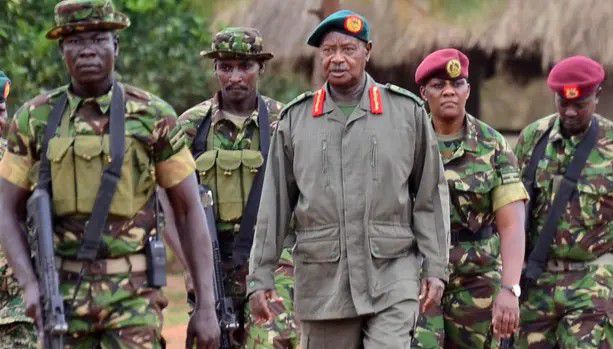
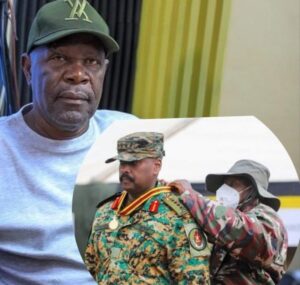
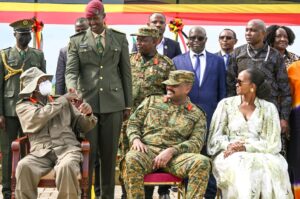
President Museveni on Wednesday cautioned security officers against employing excessive force during elections, saying beatings and torture were needless and preventable, comments that arise amid persistent claims by the opposition that security agencies habitually mistreat political supporters.
“Beating people shows lack of patience. Torture during elections is not necessary, and I will engage the security forces on this,” Museveni said, while emphasising that preserving peace remained a national priority.
“No one will be allowed to disturb Uganda’s peace. Those who attempt to cause disorder will be dealt with according to the law,” he added.
Museveni’s remarks were made against a background of recurring allegations by the leading opposition National Unity Platform (NUP) that security agencies have applied heavy-handed methods during election cycles, including beatings, torture and extended detentions of its supporters. NUP, led by opposition figure Robert Kyagulanyi, popularly known as Bobi Wine, has accused police and the military of violently dispersing rallies and targeting activists, claims the government has previously dismissed.

The president also dismissed suggestions that security agencies are overstretched during episodes of public disorder, arguing that discipline and organisation, rather than sheer numbers, are central to sustaining law and order. “I have heard statements suggesting there are few soldiers and many rioters. Peace and order are maintained through organisation, not numbers alone,” he said.
Shifting to development, Museveni said the Greater Mubende sub-region had registered progress but continued to face shortcomings tied to leadership and priority setting.
He pointed to limited access to safe water in Kasanda district.
“Kasanda has only 34% access to safe water. That reflects leadership choices,” he said, while highlighting gains in electricity, roads, telecommunications, schools and health centres in places such as Kyankwanzi.
On health matters, Museveni linked population growth in parts of the region to government immunisation efforts.
“Mityana now has over 400,000 people. The population increased because children are surviving,” he said.
He said government could deliver more through disciplined utilisation of public resources.
“We prioritise and do things step by step. We do not scatter budgets,” Museveni said, committing to continued work on the Kakono–Manyi–Mubende–Sekanyonyi–Busujju road.

On employment, the president reiterated that the state could not serve as the main employer in a country approaching 50 million people. “Government jobs are about 480,000.
Real jobs come from wealth — factories, commercial agriculture, services and ICT,” he said, adding that new factories employ about 1.3 million Ugandans.
Museveni also defended free education, blaming school dropouts on the reintroduction of school charges. “When we introduced UPE, charges came back, and that led to dropouts,” he said, urging young people across political divides to back the policy.
He said those who dropped out were being taken in by presidential skilling hubs.
On economic strategy, Museveni warned against inward-looking approaches, criticising opposition leaders for failing to stress regional markets. “None of the opposition presidential candidates talk about the regional market. That thinking is dangerous,” he said, underscoring regional integration.
“Our elders taught us ‘Uhuru na Umoja’ — freedom and unity. Being a big fish in small ponds weakens us,” Museveni added.
📩 Email us: kamunyereports@gmail.com
📲 WhatsApp us: +256705569885
Your story matters—share it with us today! 🗞️🔥