New National IDs, Old Problems; Why Your Ndaga Muntu May Not Work Everywhere Yet
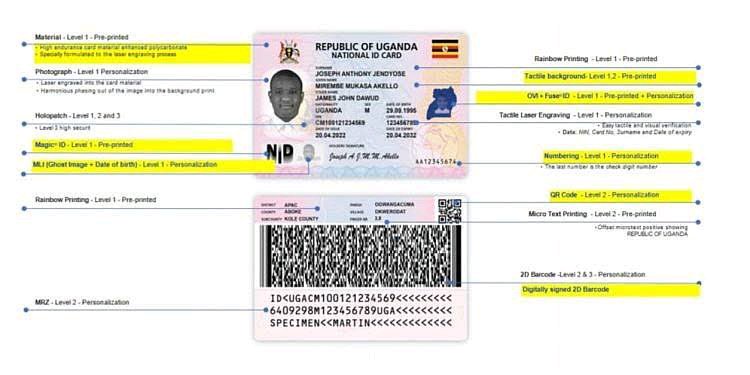
The National Identification and Registration Authority (NIRA), the government agency responsible for registering Ugandans and issuing, renewing and replacing National IDs, is in the middle of one of the country’s biggest identity system upgrades.
The new generation of National IDs, commonly referred to as the Ndaga Muntu, is being issued to replace the older cards and comes with enhanced security and biometric features. The upgraded system is also intended to improve how Ugandans are identified and verified when accessing public and private services.
The nationwide registration, renewal and issuance exercise has been ongoing since May 2025, with NIRA targeting more than 33 million people. By February 2026, the authority said it had migrated more than 28.5 million identity records from the old system into the new national register.
But while thousands of Ugandans have now received their new cards, a new frustration has emerged.
Some people are finding that their new National IDs do not work when they try to access certain services.
This has been particularly noticeable at telecom service centres, where customers seeking SIM registration, replacement or SIM swaps have reported being asked to provide their old National IDs alongside the new ones.
That has left many asking: If NIRA has already given me a new National ID, why am I being asked for the old one?
Why is the new ID not working?
The first thing to understand is that there is a difference between having a physical National ID and having every organisation’s verification system fully integrated with the new NIRA system.
A National ID is not verified simply by looking at the plastic card. Telecom companies, banks and other authorised institutions rely on electronic verification of a person’s identity information.
MTN Uganda, for example, says customers buying, swapping or replacing SIM cards must present an original National ID and that SIM cards are only activated after verification by NIRA.
Therefore, if the organisation’s system cannot successfully verify the details associated with a newly issued card, an employee may be unable to complete the transaction—even when the customer is standing there with a genuine NIRA-issued card.
This is where the transition becomes frustrating for citizens.

Why are people being asked for their old IDs?
NIRA has actually advised citizens to keep their old National IDs.
During the rollout, NIRA Registrar Claire Olama explained that citizens collecting their new cards would be required to present their old cards so officials could confirm their identity. The old card is then returned after being administratively marked to show that it has been replaced.
So, Ugandans should not throw away their old IDs simply because they have received the new ones.
The old card can be particularly useful during this transition because it provides a link to the citizen’s previous identity record.
However, there is an important distinction: being advised to keep the old card does not mean citizens should permanently need two IDs to access services.
The new card is supposed to become the primary physical identification document.
What about the new card’s digital features?
The new cards were designed with more advanced security features, including upgraded biometrics and machine-readable elements.
But introducing those features requires more than printing the cards.
NIRA has had to migrate millions of records, build new digital infrastructure and connect authorised institutions to the new system.
The authority has acknowledged that the transition has faced technical and operational challenges. A government budget report also noted that some of the newly introduced registration kits experienced malfunctions when systems were being updated or synchronised with the central system.
That helps explain why a card can be successfully issued while some downstream services still experience verification problems.
The complaints are occurring against the backdrop of significant pressure on NIRA itself.
In May, NIRA spokesperson Clare Ollama said the authority had only 418 permanent staff, with 297 assigned to core operations, while dealing with millions of cards and citizens across its network.
The authority has also been dealing with a large backlog in card distribution. In February, NIRA said more than five million printed cards were still awaiting collection after the parish-level exercise ended.
The transition, therefore, is not simply a matter of printing a new card. It involves registration, biometric capture, data migration, card production, distribution and, crucially, connecting the new identity system to organisations that depend on NIRA verification.
So what should you do if your new ID is rejected?
If a telecom company or another service provider says it cannot verify your new National ID, do not immediately assume that your card is invalid.
First, ask the service provider to check the verification process and, where applicable, visit an official service centre rather than an ordinary agent.
For telecom services, MTN, for example, directs customers to its service centres for SIM registration, swaps and replacements.
If you still have your old National ID, carry it with you. NIRA has specifically encouraged citizens to safeguard the old cards during the transition, and some service providers may need the information on the old card to help reconcile an existing customer record.
If the problem appears to be with your NIRA record itself, contact NIRA or visit a NIRA office for assistance. NIRA’s official service portal provides information on services including confirmation of information, replacement and correction of National ID details.
Most importantly, do not pay someone to “activate” your National ID. If a genuine NIRA-issued card cannot be verified, the problem should be resolved through the authorised institution and NIRA—not through an informal intermediary.
The bigger problem Uganda needs to solve
The new Ndaga Muntu is ultimately only as useful as the systems that recognise it.
NIRA can successfully print millions of technologically advanced cards, but if a citizen walks into a telecom shop and the system says the identity cannot be verified, the digital transformation has not yet reached the citizen.
For Ugandans, the expectation is straightforward: once NIRA issues a National ID, authorised institutions should be able to recognise it without sending citizens back to find documents they have already replaced.
The current complaints therefore raise a broader question for Uganda’s digital transformation: is the country upgrading the ID card—or upgrading the entire identity ecosystem around it?
For now, citizens receiving the new Ndaga Muntu should keep their old cards safely, use official service centres when verification fails and seek assistance from NIRA where necessary.
The goal of the new system should ultimately be simple: one citizen, one identity, recognised everywhere it is legally required.
📩 Email us: kamunyereports@gmail.com
📲 WhatsApp us: +256705569885
Your story matters—share it with us today! 🗞️🔥