Enough Was Enough: Why Allan Kasujja Could No Longer Work for the BBC
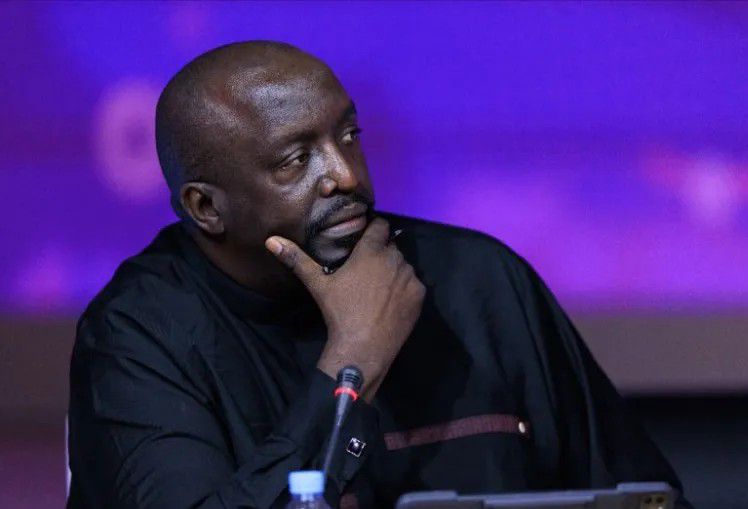
Ugandan journalist Allan Kasujja has offered a candid and deeply personal account of the uphill battles he fought during his 13 years at the BBC, a period he devoted to pushing for a fairer, more accurate, and more representative narrative about Africa.
Speaking on The Long Form Podcast, Kasujja revisited the circumstances that led to his decision to walk away from one of the world’s most influential newsrooms. Ultimately, he said, the BBC was no longer meeting the personal and professional standards he had set for himself—standards grounded in the conviction that Africa deserved better, deeper, and more nuanced coverage.
A Big Fish in an Ocean
When he arrived at the BBC, Kasujja quickly realised that the professional terrain was unlike anything he had experienced during his successful career in Kampala. He describes being struck almost immediately by the sheer concentration of journalistic pedigree around him.

“The first thing you realise when you start working at the BBC is that even if you were a big fish in a pond, here you are going to be a big fish in an ocean,” he noted. The newsroom, he recalled, was filled with people who carried decades of experience—colleagues who had “met presidents and prime ministers and worked in countries you have never heard of.”
Yet this gap in exposure and credentials did not intimidate him. Instead, it sharpened his sense of purpose.
While some of his colleagues had impressive academic achievements, he noticed they often lacked the lived experiences that shaped his worldview. “While these people are educated and have PhDs in certain fields; they don’t know what Kampala is; they’ve never been to Kigali; they have never lived the way I have, they don’t speak the language that I speak. I would rather use that to my advantage.”
This awareness became central to his approach: he may have been outnumbered in credentials, but he was rich in authenticity, context, and cultural intimacy—qualities no textbook could replicate.
Fighting the Anti-African Narrative
Kasujja refused to see himself merely as an employee of the BBC. Instead, he viewed the relationship as mutually beneficial—provided the broadcaster created space for him to challenge outdated or harmful narratives about the continent.

“I believe the BBC was working for me. I was not necessarily working for it,” he explained. Over time, however, he felt that the institution stopped aligning with his personal KPIs—his internal metrics for pushing fair African representation. When those standards were no longer being met, he knew it was time to walk away.
Throughout his tenure, he says he “fought so many wars” within the organisation, striving relentlessly to ensure that “the important questions are asked and that African nations are seen and given a fair shake.” Some of those conflicts were so sensitive that he only hinted at them: he “fought battles that I will never discuss.”
Seeing Through Pressure and Bias
According to Kasujja, bias in global media does not always come in the form of explicit directives. It can emerge subtly, through organised pressure from individuals or groups intent on influencing editorial perspectives.
“You must understand how the world works,” he said. “You will find that if there is a person who doesn’t like President Paul Kagame. He will find some like-minded people and they will make sure that they are visible to the BBC and the BBC will ride on it.”
He noted that this dynamic reflects a broader challenge: the battle for controlling narratives about African politics, leadership, and progress is often waged outside African borders.
Still, he acknowledged the many Africans doing “incredible work” within the BBC—professionals who, like him, were determined to tell the continent’s story with integrity and nuance.
Exhausting African Voices First
For Kasujja, one principle became non-negotiable: Africa’s story must be told primarily by Africans.
While he appreciated the opportunities and exposure his time at the BBC provided, he argued that African narratives should be centred on African voices—people with the lived experience, historical understanding, and cultural intuition to tell stories truthfully and responsibly.
He stressed that the ultimate responsibility for shaping Africa’s identity on the global stage lies not with foreign institutions but with Africans themselves.
📩 Email us: kamunyereports@gmail.com
📲 WhatsApp us: +256705569885
Your story matters—share it with us today! 🗞️🔥