BREAKING!! UPDF Soldiers On Patrol Attacked By Rebels – Many Feared Dead
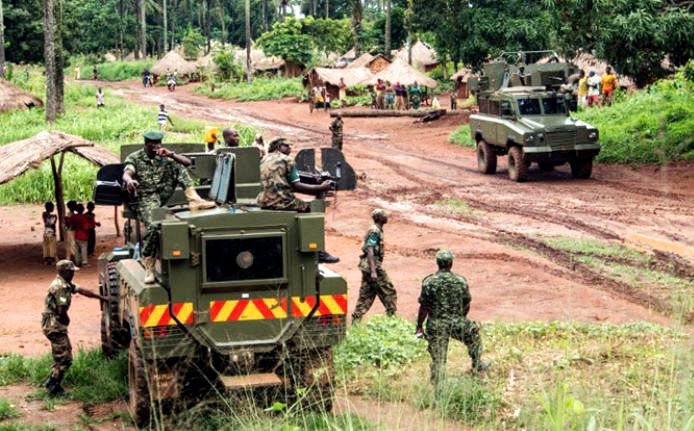
In a dramatic and tense confrontation on Wednesday, December 3, 2025, a routine Ugandan People’s Defence Forces (UPDF) patrol in the volatile Ituri region of eastern Democratic Republic of Congo (DRC) escalated into a fierce firefight after armed militants launched a sudden attack. The ambush, which unfolded at around 11:00 am, involved gunmen believed to be rogue FARDC elements working in cooperation with the ultra-violent CODECO militia—one of the most feared armed groups operating in the region.
According to eyewitness accounts, the UPDF patrol was moving through a strategically sensitive zone long known for CODECO activity. The militants, taking advantage of the dense terrain and familiar hideouts, opened fire in an attempt to overrun the patrol. Although the exact motivation behind the attack remains uncertain, its execution bore hallmarks of CODECO’s typical ambush tactics. The UPDF soldiers responded immediately and decisively, returning fire and neutralizing several of the attackers. Remarkably, no UPDF soldiers were harmed, a testament to both their alertness and professional combat readiness.
This latest attempt on UPDF forces reflects CODECO’s persistent effort to resist joint operations conducted against them. The militia, known for gruesome massacres and widespread atrocities against civilians—particularly women and children—has suffered significant degradation due to sustained offensives by UPDF and FARDC troops. Despite its weakened state, CODECO continues to pose a threat, increasingly relying on rogue FARDC defectors and desperate recruits to bolster its dwindling ranks.
UPDF officials reiterated that collaboration with FARDC remains robust and functional. Through joint patrols, rapid intelligence sharing, and synchronized combat operations, the two forces have successfully disrupted CODECO supply routes, dismantled recruitment structures, and reduced the militia’s capacity to attack rural communities. Both militaries maintain that their mission to stabilize Ituri Province is ongoing and that the partnership remains central to restoring order in the troubled region.
Ituri, a region scarred by years of militia violence, has endured cycles of massacres, forced displacement, and armed raids. CODECO, in particular, has been responsible for some of the province’s darkest chapters. While the UPDF presence has significantly cut the militia’s freedom of movement, attacks such as Wednesday’s ambush highlight the enduring volatility of the area and the constant threat posed by mobile armed groups.

During the firefight, the UPDF’s swift counterattack prevented militants from targeting local civilians or attempting to seize control of critical transit routes. The patrol’s response underscored the high level of discipline and operational preparedness of Uganda’s forces—a key factor in protecting vulnerable communities and ensuring safe passage for humanitarian and commercial activities.
Local sources reveal that CODECO’s operations have increasingly become erratic and desperate. Unable to sustain large-scale assaults, the group has shifted toward surprise attacks designed to instill fear and create the illusion of strength. Their collaboration with rogue FARDC elements appears to be a temporary survival tactic rather than a strategic alliance.
UPDF commanders noted that neutralizing the attackers was part of a broader strategy to safeguard the region. Ongoing patrols aim to secure major routes, protect villages, and forestall any attempts by militants to regroup. The goal remains steady: prevent CODECO from regaining operational ground and maintain the momentum achieved by months of joint military pressure.
Military analysts describe CODECO today as a fragmented and criminalized organization, weakened by sustained pressure yet still capable of sporadic violence. Such attacks, though limited in scale, are often symbolic—designed to project power, test the resolve of security forces, and intimidate local populations.
The UPDF-FARDC alliance has been instrumental in preventing a resurgence of CODECO activities across Ituri. Joint operations, supported by community intelligence and civilian cooperation, have restored a degree of confidence among residents who have long lived in fear of sudden raids. Many villagers report feeling safer traveling along previously dangerous routes, though the memory of past attacks still prompts cautious vigilance.
Officials emphasized that while the latest attack was serious, the quick UPDF response demonstrates the strength of ongoing security measures. The ability to neutralize threats before they escalate is key to maintaining the hard-won stability in regions once infested with armed militias.
UPDF commanders also stressed that their mission extends beyond military confrontation. Ensuring security, they said, opens the door for humanitarian assistance, school operations, and local economic activity to resume. In many previously terrorized communities, the return of normal life is directly tied to the presence of disciplined joint forces.
Observers warn, however, that CODECO’s adaptability cannot be underestimated. The group continues to exploit local grievances, disillusionment within FARDC, and the vulnerability of disenfranchised youth. This reinforces the importance of sustained vigilance, intelligence cooperation, and community engagement.
The UPDF highlighted the strategic importance of maintaining control over key transport corridors and remote villages. Preventing CODECO from reestablishing bases is critical to long-term regional stability. Patrols, rapid-response teams, and continuous surveillance remain central to ensuring that militant remnants do not regroup.
Security experts advise that lasting peace requires ongoing cooperation not only between UPDF and FARDC but also with local communities whose support has proven vital. Without grassroots intelligence and community trust, militants could exploit security gaps and rebuild their influence.
The December 3 ambush reflects the difficult reality of peacekeeping in eastern DRC, where multiple armed groups—including the Allied Democratic Forces (ADF), various Mai-Mai factions, and CODECO—operate in overlapping territories. Nonetheless, the UPDF’s disciplined and effective reaction sends a clear message: attacks on patrols will be met with forceful and immediate response.
Despite periodic clashes, the overall security outlook in Ituri appears more hopeful than in recent years. CODECO’s operational capacity has significantly diminished, and joint UPDF-FARDC deployments have contributed to safer conditions for civilians, traders, and humanitarian agencies.
Officials encouraged residents to continue providing information about suspicious activities, emphasizing that community involvement is crucial to defeating remnants of armed groups. The attack underscores the need for vigilance, but also reaffirms that joint security efforts are having a tangible impact on regional safety.
In the end, the UPDF’s successful defense against CODECO-affiliated militants reinforces their commitment to regional stability. Alongside FARDC forces, Uganda’s troops have shown that they remain capable and determined to ensure that civilians in Ituri are protected and that militant networks are unable to reorganize or threaten peace once again.
📩 Email us: kamunyereports@gmail.com
📲 WhatsApp us: +256705569885
Your story matters—share it with us today! 🗞️🔥