Muhoozi Is The Next Vice President In A Few Days And President Soon – Mwenda Confirms M7 Isn’t Okay
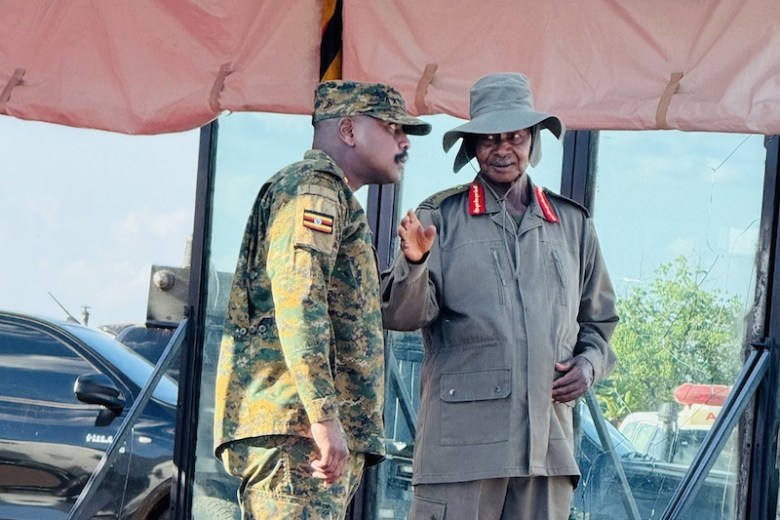
In a striking statement circulating on social media, veteran Ugandan journalist and political commentator Andrew Mwenda has asserted that General Muhoozi Kainerugaba, the Chief of Defence Forces and son of President Yoweri Museveni, will assume the office of Vice President of Uganda next year.
The remarks, shared in a post by Elite News Uganda, further claim that the incumbent Vice President, Jessica Alupo, will be relegated to a subordinate or sidelined position described as “the basement,” while security forces including the military and Local Defence Units will be deployed on the streets to confront anyone opposing Muhoozi through physical force.
The attributed quote reads: “Next year, Muhoozi will be the Vice President of Uganda. Alupo, who is the Vice President now, will be in the basement. We will deploy all the military, LDUs and all forces onto the streets, beating, brutalising and killing anyone who is against Muhoozi.” This language has drawn attention amid an already heightened atmosphere of speculation around political succession in Uganda, where Museveni has held power since 1986 and is currently serving a term that extends until 2031.

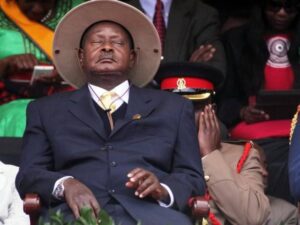
Muhoozi Kainerugaba, approximately 52 years old, serves as the country’s top military officer and chairs the Patriotic League of Uganda (PLU), a political pressure group that has mobilized support for his long-term ambitions. He has publicly signaled interest in the 2031 presidential contest. Recent weeks have seen him issue direct statements on X regarding the Vice Presidency.
On or around November 9, 2026, he posted that diplomacy had gone on long enough and that “whoever is in that office should prepare to hand it over soon.” He also indicated that government under his leadership would operate “on military terms” with no more inefficiency. Additional remarks referenced Alupo by name in connection with dismissal and suggested possible legal consequences linked to other figures.
Alupo, a retired major who has held the vice-presidential post since May 2021 and was reappointed following the January 2026 elections, comes from the Teso region. Muhoozi’s comments have been widely interpreted as applying to her, including suggestions of shifting the office toward other regions or replacing her with a man.
Shortly after the series of posts, his X account was deactivated, according to multiple reports. Sources close to the PLU have told outlets that Muhoozi could be elevated to the vice presidency within months, with Parliament expected to approve any nomination swiftly, positioning him as a clear successor figure.
Mwenda has long been associated with Muhoozi and the PLU. He has described a personal friendship dating back to their secondary school years and has served in advisory or spokesperson roles within Muhoozi’s political initiatives. In recent months he has made bullish predictions about Muhoozi’s electoral prospects, including the claim that the general could secure as much as 99 percent of the vote in 2031.
He has also spoken of parliamentary strategies to alter opposition leadership positions, asserting that PLU could marshal overwhelming majorities to change rules and remove figures such as the current Leader of the Opposition. At the same time, the relationship has not been entirely frictionless; earlier in 2026 Muhoozi publicly directed that Mwenda face internal PLU disciplinary processes over comments criticizing the president’s decision-making, and he ordered Mwenda to stop commenting on Tooro Kingdom succession matters after controversial interventions.
The broader succession conversation has intensified inside the ruling National Resistance Movement. President Museveni reportedly presented a discussion paper to the party’s Central Executive Committee outlining criteria for a future leader and highlighting his son’s military record, patriotism, and other attributes. Some PLU-aligned figures claimed this amounted to an endorsement, while other accounts described pushback from senior party members who questioned Muhoozi’s readiness for civilian politics or expressed concern over his confrontational social-media style.
The NRM has denied reports that the CEC formally rejected a succession proposal, with the secretary general describing such stories as false. Muhoozi himself has instructed PLU members to refrain from public discussion of the paper and to focus instead on gathering endorsements for his eventual presidential run.
Constitutionally, the Vice President is first in the line of succession should the president die or become unable to discharge duties. Elevating Muhoozi to that post while he remains Chief of Defence Forces would further consolidate the family’s control over both the executive and the security apparatus. Observers note that the UPDF has already played a visible role in recent electoral periods, with reports of security forces disrupting opposition activities.
Mwenda has previously described Muhoozi as central to security operations and has defended aspects of those deployments. The explicit reference in the circulating quote to deploying forces for “beating, brutalising and killing” anyone opposed to Muhoozi escalates the rhetoric beyond ordinary political competition and raises questions about the space for dissent.
Uganda’s political landscape remains polarized. The main opposition National Unity Platform, associated with Robert Kyagulanyi (Bobi Wine), has faced significant restrictions, and other veteran opposition figures continue to operate under constraints. Analysts point to the country’s youthful population—average age around 16—as a demographic that has shown limited enthusiasm for dynastic continuity. International coverage has highlighted Muhoozi’s dual role as army chief and aspiring civilian leader, noting both his organizational efforts through PLU and the risks of further militarization of politics.
Whether Mwenda’s prediction reflects concrete plans already under discussion inside State House or simply the confidence of a close associate remains unclear. No official announcement has confirmed a timeline for replacing Alupo or elevating Muhoozi. The president retains the prerogative to nominate a vice president, subject to parliamentary approval. Past patterns in Uganda and elsewhere in the region show that long-serving leaders sometimes use the vice-presidential slot as a staging post for preferred successors while retaining ultimate control.
Muhoozi has at times clarified that he is focused on military duties or personal matters such as faith, and he has not formally launched a presidential campaign, yet the cumulative public statements from him, Mwenda, and PLU structures continue to shape expectations of a managed transition.
The combination of an explicit timeline, the demotion language applied to the sitting vice president, and the threat of street-level force against opponents has added a sharper edge to an already sensitive succession debate. As Uganda moves deeper into Museveni’s seventh term, the interplay between formal party processes, military authority, and public messaging by figures close to the first family will determine how the next phase of leadership unfolds.
For now, the statement attributed to Andrew Mwenda stands as one of the most direct articulations yet of both the expected elevation of Muhoozi and the methods that supporters claim will secure it.
📩 Email us: kamunyereports@gmail.com
📲 WhatsApp us: +256705569885
Your story matters—share it with us today! 🗞️🔥