Planning To Overthrow Museveni? Inside Story On Why Muhoozi Closed NTV And Daily Monitor
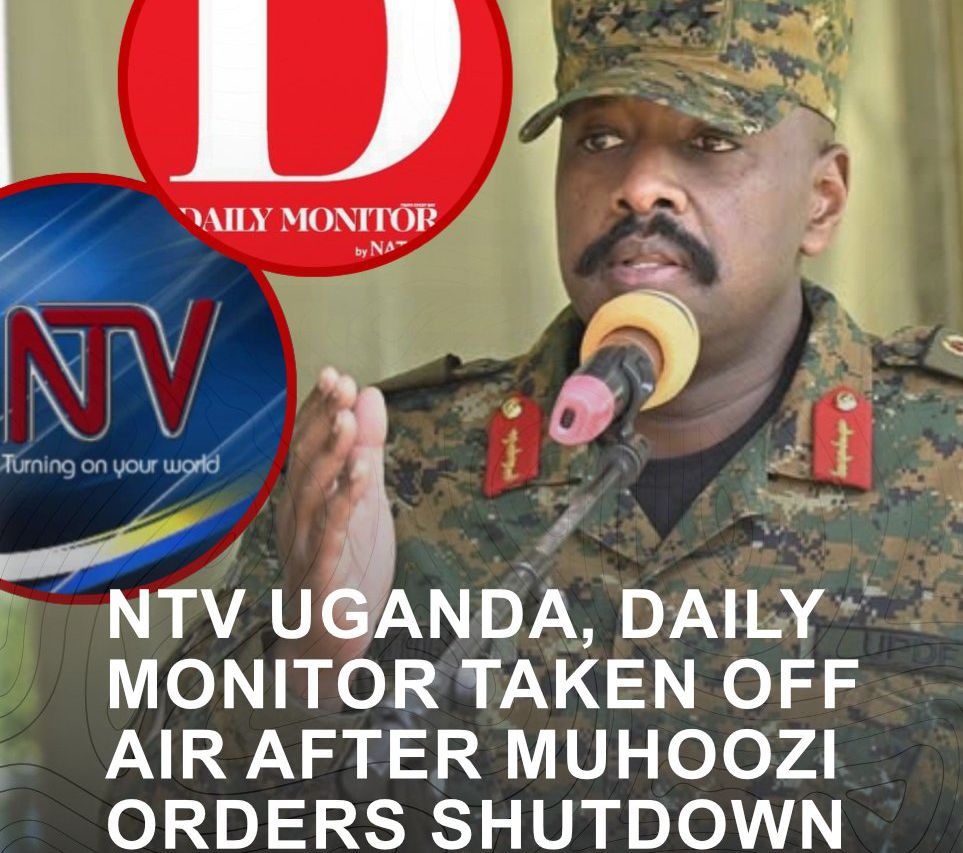
KAMPALA, Uganda — Uganda’s media fraternity was thrown into turmoil on Sunday after Chief of Defence Forces Gen. Muhoozi Kainerugaba ordered the shutdown of NTV Uganda, Spark TV and the Daily Monitor, triggering one of the most dramatic confrontations between the state and independent media in recent years.
Security personnel were deployed to Nation Media Group (NMG) Uganda premises in Namuwongo, Kampala, effectively halting operations at some of the country’s most influential media outlets. Television broadcasts on NTV Uganda and Spark TV went off air, while staff at the Daily Monitor newspaper reportedly found themselves unable to freely access or leave their workplaces as security maintained a presence at the premises.
The shutdown followed a series of posts by Gen. Muhoozi on X, formerly Twitter, in which he announced that NTV and the Daily Monitor would cease operations immediately.
“NTV and Monitor are being shut down from today,” Gen. Muhoozi wrote, later adding that the outlets would not reopen without his permission. In subsequent remarks, he stated that he does not believe in a free press and argued that the media should be guided by “cadres of the revolution.” No formal legal order or detailed justification for the closure had been publicly issued by Sunday evening.
The affected media houses are owned by Nation Media Group, the Nairobi-based regional media conglomerate that has operated in Uganda for decades. Daily Monitor, founded in 1992, has long established itself as one of Uganda’s leading independent newspapers, while NTV Uganda is among the country’s most watched television stations.
For journalists inside the besieged media houses, Sunday was marked by uncertainty, anxiety and disbelief.

Several staff members, speaking anonymously to local and international media, described a tense atmosphere as heavily armed security personnel maintained their presence around the premises. Some employees reportedly remained trapped inside offices for hours as broadcasts were interrupted and newsroom operations ground to a halt.
The shutdown has also left many ordinary Ugandans worried about the future of press freedom in the country.
For newspaper vendors, camera operators, technicians, drivers, editors and freelance contributors who depend on NMG outlets for their livelihoods, the closure carries immediate economic consequences. Hundreds of workers and their families now face uncertainty over their jobs should the shutdown persist.
Outside the Namuwongo offices on Sunday, concern was evident among staff and members of the public who gathered nearby, seeking information about what would happen next.
The development comes amid increasing political tensions and a broader crackdown on government critics ahead of a highly charged political period in Uganda. In recent weeks, Gen. Muhoozi has made several controversial public statements targeting opposition figures, activists and sections of the media. Analysts say the latest action could further deepen concerns about shrinking civic space in the country.
Media rights organisations and press freedom advocates have reacted with alarm.
Regional and international watchdogs warned that shutting down independent media outlets without due legal process undermines constitutional guarantees of freedom of expression and access to information. The East African Press Councils called for de-escalation and urged authorities to respect media independence.
The latest siege has also revived memories of the 2013 closure of Daily Monitor by security agencies after the newspaper published a controversial letter allegedly linked to former coordinator of intelligence services Gen. David Sejusa. That shutdown lasted approximately ten days and drew widespread condemnation from civil society groups and international observers.
As of Sunday night, there had been no official communication from the Uganda Media Council or the Uganda Communications Commission explaining the legal basis for the closure. Similarly, government spokespersons had not publicly outlined whether the shutdown was temporary or indefinite.
For many Ugandans, the images of dark television screens and silent radio frequencies represent more than the closure of media businesses. They symbolise an escalating struggle over who controls information in Uganda and how far state power can extend into independent journalism.
Whether NTV Uganda, Spark TV and the Daily Monitor will resume operations soon remains uncertain. What is clear, however, is that Sunday’s events have reopened an old and deeply contentious debate about press freedom, constitutional rights and the future of independent journalism in Uganda.
📩 Email us: kamunyereports@gmail.com
📲 WhatsApp us: +256705569885
Your story matters—share it with us today! 🗞️🔥