BREAKING: U.S. soldiers Evacuated from American Base Seek Refuge at Entebbe Airport over Iran threat
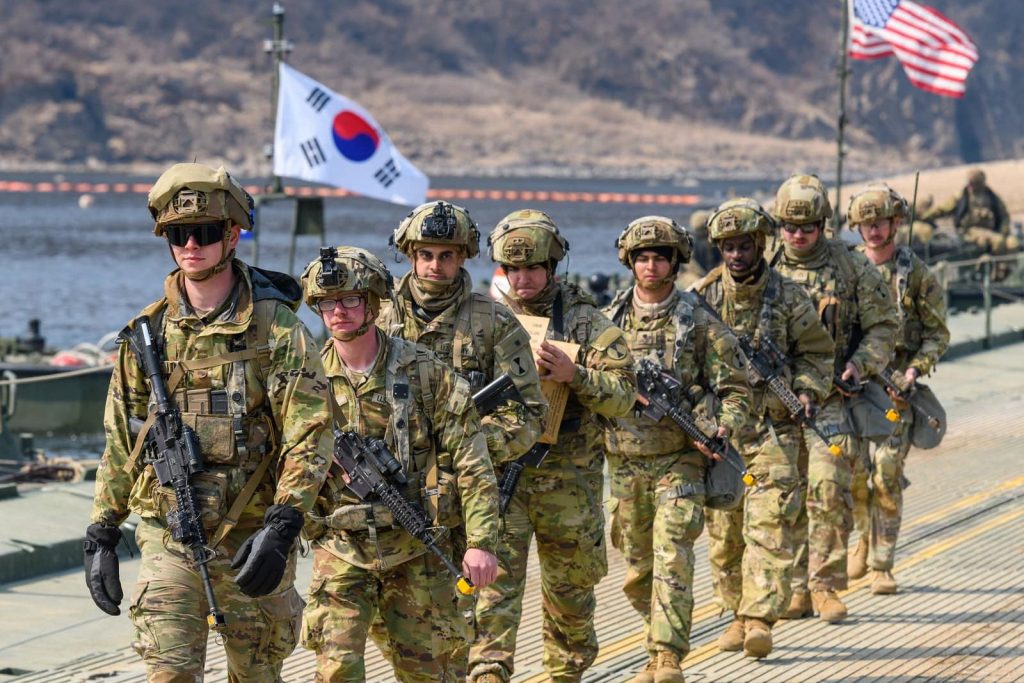
Hundreds of U.S. troops stationed at a major American military installation in the Horn of Africa have been temporarily relocated to Uganda, with many now being hosted at Entebbe International Airport, according to sources familiar with the situation.
The soldiers had been based at Camp Lemonnier, the largest U.S. military base on the African continent and the only permanent American installation in Africa. The base, located near Djibouti–Ambouli International Airport, supports a wide range of operations across the Horn of Africa, the Middle East and the Indian Ocean.
Multiple sources said the troops were evacuated from Djibouti as part of precautionary security measures following escalating tensions between United States and Iran. Fears had grown that Camp Lemonnier could become a potential target if the confrontation widened beyond the Middle East.
According to information obtained by this investigative website, hundreds of soldiers were flown to Uganda and are currently staying inside facilities at Entebbe International Airport. The troops are being accommodated in a mixture of temporary shelters and existing airport buildings while authorities continue to monitor the regional security situation.
Other American personnel stationed at Camp Lemonnier were reportedly relocated to Kenya as part of the same precautionary plan.
Camp Lemonnier plays a central role in U.S. military activity in Africa. The installation hosts roughly 4,000 personnel attached to the Combined Joint Task Force – Horn of Africa and serves as a key platform for counterterrorism operations, intelligence gathering and regional security missions.

The movement of troops comes amid rapidly escalating geopolitical tensions triggered by the assassination of Ali Khamenei on February 28, 2026. The killing occurred during a series of coordinated airstrikes in and around Tehran that targeted senior Iranian officials.
Regional security sources say the operation was carried out by the United States and Israel with intelligence support from the Central Intelligence Agency. The strikes reportedly tracked and targeted the movements of several Iranian leaders.
In the weeks since the assassination, Iran has launched multiple missile attacks against American military installations in the Gulf region. Targets have included bases and facilities in Qatar, Kuwait, the United Arab Emirates and Saudi Arabia.
Iranian officials have warned that further retaliation remains possible and could extend to U.S. facilities beyond the Middle East, prompting heightened security assessments at American installations worldwide.
Against this backdrop, military planners opted to disperse some troops stationed in Djibouti to locations considered relatively secure, including Uganda and Kenya.

A senior official at Entebbe International Airport confirmed that the soldiers had arrived and were being hosted within airport facilities.
“The soldiers were welcomed and are being taken care of here as the situation unfolds,” the official said.
Attempts to obtain official comment from the Uganda People’s Defence Forces were unsuccessful.
Calls placed to Chris Magezi, the acting spokesperson of the UPDF, did not go through.
However, a separate source at the Uganda Civil Aviation Authority, which manages operations at Entebbe International Airport, confirmed that arrangements had been made to house the soldiers inside both permanent airport facilities and temporary structures.
“They are living in very good conditions,” the source said, declining to disclose additional details about the arrangements.
The temporary presence of U.S. soldiers in Uganda underscores the long-standing security cooperation between Kampala and Washington, even as relations between some officials in both countries have faced strains in recent months.
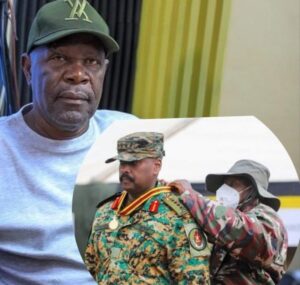
Earlier this year, Jim Risch, chairman of the United States Senate Foreign Relations Committee, warned that Washington could reconsider aspects of its security partnership with Uganda following remarks by Muhoozi Kainerugaba, Uganda’s Chief of Defence Forces.
Gen. Kainerugaba had accused the Embassy of the United States in Kampala of backing opposition leader Robert Kyagulanyi. The Ugandan general later apologized and removed the posts from social media, explaining that the claims had been based on incorrect intelligence.
Meanwhile, Yoweri Museveni has recently weighed in on the confrontation between Iran and the United States, describing both countries as “our friends.” The Ugandan president also noted that Kampala has maintained diplomatic relations with both nations since the National Resistance Movement came to power in 1986.
The conflict has also begun to ripple through the global economy, particularly in energy markets.
One recent incident involved the temporary shutdown of a major gas facility in Saudi Arabia after authorities intercepted Iranian missiles believed to have been heading toward the plant.
Airspace restrictions across parts of the Middle East have also disrupted international aviation, forcing airlines to reroute flights and leaving many travelers stranded in different parts of the world.
Humanitarian concerns are also growing. Reports indicate that the expanding conflict has already resulted in widespread destruction and significant casualties inside Iran. Some estimates suggest that up to 30,000 people may have died since hostilities escalated.

The relocation of American soldiers to Entebbe represents one of the many ripple effects of the crisis, reflecting how rapidly shifting geopolitical tensions can affect military deployments far beyond the immediate battlefield.
This investigative website continues to monitor developments surrounding the U.S. troop presence at Entebbe International Airport and will provide updates as additional details emerge.
📩 Email us: kamunyereports@gmail.com
📲 WhatsApp us: +256705569885
Your story matters—share it with us today! 🗞️🔥