“I Will Win Anita Among And She Goes Back To Farming” Norbert Mao
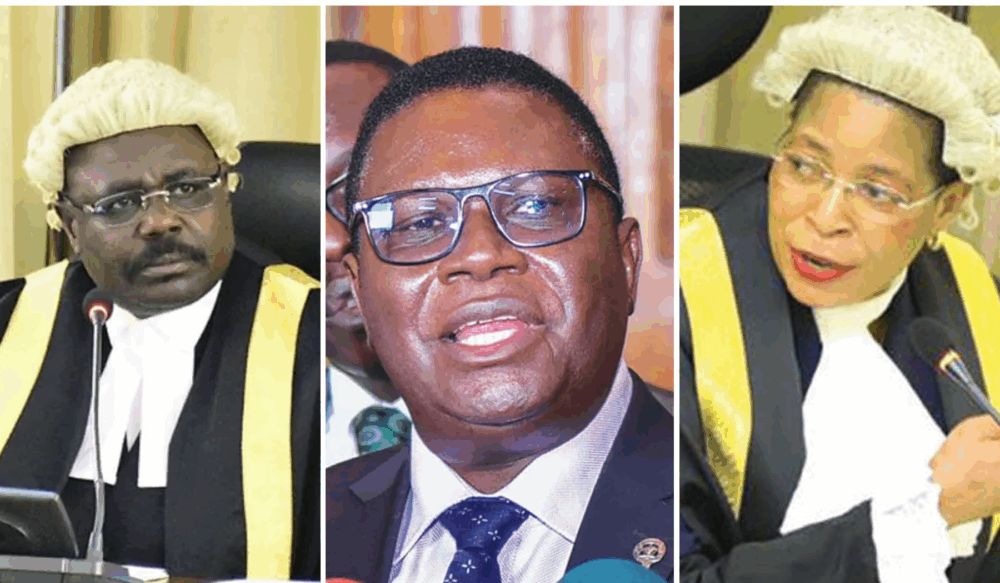
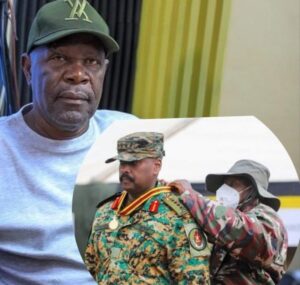
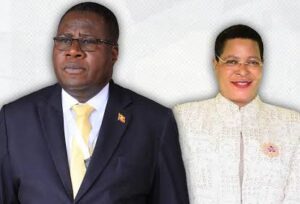
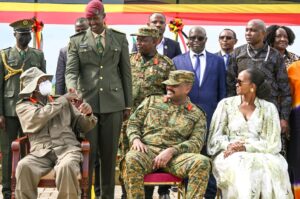
Norbert Mao, a long-time ally of President Yoweri Museveni, has come out swinging—but carefully—against Speaker Anita Among as he positions himself to snatch the Speakership this May. And while he insists there’s no personal beef, no vendetta, no grudge fueling his bid, the political undertones are impossible to ignore.
At a fiery Tuesday press conference in Kampala, Mao repeatedly declared that his ambition is about “balancing the boat.” But he wasn’t talking about watercraft—he was talking about power. In his view, Uganda’s top political offices have been distributed in a way that leaves key regions sidelined while others feast comfortably at the national table. His mission, he says, is to rebalance that equation and redistribute influence more equitably across the country’s major geographical blocs.
When pressed by reporters from Mulengera News on whether he had personally informed Among about his decision to challenge her—something he had previously pledged to do—Mao admitted he hadn’t. However, he was quick to stress that there is no bad blood between them. In fact, he went further, revealing that Among had once stood by him in remarkably generous ways during what he described as his most trying political days.
Though Mao avoided going into specifics, insiders say Among was among those who financially supported him when he was still politically stranded in the Democratic Party, long before he rose to become Minister of Justice and Constitutional Affairs. Unverified accounts even suggest she collaborated with lawyer Edwin Karugire in efforts that helped engineer Mao’s eventual elevation to Cabinet.
Given that history, many observers were stunned that Mao would even contemplate unseating her. To critics, it looks dangerously close to political ingratitude—like turning against the very hand that once fed you.

And there’s more at stake than gratitude. Within Mao’s inner circle, there is quiet anxiety. Whispers suggest that individuals aligned with Among may be in possession of sensitive audio recordings that, if ever made public, could deal Mao a crushing political blow. Whether those fears are grounded in fact or paranoia, they have clearly influenced Mao’s strategy.
That explains why, despite launching a direct challenge, Mao has avoided descending into outright personal attacks. Analysts believe he knows better than to provoke a war he may not be able to control. If he crosses certain lines, retaliation from the Speaker’s camp could be swift and devastating—leaving him politically bruised and regretting his bold gamble.
Still, Mao couldn’t resist a subtle jab. While acknowledging that he has personally benefited from Among’s kindness, he hinted that Parliament deserves leadership that commands loyalty and respect without allegedly functioning like a “cashier.” The message was sharp, even if diplomatically delivered: authority should not be bought—it should be earned.
He also claimed he wants to win the Speakership without engaging in aggressive campaigning, arguing that Parliament’s own rules frown upon such conduct. According to him, he has even discouraged senior figures within the ruling NRM and government from publicly endorsing him through video messages. Whether that restraint is strategic humility or calculated optics is open to interpretation.
Mao framed his candidacy as both a moral obligation and a tribute. He invoked the memory of his late friend Jacob Oulanyah, arguing that Oulanyah would have wanted a more effectively led legislature. He declared that he is stepping forward to set a higher benchmark for future Speakers—and bluntly suggested that the 12th Parliament requires leadership far more capable than what is currently in place.
In one of his more provocative remarks, Mao described Among’s rise to the Speakership as an “accident” rather than the result of deliberate, strategic planning. That assertion alone signals that this race will not be a gentle affair.

He argued that the coming five years will demand political sophistication, particularly as Uganda inches toward an inevitable transition. Referring to what he called the “biological limitations” that will eventually constrain President Museveni, Mao implied that the next Parliament must be led by someone intellectually and politically prepared to navigate turbulent waters.
For Mao, this is not ambition—it’s necessity. He claims he had no choice but to offer himself for the position of Uganda’s third-most powerful office holder.
Meanwhile, Among has yet to respond—not only to Mao but also to other challengers like Persis Namuganza and Lydia Wanyoto. Each contender brings a distinct brand: Namuganza markets herself as fearless and unapologetically bold, while Wanyoto leans heavily on her eloquence and intellectual polish.
Mao also injected regional arithmetic into the contest. He argued that the Teso sub-region already boasts the Vice President, Deputy CDF, Auditor General, and Governor of the Bank of Uganda. Allowing it to retain the Speakership, he suggested, would deepen perceptions of imbalance while areas like Buganda and the Greater North remain politically sidelined.
He openly stated that with Alfonse Owiny-Dollo no longer serving as Chief Justice, it would be strategically prudent for the North to reclaim influence through the Speakership. And with both the President and the new Chief Justice hailing from the West, Mao argued it is reasonable for some to conclude that the region has already had more than its fair share.

Yet despite acknowledging that the incumbent Speaker is rumored to command enormous financial resources, Mao projected defiance. He insisted he is not intimidated by wealth or political machinery. His campaign, he said, is driven by conviction—not cash.
In a dramatic flourish, Mao likened himself to the Biblical David facing Goliath. The implication was clear: he may appear outmatched in resources, but faith and resolve can topple giants. When a Spark TV journalist questioned whether he was prepared to counter Among’s alleged deep pockets and tough political style, Mao shot back with a rhetorical punch:
“I don’t have to become Goliath in order to defeat Goliath.”
It was a bold declaration. Now, Uganda waits to see whether conviction alone can overcome power, money, and entrenched influence—or whether this daring challenge will collapse under the weight of political reality.
📩 Email us: kamunyereports@gmail.com
📲 WhatsApp us: +256705569885
Your story matters—share it with us today! 🗞️🔥