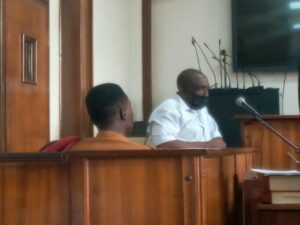
Please Help Me They Will Kill Me If I am Deported from US to Uganda – Pastor Steven Tendo
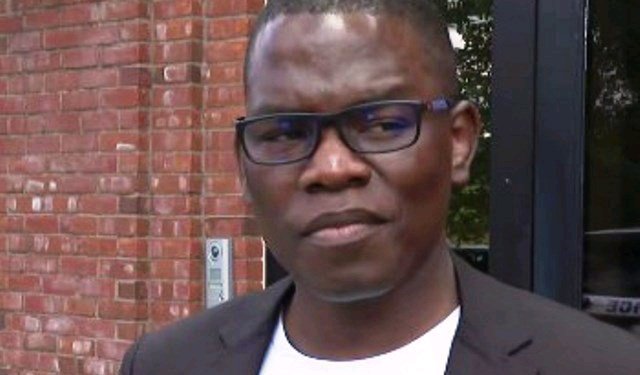
Pastor Steven Tendo, a Ugandan asylum seeker currently living in Vermont, United States, says he is living under the constant shadow of fear—fear that he could soon be deported back to Uganda, a country where he believes returning would amount to a death sentence.
Tendo has lived in the United States since 2018, building a quiet life centered on faith, service, and caregiving. That life was abruptly disrupted when US Immigration and Customs Enforcement (ICE) agents arrested him outside his workplace in Shelburne, Vermont. He is now being detained at Strafford County Corrections Facility in Dover, New Hampshire, as he faces the possibility of imminent deportation.
At the heart of Tendo’s fear are the traumatic experiences he says he endured in Uganda due to his human rights activism. According to his account, he was subjected to brutal forms of torture by Ugandan security forces. Among the most harrowing allegations are that he was reportedly forced into a pit with a live python and subjected to gen!t@l mut!l@tion. Tendo also claims that two fingers on his left hand were allegedly cut off by security officers using wire cutters. These alleged acts, he says, were intended to punish and silence him for speaking out against human rights abuses.
Tendo has detailed these experiences in sworn affidavits submitted to US courts, recounting the torture and persecution he claims to have suffered. In these affidavits, he again reportedly describes being forced into a pit with a live python, subjected to gen!t@l mut!l@tion, and having two fingers allegedly cut off by security officers. These allegations, which Ugandan security agencies have yet to comment on, form the backbone of his asylum claim. His lawyer, Chris Worth, says these sworn statements are critical evidence of the grave danger Tendo would face if deported back to Uganda.

According to Worth, Tendo’s asylum application was initially denied in 2019. Despite filing multiple appeals since then, Worth says his client now faces the very real possibility of being forcibly returned to the country he fled. Worth argues that deporting Tendo would place him directly in harm’s way, given the documented risks he has outlined and the broader human rights situation in Uganda.
Tendo’s detention has drawn attention and concern from Vermont’s congressional delegation. Senator Bernie Sanders has publicly expressed alarm over the case, questioning why a man with such a documented history of alleged torture remains in detention and urging authorities to prioritize his safety. Sanders has called for due process and for immigration officials to carefully consider the risks Tendo claims he would face if removed from the United States.
Beyond the legal battle, Tendo’s supporters point to the life he has built in the US as further evidence that he deserves protection. He has worked as a licensed nursing assistant at the University of Vermont Medical Center, where colleagues and supervisors have praised his compassion, professionalism, and dedication to patient care. Those who have worked alongside him describe him as a valued and trusted member of the healthcare team who has positively impacted countless patients during his time at the hospital.
Tendo’s case unfolds within the wider context of aggressive immigration enforcement policies implemented under the Trump administration. Human rights organizations, including Amnesty International, have strongly criticized these policies. Amnesty International has condemned ICE’s decision to pursue Tendo’s deportation, describing it as “particularly cruel” given his alleged history of torture and persecution in Uganda.
Supporters argue that Tendo’s situation is not unique. His case is one of many involving asylum seekers who claim to have valid grounds for protection but nonetheless find themselves detained and facing removal. The detention and potential deportation of Tendo have sparked outrage among activists and lawmakers alike, with Vermont’s congressional delegation, including Senator Sanders, calling for his release and urging authorities to allow him full and fair due process.
The Trump administration’s deportation policies have been widely described as aggressive, driven largely by a stated commitment to strict enforcement of immigration laws and border security. The administration has argued that tougher measures are necessary to deter undocumented immigration and asylum claims, citing national security and public safety concerns. However, critics say this approach has led to the detention and deportation of individuals who, like Tendo, are believed by advocates such as Worth and Sanders to have legitimate asylum claims.

Several policies have contributed to this environment. The Migrant “Protection” Protocols (MPP), commonly known as “Remain in Mexico,” require asylum seekers to wait outside the United States while their immigration cases are processed. In addition, stricter asylum rules introduced during the administration have narrowed the criteria for protection, making it more difficult for applicants to qualify. Increased funding for immigration enforcement has also enabled more aggressive tactics and expanded detention capacity.
Critics argue that these policies prioritize enforcement over humanitarian obligations, often at the expense of due process and human rights. They say this has resulted in unnecessary suffering, prolonged detention, family separations, and, in some cases, the return of individuals to countries where they face serious harm.
Tendo’s supporters further argue that his case highlights the broader human rights crisis in Uganda. Under President Yoweri Museveni, who has been in power since 1986, the country has faced persistent allegations of repression, including the targeting of opposition politicians, activists, and civil society groups. Human rights organizations have documented claims of torture, arbitrary arrests, and the shrinking of democratic space. Supporters say Tendo’s alleged persecution reflects this wider pattern of abuse and underscores why his fear of returning to Uganda is grounded in what they describe as a very real and ongoing risk.
As Tendo remains behind bars in New Hampshire, his future hangs in the balance. For his advocates, the question is not merely one of immigration law, but of moral responsibility—whether the United States will protect a man who says he fled unimaginable brutality, or send him back to face the dangers he believes nearly cost him his life.
📩 Email us: kamunyereports@gmail.com
📲 WhatsApp us: +256705569885
Your story matters—share it with us today! 🗞️🔥