A Legal Abyss Awaits: Uganda Braces for Arrival of Convicts Deported by the US
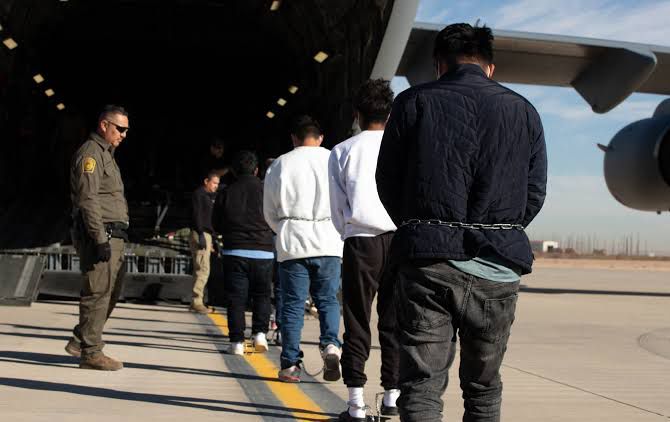
The Trump administration has launched what insiders describe as an unprecedented and “vicious” immigration crackdown, a sweeping operation that now places three convicted Ugandan nationals at the center of a rapidly escalating deportation storm. Labeled by officials as the “Worst of the Worst,” the trio represents only a fraction of what sources say is a looming mass removal of more than 10,000 foreign nationals across the United States.
This week, the US Department of Homeland Security (DHS) released a public database that named the three Ugandans—each convicted of violent crimes or major felonies—setting off a wave of uncertainty and diplomatic concern. According to the list, the deportees include Mukiibi Kiwana, convicted of aggravated assault in California; Adrian Kawuba, convicted of cyber fraud in Pennsylvania; and Winner Mangeni, who was found guilty in Massachusetts of assault, confinement, and flight to avoid prosecution.
In Kampala, government officials scrambled for answers. Foreign Affairs Permanent Secretary Vincent Bagiire Waiswa confirmed Thursday that Uganda’s Embassy in Washington had formally received notice of the impending removals. Yet the confirmation only deepened the sense of ambiguity surrounding the fate of the deportees once they land back home.
A complex legal puzzle now hangs over the case: Will the three men walk free upon arrival, or will they be taken directly into Ugandan custody to continue serving their American sentences? The answer, it seems, is entangled in a network of international legal agreements and diplomatic arrangements.
“Convicts often continue serving their sentences after deportation, especially through international prisoner transfer agreements,” Bagiire admitted. “But it depends heavily on treaties between the US and Uganda.”

Adding to the uncertainty, Uganda Prisons spokesperson Frank Baine emphasized that even existing arrangements do not guarantee that a transferred sentence will automatically be enforced. The result is a murky situation in which the legal and political implications of returning convicted criminals remain unresolved.
Meanwhile, US officials have made no attempt to soften their message. President Trump’s expanding deportation campaign—one of the most dramatic in recent American history—now targets thousands of Africans, including the three Ugandans. The warning from Washington has been blunt and uncompromising: “They will be hunted down and deported.”
Africa Caught in the Dragnet
The scale of the operation has stunned many across East Africa. What began as an internal security response to a November shooting involving an Afghan national accused of attacking two US soldiers has now widened into a cross-continental purge. The DHS list reads like an atlas of African nations, with entire communities bracing for the return of their citizens.
Among those slated for removal are 15 Kenyans, 12 Congolese, 5 Burundians, 4 South Sudanese, 2 Tanzanians, and 1 Rwandan. The three Ugandans join this expanding list, along with an additional 12 Somalis, raising concerns about diplomatic strain and reintegration challenges.
DHS Secretary Kristi Noem, speaking publicly about the mass operation, described it as a direct fulfillment of President Trump’s most hardline immigration pledges. “This serves as a strong warning to criminal illegal aliens to not come to America,” Noem thundered. “If they do, they will be hunted down and deported.”
Her remarks reflect an administration determined to leave no ambiguity in its approach. Earlier this year, Noem unveiled a multimillion-dollar international campaign aimed at warning undocumented migrants to leave the US voluntarily or face permanent removal with no possibility of return. The initiative, controversial both domestically and abroad, underscores the administration’s escalating posture toward immigration enforcement.
The crisis deepened further in November when the US Citizenship and Immigration Services announced a halt to all asylum decisions. Director Joseph Edlow defended the suspension, insisting it would remain in place “until we can ensure that every alien is vetted and screened to the maximum degree possible.”
For many observers, the combination of halted asylum processing, mass deportations, and increasingly militant rhetoric marks a new chapter in America’s contentious immigration debate—one with far-reaching implications for thousands of families, dozens of nations, and the fragile diplomatic ties that bind them.
📩 Email us: kamunyereports@gmail.com
📲 WhatsApp us: +256705569885
Your story matters—share it with us today! 🗞️🔥