Survivors of the Purge: How Two Pro Mpuuga MPs Escaped NUP’s Political Axe Even After Openly Disrespecting Bobi Wine
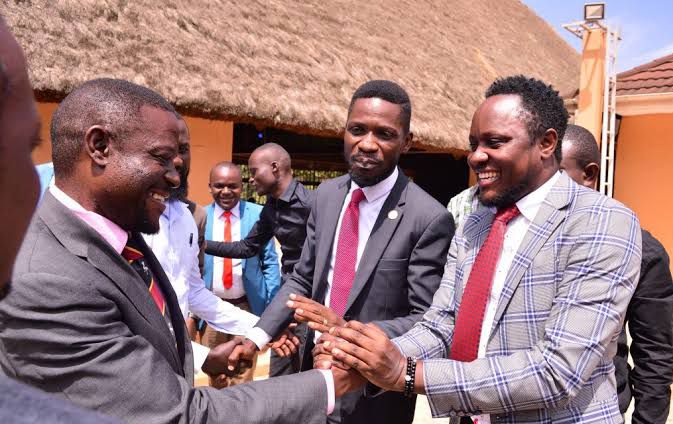
As the National Unity Platform (NUP) undergoes a sweeping reshuffle of its parliamentary candidates ahead of the 2026 general elections, two notable MPs have emerged relatively unscathed—surviving what insiders have come to describe as Bobi Wine’s sharp political sword.
Hillary Kiyaga, popularly known as Dr. Hilderman, the MP for Mawokota North, and Veronica Nanyondo, MP for Bukomansimbi District, have both successfully reclaimed their NUP tickets. This comes despite their previous affiliations with internal party rivalries, particularly during one of NUP’s most controversial chapters: the UGX 500 million “service award” saga.
Both legislators were known to have sided with the party’s then-deputy president, Mathias Mpuuga, during the heated fallout over the service award—a scandal that drew a clear line between loyalists and dissenters within the party’s top ranks. That very line became the basis for a quiet yet decisive purge, where MPs like Medard Sseggona, Joyce Bagala, and several others found themselves stripped of their NUP endorsement.
Yet, while others were ousted, Kiyaga and Nanyondo managed to navigate the treacherous waters of the party’s internal vetting process with remarkable political dexterity.
So, how did they do it?
Strategy, Optics, and Survival
According to well-placed sources within the party, the difference boiled down to three critical factors: strategy, optics, and perceived value on the ground.
Kiyaga, for instance, reportedly made several behind-the-scenes overtures to the party leadership, including what insiders describe as “repeated apologies” for his previous alignment.
Combined with his enduring grassroots popularity in Mawokota North, he emerged not just as a forgiven figure—but a politically useful one. His popularity is particularly important given the likelihood of facing off again with NRM’s Amelia Kyambadde, a seasoned politician with strong ties to the ruling establishment.
One party insider described Kiyaga as “the ragamuffin legislator who knows how to read the room,” emphasizing that, in politics, survival sometimes hinges more on humility and timing than on loyalty alone.
Nanyondo’s case was more subtle, but equally effective. Her careful maneuvering during the post-Mpuuga fallout earned her quiet praise within the party. She kept a low profile, distanced herself from further controversies, and—critically—faced no serious competition within Bukomansimbi district. That vacuum of viable alternatives made her a convenient, even necessary, choice for the party’s electoral strategy.
“Her reinstatement was helped by the absence of stronger contenders and her non-confrontational posture,” said a source close to NUP’s Electoral Management Committee (EMC). “It became clear that she was not a threat to party unity—and she still has support on the ground.”
The EMC’s Calculated Call
According to individuals familiar with the inner workings of the EMC, the party evaluated multiple criteria before deciding which MPs to retain or drop. These included popularity in respective constituencies, past loyalty, current public perception, and the possibility of political rehabilitation.
“Kiyaga and Nanyondo stood out as politically recoverable,” a source within the EMC stated bluntly to Kamunye.

In contrast, those like Sseggona and Bagala, despite their prominence, were deemed too closely tied to internal dissent and less willing to backtrack or reconcile.
A Lesson in Political Optics
Their survival offers a revealing glimpse into the shifting internal politics of NUP under Bobi Wine’s leadership. It suggests a balancing act: one that seeks to cleanse the party of perceived traitors while retaining members who, though once controversial, remain electorally valuable and symbolically manageable.
Analysts see this as a clear message from Kavule: in NUP, political careers can still be salvaged—but only with a combination of public popularity, visible humility, and strategic repentance.
More broadly, the episode serves as a cautionary tale for other MPs navigating Uganda’s highly fluid opposition politics. As one political commentator noted, “Loyalty alone won’t save you—but optics, ground support, and the ability to say ‘sorry’ might.”
In the end, Kiyaga and Nanyondo’s political resilience may not just be about surviving a purge—it might be the new blueprint for how to remain relevant, even in the face of internal party storms.
📩 Email us: kamunyereports@gmail.com
📲 WhatsApp us: +256705569885
Your story matters—share it with us today! 🗞️🔥