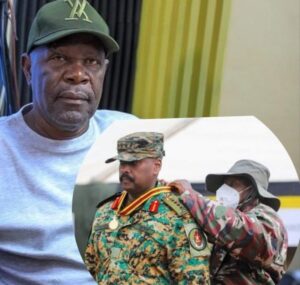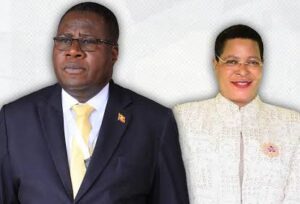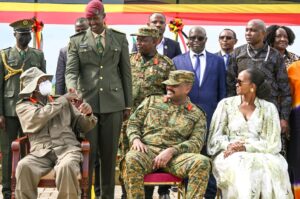
Gen Salim Saleh: The Silent Power Behind Uganda’s Political Chessboard
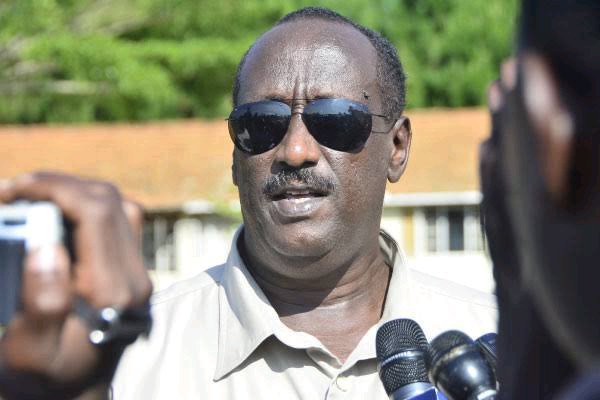
More than just President Museveni’s brother, Gen Salim Saleh is a formidable figure—a quiet powerhouse shaping Uganda’s political landscape and ensuring the longevity of the ruling NRM regime.
Saleh has mastered the art of political triage, often stepping in to lighten the emotional and operational burdens that come with his brother’s long rule. One of his most effective strategies? Keeping the opposition movement fragmented and distracted.
Taming TikTok and Neutralizing Noise
It is through Gen Saleh’s subtle interventions that Museveni has managed to keep much of the youthful online opposition preoccupied. A good chunk of these were initially aligned with Bobi Wine’s NUP. But today, many are busy doing government PR, paid handsomely to amplify pro-regime messages online.
This network of TikTokers and bloggers is coordinated by a veteran musician (names withheld), who frequently travels to Gulu to collect facilitation packages ahead of major state events.
For instance, during the recent NRM National Conference at Kololo, upwards of UGX 350 million was disbursed to these digital influencers. These funds are meant to fuel online publicity campaigns, keeping TikTok timelines buzzing with government narratives.

Each influencer can bag UGX 5–10 million depending on their reach and relevance. “They get the money in advance,” a source said, “and return home very happy, with less incentive to be angry and abusive at government.” Many have since distanced themselves from Bobi Wine and NUP messaging.
From Critics to Collaborators
Saleh’s strategy is rooted in diversion and inclusion. By absorbing vocal critics into his orbit and offering generous facilitation, he’s turned many former firebrands into loyal insiders.
He’s done so with the backing of government MDAs, where accounting officers obey his directives without question. As a result, bloggers and TikTokers now dominate publicity budgets, leaving traditional media houses increasingly sidelined.
This has allowed digital influencers to attack even senior government officials, especially those who decline requests for financial “support” as recommended from Gulu. And if such officials complain, they’re portrayed as enemies of anti-corruption.
One reported: “The attack will be presented as a genuine contribution to the fight against corruption. The aggrieved official may complain to UCC, but the bloggers threaten to escalate it to Gen SS in Gulu.”
Even UCC’s ED Nyombi Thembo is cautious, knowing these influencers could turn on him, portraying him as siding with “corrupt” officials. “In the end,” sources say, “the regulator does nothing, because Gen SS can determine who becomes the next CEO at UCC.”
TikTok Justice and Silenced Critics
Many respected public officials and politicians, after being publicly attacked by these influencers, find no recourse except filing slow-moving civil defamation suits. It’s a frustrating cycle, but one that ensures the regime’s survival in the social media era.

By empowering these online warriors, Museveni has a digital army ready to counter Bobi Wine’s online activism, both domestically and abroad.
Beyond Bloggers: Saleh’s Bigger Game
Yet TikTokers are just one piece of the puzzle. Saleh has been instrumental in neutralizing political elites who once fervently criticized the regime.
Take David Pulkol, once a fiery FDC founder and Go Forward stalwart. Today, he rarely speaks politics on air. He now works as Gen Saleh’s Chief of Staff and Executive PA, practically living in Gulu. “He was the adult in the room,” a diplomat said, recalling how Pulkol diffused a tense exchange involving Andrew Mwenda and EU ambassadors.
Pulkol, now heavily facilitated under a classified budget, is reportedly paid via the Office of the President through Hajji Yunnus Kakande. He is guarded, chauffeured, and discreet—a far cry from his days of anti-regime firebrand activism.
Rehabilitating the Opposition: A Masterclass
Counsel Saverino Twinobusingye, once an eloquent critic and Go Forward heavyweight, now serves as Gen Saleh’s Principal Legal Advisor. Back in 2016, Saverino and lawyer Fred Muwema would storm EC offices, denouncing Badru Kiggundu and decrying election irregularities.
Today, he enjoys high-level representation roles, heading projects like the Karamoja University initiative and speaking publicly on behalf of Gen SS. “Whatever fault one might find in him,” a close observer noted, “Saverino is a powerful speaker, clear and convincing.” Like Pulkol, he is well-compensated under OWC’s expansive umbrella.
A Web of Co-option
Former FDC Deputy President Prof Ogenga Latigo has also joined the fold. He sits on Gen Saleh’s Council of Elders on Cooperatives, offering guidance on reviving the Cooperative Bank and other related institutions.
“It’s not just about facilitation,” one insider said. “It’s inclusion. It makes critics feel heard, which defuses potential dissent.”
Even Godbar Tumushabe, an eminent policy voice, now consults for Gen Saleh. “Not long ago, he acquired over 600 acres in Katosi,” a source revealed, adding, “and now he gets facilitated through Gen SS projects.”
Then there’s Maj Rubaramira Ruranga, once tortured during an FDC protest in 2005. Today, he’s a Director at the OWC Secretariat, earning an 8-digit salary, complete with Tundra vehicle, bodyguards, and office staff.
The Returnees: From Rebels to Loyalists
Henry Banyenzaki, formerly a rebel MP, now enjoys a quiet, well-paid role within OWC. Saleh also played a role in recruiting prominent former critics like Beti Kamya, Nakiwala Kiyingi, and Ramathan Goobi, the now-PSST who once fiercely criticized regime policies while lecturing at MUBS.
“Goobi used to preach economics of common sense,” said a colleague. “But Saleh drew him into debates that led to interventions like PDM.”
The General even managed to reintegrate Gen David Sejusa, once exiled over Museveni’s refusal to end the Kony war. He also absorbed formerly disillusioned Makerere University scholars under Prof Elia Hisali’s coordination.
Makerere’s Quiet Transformation
Makerere University, once a hub for opposition sentiment, has undergone a transformation—partly due to Gen Saleh’s engagement, partly due to VC Barnabas Nawangwe’s tough leadership, and infrastructural development under Minister Janet Museveni.
The result? A once-radical campus is now largely muted, its fiercest critics drawn into government-funded projects, commissions, and quiet retirement.
Conclusion: The Invisible Hand
From managing digital influencers to silencing critics with generous facilitation, Gen Saleh has become the regime’s quiet architect of political stability. His approach—blend appeasement with opportunity—has ensured that Uganda’s most vocal detractors either go silent or join the fold.
And as Uganda’s political future continues to unfold, one thing remains clear: Gen Salim Saleh is the shadow strategist ensuring that the center holds—for now.
📩 Email us: kamunyereports@gmail.com
📲 WhatsApp us: +256705569885
Your story matters—share it with us today! 🗞️🔥