
How governments worldwide are regulating big tech companies like Google, Apple, and Amazon
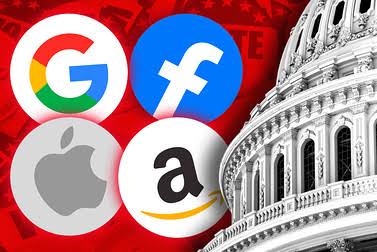
Governments around the world are increasingly stepping in to regulate the immense power and influence of big tech companies like Google, Apple, and Amazon.
Once seen as the champions of innovation and economic growth, these tech giants are now being scrutinized for their market dominance, data practices, and impact on competition, privacy, and democracy itself.
In the United States, lawmakers and regulatory bodies are pushing back against monopolistic behavior. The Department of Justice and the Federal Trade Commission have launched multiple antitrust lawsuits targeting Google’s dominance in online search and advertising, while Apple faces legal challenges over its control of the App Store and the fees it imposes on developers. Amazon, too, is under the microscope for allegedly using third-party seller data to give its own products an unfair advantage.
Across the Atlantic, the European Union has taken an even more aggressive stance. The EU’s Digital Markets Act (DMA), which came into force in 2023, imposes strict rules on so-called “gatekeepers”—tech firms with enormous influence over the digital market. Under this legislation, companies like Apple and Google are required to open up their platforms to competitors, ensure fair ranking in search results, and give users more control over their data. Violations could lead to hefty fines amounting to up to 10% of global annual turnover.
Meanwhile, other countries are forging their own regulatory paths. India has launched investigations into Google’s Android dominance and is considering measures to curb app store monopolies. China, though taking a different approach, has also tightened its grip on tech firms like Alibaba and Tencent, emphasizing state oversight and data localization. Australia, on the other hand, made headlines with its News Media Bargaining Code, forcing platforms like Facebook and Google to pay for news content they display.
The global push to regulate big tech reflects a broader shift in how governments view the industry—not just as a source of innovation and economic growth, but as powerful entities that can shape markets, societies, and political outcomes. As public concern grows over issues like surveillance capitalism, misinformation, and digital monopolies, regulation is no longer a question of if, but how far and how fast it will go. The coming years will be crucial in shaping a digital ecosystem that balances innovation with accountability and fairness.
📩 Email us: kamunyereports@gmail.com
📲 WhatsApp us: +256705569885
Your story matters—share it with us today! 🗞️🔥