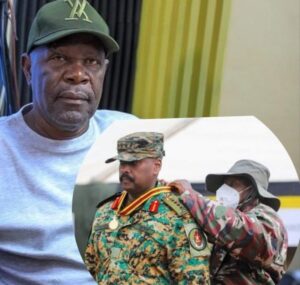
Unbelievable!! 87 Year Old MP Moses Ali Forgets His Name And Country During Swearing In – Taken To Parliament Basement For Private Swearing In Ceremony
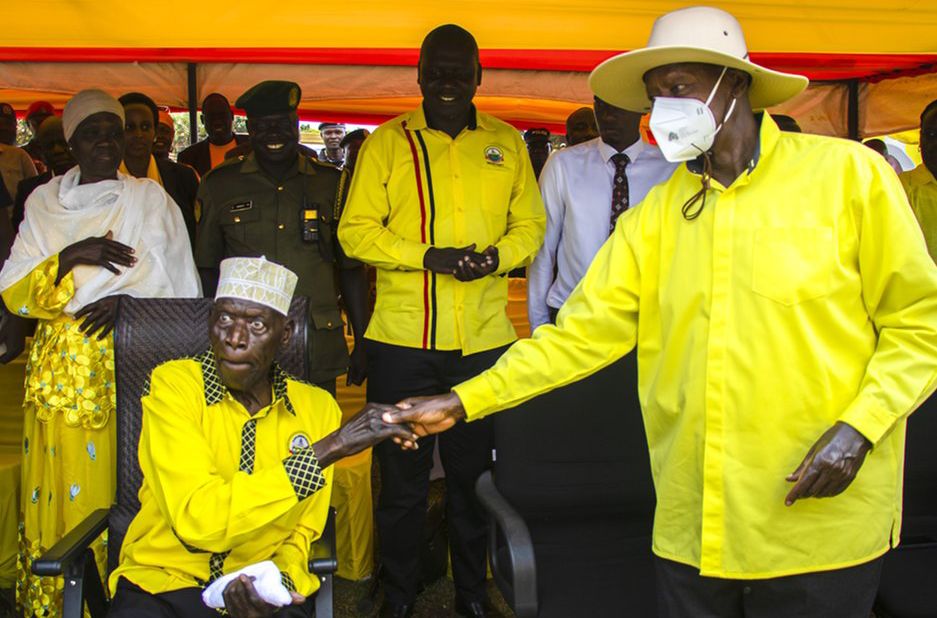
Veteran Ugandan politician and senior government figure Moses Ali has officially taken the oath of office to represent Adjumani West County in Uganda’s 12th Parliament, extending a political career that has spanned some of the country’s most turbulent and transformative decades.
At 87 years old, Ali now enters another parliamentary term as one of the oldest serving legislators in Uganda’s modern political history, in a Parliament increasingly populated by a younger generation of lawmakers, many of whom were born long after the National Resistance Movement captured power in 1986.
His swearing-in ceremony, however, unfolded far differently from the high-profile events witnessed for most newly elected Members of Parliament.
While dozens of legislators took their oaths publicly at Parliament’s main entrance amid cameras, supporters, and political excitement, Ali’s ceremony was conducted quietly and away from the public eye.
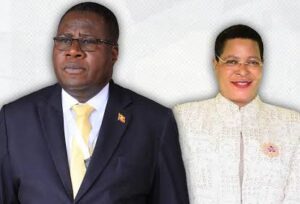
The oath was reportedly administered during a low-key session witnessed by Clerk to Parliament Adolf Mwesige and one of the female clerks at Parliament.

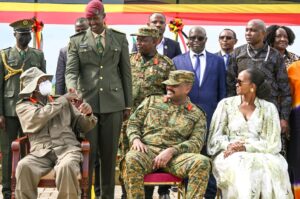
Due to his widely known health challenges, Ali was discreetly driven into Parliament through the basement entrance under tight security arrangements. Witnesses said the elderly statesman was assisted by security aides before being escorted into the chamber with minimal media attention and little of the usual ceremonial spectacle associated with parliamentary swearing-in events.
The images and reports emerging from Parliament immediately reignited public debate over age, leadership, succession, and the continued dominance of liberation-era politicians in Uganda’s political system.
Born on April 5, 1939, in Adjumani District, Moses Ali’s political and military career stretches across nearly every major chapter of Uganda’s post-independence history.
A trained lawyer who earned a Bachelor of Laws degree from Makerere University, Ali also received military training in Israel and the United Kingdom before rising through the ranks during the rule of former Ugandan president Idi Amin.
During Amin’s government, Ali served in influential positions including Minister of Finance and Minister of Interior. However, after the collapse of Amin’s regime in 1979, he fled into exile before later re-emerging as the leader of the Uganda National Rescue Front (UNRF), a rebel movement largely based in the West Nile region.
In one of the defining moments of his political life, Ali negotiated a peace agreement with the government of Yoweri Museveni in 1986, eventually integrating his fighters into the national army and transitioning into mainstream politics.
Over the decades that followed, Ali became one of the longest-serving figures within successive Ugandan governments, occupying powerful positions in Tourism, Trade, Internal Affairs, and various Deputy Prime Minister roles.
From the bush war era to modern parliamentary politics, Ali has remained a dominant figure in West Nile politics and a symbol of Uganda’s long and often complicated journey through conflict, reconciliation, and state rebuilding.
His latest swearing-in fulfills the constitutional requirements under Article 81(4) and the Fourth Schedule of Uganda’s 1995 Constitution, officially authorizing him to participate in the activities of the 12th Parliament.
The new Parliament is expected to debate critical national issues including youth unemployment, economic recovery, rising public debt, governance reforms, and regional security concerns.
Supporters of the veteran politician argue that Ali’s decades of experience still make him an important national figure whose institutional memory cannot easily be replaced.
Many of his allies describe him as a “repository of institutional memory,” particularly on matters relating to security, refugee affairs, peace negotiations, and northern Uganda’s historical development.
In West Nile and especially Adjumani, several supporters celebrated his return to Parliament, arguing that his experience and influence remain important for regional representation at the national level.

Social media posts from supporters congratulated him on taking oath, with some referring to him affectionately as “our elder Gen. Moses Ali” while praising his resilience and long-standing contribution to national politics.
However, critics view Ali’s continued presence at the center of power as a reflection of Uganda’s slow generational transition and the entrenched grip of liberation-era politicians on state institutions.
The debate became even more intense following the circulation of photos and videos showing the visibly frail statesman during recent nominations, campaigns, and public appearances.
Some online users questioned whether Ali still possesses the physical strength required for active parliamentary duties, especially after his swearing-in was conducted privately inside Parliament chambers.
“At what time is Gen. Moses Ali swearing in?” some social media users reportedly asked while questioning why the event was not publicly conducted like those of other MPs.
Others turned the discussion into a broader criticism of Uganda’s political establishment and the country’s aging leadership class.
“At this point, the problem is not Museveni but the Ugandan people,” one user reportedly wrote online, while others joked that “Uganda bado wako 1970,” loosely translated to suggest the country remains politically stuck in the 1970s.
Several critics also cited reports about Ali’s health challenges between 2022 and 2025, including claims that he temporarily lost speech ability, sought medical treatment in India, and appeared increasingly weak during the 2025 NRM primary campaigns.
Some online commentators argued that the veteran politician deserved retirement and rest after decades in public service, while others described the situation as symbolic of Africa’s broader leadership crisis.
Yet despite the criticism and concerns over his health, Ali’s strong electoral victory in Adjumani West demonstrated that he still commands significant political support in his home region.
His re-election and eventual swearing-in have now become a powerful symbol of Uganda’s continuing political crossroads — balancing respect for liberation-era veterans against mounting public demands for youthful, energetic, and generationally fresh leadership.
Few political figures on the African continent have managed to survive and remain influential through so many different eras — as a military officer, cabinet minister, rebel commander, peace negotiator, and senior statesman — while still occupying space at the highest levels of government power.
For supporters, Moses Ali represents continuity, stability, and historical experience. For critics, he embodies a political system struggling to renew itself.
Either way, his return to Parliament ensures that the national conversation around age, leadership, and Uganda’s political future is far from over.
📩 Email us: kamunyereports@gmail.com
📲 WhatsApp us: +256705569885
Your story matters—share it with us today! 🗞️🔥