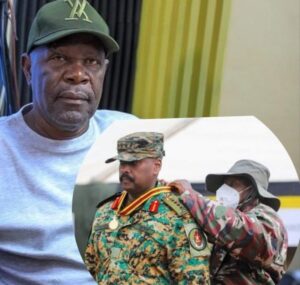
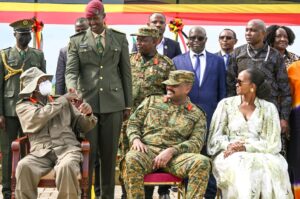
Be Careful With Your ‘Useless’ Statements – Muhoozi Warns BoU Governor
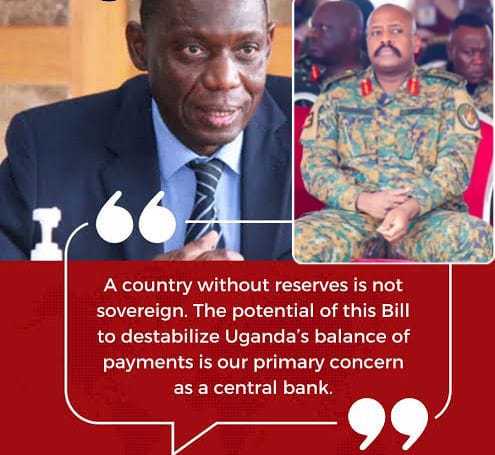
Uganda’s Chief of Defence Forces and Senior Presidential Advisor on Special Operations, Muhoozi Kainerugaba, has issued a public warning to central bank governor Michael Atingi-Ego over remarks concerning a newly passed sovereignty law, sharpening an already sensitive debate about the balance between national control and economic openness.
“My friend the Governor of the Central Bank should be careful about his statements,” Gen Kainerugaba said, responding to a Reuters report that highlighted Atingi-Ego’s concerns about the Protection of Sovereignty Bill, 2026, which Parliament approved on May 5, 2026.
The legislation, which now awaits assent from President Yoweri Museveni, is designed to curb foreign influence in Uganda’s political and policy processes. Lawmakers passed the bill after softening earlier provisions that had drawn pushback from business leaders and international partners, particularly around restrictions on external funding.

At the center of the controversy are warnings from Atingi-Ego, who cautioned that the law could have unintended economic consequences. According to the Reuters report, the governor warned that reduced inflows of foreign capital could put pressure on Uganda’s foreign exchange reserves. He described the potential outcome as an “economic disaster for our country,” underscoring concerns that tighter controls may discourage investment and complicate financial stability.
The remarks appear to have triggered a swift reaction from Gen Kainerugaba, whose statement signals unease within sections of government over public criticism of the bill by senior officials. His comments add a new dimension to the debate, which has increasingly drawn in voices from the financial sector, international institutions, and political actors.
The World Bank also weighed in last month, expressing concern that the legislation could inadvertently criminalize aspects of its development work in Uganda. In a statement, the institution said the bill might expose many of its “routine development activities” to legal risk, including meetings and consultations where policy ideas are exchanged with government counterparts.
Ugandan authorities, however, have defended the intent of the bill, framing it as a necessary safeguard against external interference. Government officials have repeatedly accused political opponents of leveraging foreign funding to advance outside interests within the country. Some opposition groups in Uganda have historically relied on such support, making foreign financing a longstanding point of political contention.

Under the provisions of the new law, individuals found to be acting on behalf of foreign interests without authorization could face severe penalties, including prison terms of up to 10 years. The legislation prohibits such individuals or entities from influencing or implementing government policy without prior approval. It also criminalises actions deemed to promote “the interests of a foreigner against the interests of Uganda,” language that critics say could be broadly interpreted.
In response to earlier criticism, lawmakers revised the bill to narrow its scope. A controversial clause that initially required all recipients of foreign funding to register as foreign agents was scaled back. The requirement now applies specifically to individuals or organisations receiving funds for political purposes linked to foreign interests, a change aimed at easing concerns from economic stakeholders and civil society groups.
Despite these adjustments, questions remain about how the law will be implemented and its potential ripple effects on Uganda’s economy. Analysts note that foreign direct investment, development aid, and diaspora remittances are all critical components of the country’s financial ecosystem.
Remittances from Ugandans living abroad, in particular, continue to serve as a vital source of foreign exchange, helping to support household incomes and stabilize the national currency. Any policy perceived to constrain financial inflows could therefore have broader implications beyond the political sphere.
As the bill awaits presidential assent, attention is likely to remain fixed on how Uganda navigates competing priorities—asserting sovereignty while maintaining investor confidence and international partnerships. The exchange between Gen Kainerugaba and Atingi-Ego highlights the stakes involved, with both political authority and economic stability hanging in the balance.
📩 Email us: kamunyereports@gmail.com
📲 WhatsApp us: +256705569885
Your story matters—share it with us today! 🗞️🔥