Museveni Reveals His Most Corrupt Ministers In New Cabinet Revelation – See List
The final Cabinet sitting of Uganda’s current administration closed on Monday with a mix of reflection, political messaging, and a stark warning on corruption, as senior government officials gathered for what could be their last meeting before a new lineup is unveiled.
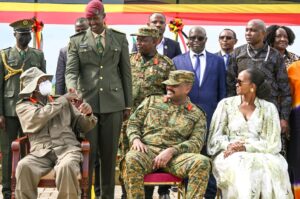
Held under a tented setting and running from 2 p.m. to 5 p.m., the farewell-style luncheon brought together ministers who have served in the 2021–2026 term. The mood shifted between celebration of milestones and unease about what lies ahead as President Yoweri Museveni prepares to name a new Cabinet after his upcoming swearing-in.
Prime Minister Robinah Nabbanja opened the session with a detailed account of her tenure, presenting a report she said would be circulated among ministers for further review. Her remarks highlighted what she described as key achievements of the government and praised the president’s role in elevating women into top leadership positions.
She lauded President Museveni for giving women a seat at the table, citing the PM, Vice President Maj Jessica Alupo, and Parliament Speaker Anita Among.

Nabbanja also pointed to the government’s flagship poverty alleviation initiative, the Parish Development Model (PDM), describing it as a decisive factor in the ruling party’s continued political dominance.
She also praised the Parish Development Model (PDM) as the “magic bullet,” adding that it was the reason for which Ugandans renewed the mandate of the NRM in the January elections.
Vice President Alupo echoed similar sentiments when she took the floor, expressing gratitude to the president for entrusting her with leadership responsibilities during Cabinet sittings and for instilling confidence in her service.
Vice President, Maj Alupo, also took the floor, thanking Mr Museveni for entrusting her with the role of chairing Cabinet from time to time and for giving her confidence in service.
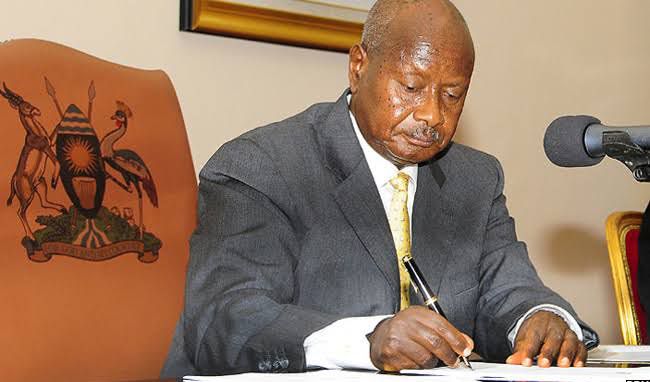
When President Museveni addressed the gathering, his remarks turned to policy and politics, particularly the contentious Sovereignty Bill. He defended the proposed law, framing it as a safeguard against foreign interference in Uganda’s domestic affairs.
When Museveni rose to speak, he hammered home his support for the Sovereignty Bill, clarifying that it seeks to clip the wings of external forces meddling in Uganda’s political decisions.

He added that “we should not disturb ourselves with money coming to churches and donations as they are not the reason for the sovereignty Bill.”
The president urged members of the ruling caucus to sustain momentum around the Bill in upcoming discussions, emphasizing the need to balance national sovereignty with continued support for development initiatives.
Mr Museveni urged the caucus (meeting Tuesday) to carry the torch on the Bill and discuss it with the intention of not choking off income flows for productive projects by churches and donor-funded development initiatives.
Museveni also used the platform to commend the outgoing Cabinet for its role in achieving a key economic milestone, while signaling priorities for the next administration.
Mr Museveni praised the Cabinet for steering the country into middle-income status and touched on corruption.
“This is the Cabinet that ushered Uganda into the middle-income status, I want to thank everyone who contributed, the secretariat of cabinet for managing the business of cabinet and mobilisation, hence the victory of the 2026 presidential elections is not my victory but the victory of all of us,” he said.
“Now the upcoming cabinet is for us to put a total end to corruption and taking bribes of any nature. I also expect the future cabinet to ensure collective decision making, making decisions without the blessings of others is detrimental and I discourage it,” Mr Museveni warned.
The atmosphere, described by attendees as initially upbeat, shifted noticeably toward the end of the president’s speech when he disclosed that investigations into corruption were already underway.
However, a cheerful audience soon lost the smile when Mr Museveni revealed he had a list of corrupt officials and was gathering proof before arresting them.
At that moment, the tents fell dead silent.
Background
Cabinet meetings in Uganda are convened under the authority of the president, who also chairs them. In his absence, the vice president presides, or a minister designated in writing assumes the role.
The outgoing Cabinet, formed after the 2021 elections, comprised 32 full ministers and 50 Ministers of State, reflecting one of the largest executive teams in the country’s recent history.
With President Museveni set to begin a new five-year term following his swearing-in on May 12, attention now turns to the composition of the next Cabinet—an announcement expected to shape Uganda’s political and policy direction in the years ahead.
📩 Email us: kamunyereports@gmail.com
📲 WhatsApp us: +256705569885
Your story matters—share it with us today! 🗞️🔥