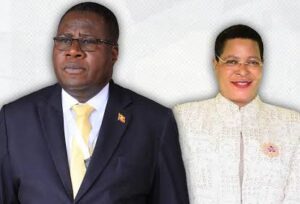
Norbert Mao To Be Served Election Petition In Newspaper After Hiding And Switching Off Phones

The High Court in Gulu has cleared the way for an unusual form of legal notice in an election dispute, allowing Tonny Kitara to serve court documents on Justice and Constitutional Affairs Minister Norbert Mao through a newspaper advertisement after repeated attempts at personal service failed.
The ruling, delivered by Justice Phillip Odoki, marks an early procedural victory for Kitara, who is challenging Mao’s victory in the Laroo-Pece division race held in January this year.
Kitara, who lost the contest, formally filed his petition on April 1, setting in motion a tightly timed legal process governed by strict electoral laws. The following day, his lawyer, Imran Gitta, collected the court documents and began efforts to serve Mao, a critical requirement before the case can proceed.
According to court filings, Gitta said Kitara provided him with a telephone number believed to belong to Mao, with the intention of arranging a meeting to deliver the documents in person. However, those efforts quickly ran into obstacles.

Gitta told the court that he called the telephone number mentioned above several times, but Mao did not answer the calls or return the calls.
He added that he tried to communicate with Mao on WhatsApp but discovered that his telephone number is not registered on WhatsApp.
With digital avenues exhausted, Gitta turned to physical delivery. He travelled to Mao’s known workplace at the Ministry of Justice and Constitutional Affairs, located at the JLOS Towers in Naguru, but found the office locked, further complicating the effort to complete service within the required timeframe.
From these repeated failed attempts, Kitara’s legal team formed the view that Mao was either unavailable or deliberately avoiding being served, prompting them to seek the court’s intervention.
In his ruling, Justice Odoki underscored that the law prioritises personal service of election petitions, given the seriousness and urgency of such cases. However, he noted that the law also recognises practical challenges.
He explained that if a respondent cannot be found within three days, the petitioner is permitted to apply to court for alternative means of service, commonly referred to as substituted service.

Kitara’s legal team argued that they had fulfilled this requirement.
Caleb Alaka, who took over from Gitta, told the court that his client had done everything possible to locate Mao within the required time.
He relied on past court decisions and the election petition rules to argue that the court has the power to allow substituted service when personal service fails.
Alaka explained that the delay was caused by the Easter public holidays, which made it difficult to file documents within the strict deadline.
He asked the court to extend the time.
Justice Odoki agreed that the explanation was reasonable, saying the law allows courts to extend time where there are “special circumstances.”
He emphasised that election petitions are very important cases that should be decided on their merits rather than technicalities, reinforcing the judiciary’s broader role in safeguarding electoral justice.
After reviewing all the evidence presented, the judge concluded that Kitara had made sufficient effort to locate Mao and comply with the rules governing service.
“I therefore find that this application has merit and is accordingly granted,” Justice Odoki ruled.
In a set of clear directives, the court extended the time for filing the application and authorised substituted service. Kitara is now permitted to notify Mao of the petition by publishing a notice in the Daily Monitor newspaper and by pinning the notice on the court notice board.
The court further directed that Mao could collect the full petition documents from the court registry.
While the ruling does not address the substance of the election dispute, it allows the case to move forward, setting the stage for a legal contest that could revisit the outcome of the Laroo-Pece division race.
For now, Kitara has secured a procedural foothold, but the central question—whether Mao’s election will stand—remains to be determined in the proceedings ahead.
📩 Email us: kamunyereports@gmail.com
📲 WhatsApp us: +256705569885
Your story matters—share it with us today! 🗞️🔥