Museveni Tells Supreme Court To Dismiss Any Petition On His Win
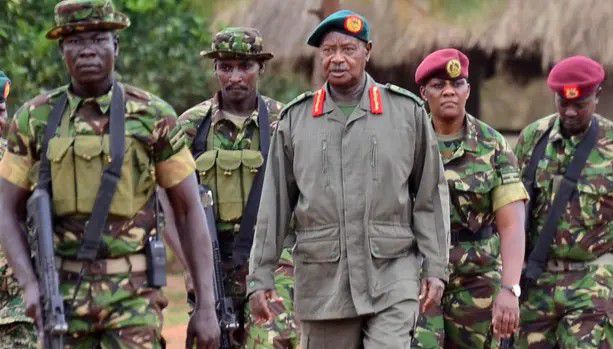
President Yoweri Kaguta Museveni has asked the Supreme Court to dismiss a presidential election petition filed by former presidential aspirant Robert Kasibante, insisting that the January 2026 election was conducted in accordance with the Constitution and electoral laws and that he was validly elected.
In his defence to the petition filed on January 25, Museveni denies all allegations of electoral malpractice, violence, voter bribery, misuse of state resources, and manipulation of the Electoral Commission, arguing that the claims are vague, unsupported and in several instances outside the jurisdiction of the court.
“Save what is hereafter expressly admitted to be true, each and every allegation in the Petition is denied,” Museveni states in his formal response lodged through his lawyers of K&K Advocates.
Museveni contends that Kasibante does not have a valid grievance under Article 104(1) of the Constitution and Section 61 of the Presidential Elections Act, which govern presidential election petitions.
He argues that the petitioner has failed to demonstrate any non-compliance that substantially affected the result of the election.

According to the response, Museveni was declared winner of the January 15, 2026 presidential election on January 17 after polling 7,946,772 votes, representing 71.65 percent of the valid votes cast.
“The election was conducted in accordance with the provisions of the Constitution, the Presidential Elections Act and the Electoral Commission Act,” Museveni states, adding that any alleged non-compliance, which he denies, did not affect the result of the election in a substantial manner.
The President also denies responsibility for any illegal acts allegedly committed by security forces, government officials, or political supporters during the campaign and polling period.
He maintains that he did not personally, or through agents with his knowledge and consent, commit any electoral offences.
“I did not personally or through my agents, with my knowledge and consent or approval, influence, direct or control any of the actions of the 2nd Respondent as alleged,” Museveni says, referring to the Electoral Commission.
Several paragraphs of Kasibante’s petition are challenged as incurably defective, vague, or lacking particulars.
Museveni asks court to strike out some allegations on the grounds that they do not disclose specific offences or fall outside the grounds permitted for challenging a presidential election.

In response to claims that the Electoral Commission was under political control, Museveni states that he has no knowledge that the 2nd Respondent was influenced and/or was under the whims, control or direction” of ruling party officials or government actors.
On allegations of violence, intimidation, and deployment of armed forces in favour of his candidacy, Museveni asserts that security during the election was handled by the Uganda Police Force, supported by the Uganda Peoples’ Defence Forces, to ensure a secure environment.
“To my knowledge, members of the Uganda Peoples’ Defence Forces did not campaign for me or illegally interfere with opposition campaigns or the electoral process,” he states in his supporting affidavit.
Museveni also rejects accusations of misuse of government resources, saying facilities used during his campaign were limited to those ordinarily attached to the office of the President under the law.
Regarding the voters’ register and biometric voter verification machines, Museveni maintains that the Electoral Commission compiled and maintained a credible national voters’ register and that any failure of biometric equipment did not disenfranchise voters.
“I believe that no prejudice was caused by any failure in the use of some of the BVVK machines as the registered voters could and were indeed identified using the voters’ roll,” he says.
Museveni further disputes claims that polling stations were not gazetted or that results were improperly tallied and transmitted, insisting that counting, tallying, and declaration of results were done transparently and within the constitutionally required timelines.
He then the Supreme Court to dismiss the petition with costs, arguing that the remedies sought by Kasibante are not available under the Presidential Elections Act.
Kasibante, a former presidential aspirant of the National Peasants’ Party, earlier asked the Supreme Court to compel the Electoral Commission to grant access to election documents and electronic systems, including biometric verification and results transmission platforms, as part of his challenge to Museveni’s re-election.
Although the hearing of the petition is coming up from for hearing on January 28, this application has not yet been given a hearing date.
📩 Email us: kamunyereports@gmail.com
📲 WhatsApp us: +256705569885
Your story matters—share it with us today! 🗞️🔥