Gashumba Warns: NUP’s Focus Is Funding, Not the Presidency
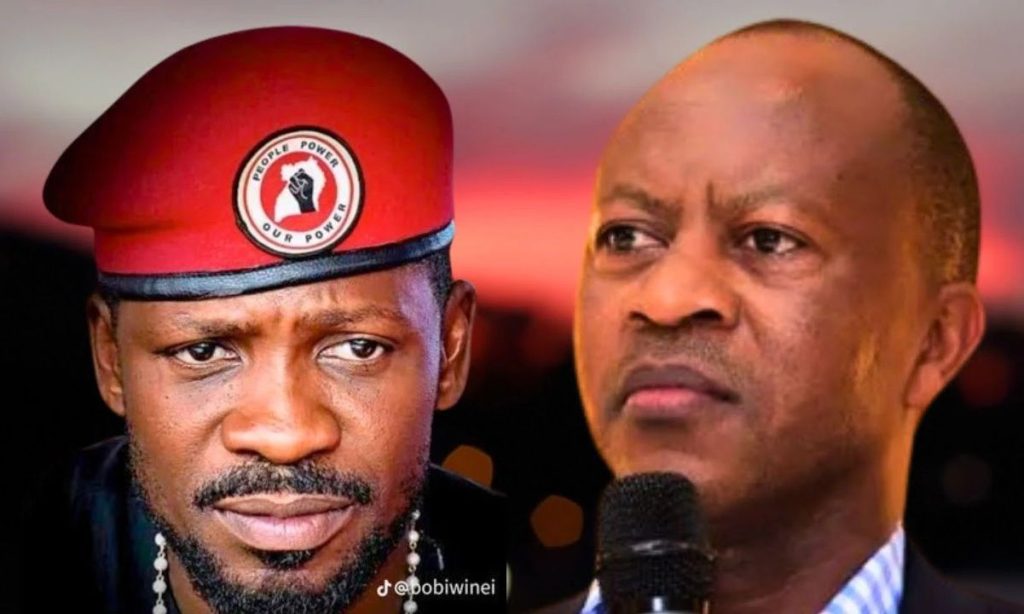
Media commentator and politician Frank Gashumba has launched a fresh critique against the National Unity Platform (NUP) and its president, Robert Kyagulanyi, popularly known as Bobi Wine, accusing them of prioritizing financial benefits over the pursuit of actual political power.
Gashumba made the remarks while speaking in an interview with a local television station, where he was reacting to NUP’s recent parliamentary victories and its growing presence in Uganda’s legislature. While acknowledging the party’s success in increasing its number of Members of Parliament, Gashumba argued that these gains should not be mistaken for a genuine attempt to take control of state power.
According to Gashumba, NUP’s strategy going into the 2026 election cycle is centered more on numbers than on leadership. He claimed that the party’s main objective is to expand its parliamentary representation in order to qualify for increased public funding, rather than mounting a serious challenge for the presidency or forming government.

In his assessment, Gashumba described Bobi Wine as a calculated and highly strategic individual who approaches politics with a business-oriented mindset. He suggested that Kyagulanyi understands how to navigate political systems in a way that delivers financial returns, even when political power itself remains elusive.
“Robert Kyagulanyi is a very smart business person. He always looks at profits first. He is now comfortable because he secured over fifty Members of Parliament.
He is for business gains, not political power,” Gashumba said.
Gashumba went on to argue that securing a large bloc of legislators offers more than just influence within Parliament. In his view, it also guarantees financial stability for the party through state-supported funding mechanisms, which he believes have become a central focus for NUP’s leadership.
He further claimed that NUP’s participation in elections is heavily influenced by the desire to maximize its share of funding from the Inter-Party Organisation for Dialogue (IPOD), a platform that brings together political parties represented in Parliament.
According to Gashumba, the recent legal framework governing political parties has reinforced this approach. Under amendments to the Political Parties and Organisations Act in 2025, political parties with parliamentary representation are required to be members of IPOD in order to qualify for public funding. This funding, which is meant to support party activities and promote multiparty democracy, is allocated based on the number of seats a party holds in Parliament.

Gashumba argued that this funding formula has shifted the focus of some opposition parties away from the presidency and toward parliamentary expansion. He suggested that by concentrating on winning constituencies rather than the top seat, NUP can secure long-term financial benefits regardless of whether it captures state power.
In his view, the strategy explains why the party appears more aggressive in parliamentary races than in building a broader national coalition capable of winning the presidency. He implied that the comfort of guaranteed funding may have reduced the urgency for NUP to push for deeper structural political change.
The remarks have added to an ongoing national debate about the role of public funding in Uganda’s multiparty system and whether financial incentives are shaping political behavior. While NUP supporters continue to defend the party’s parliamentary achievements as a foundation for future governance, critics like Gashumba insist that numbers alone do not translate into meaningful political transformation.
As the country gradually moves toward the 2026 general elections, Gashumba’s comments are likely to fuel further discussion about the true intentions of political actors, the balance between political ambition and financial sustainability, and whether opposition parties are genuinely positioning themselves to take power or simply to survive—and profit—within the existing system.
📩 Email us: kamunyereports@gmail.com
📲 WhatsApp us: +256705569885
Your story matters—share it with us today! 🗞️🔥