Internet Blackout and Bloodshed Shadow Museveni’s Election Triumph, What You Missed
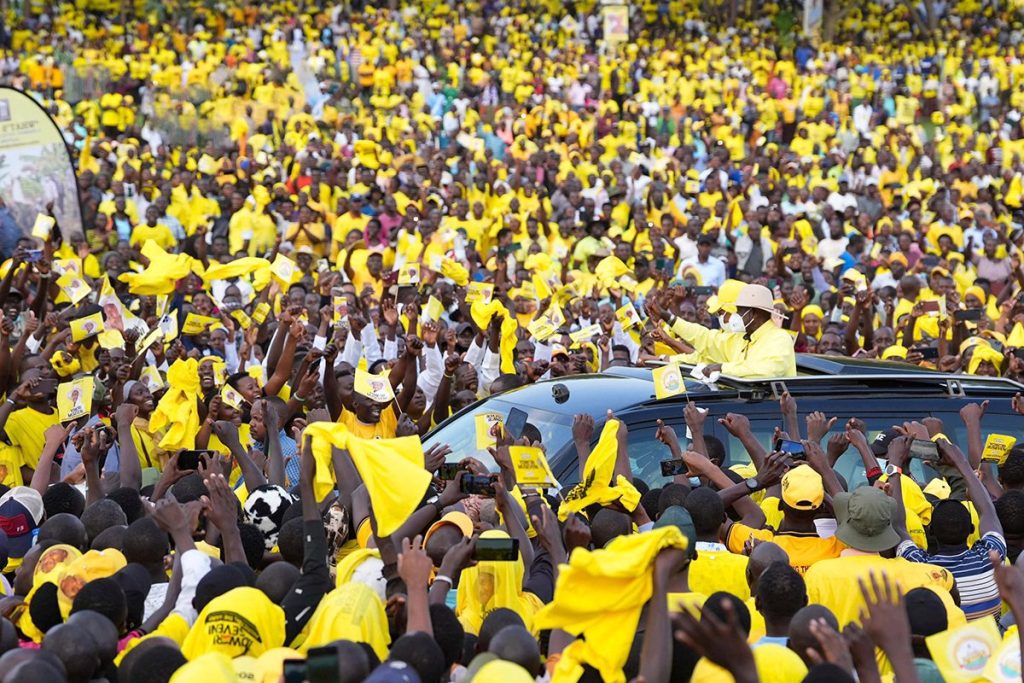
Ugandan President Yoweri Museveni has been declared the winner of Thursday’s presidential election, extending his nearly four decades in power by another five years in a vote that has already sparked controversy, allegations of irregularities, and international concern.
According to results announced by the Electoral Commission, Museveni secured a commanding 72% of the vote, defeating his closest challenger, opposition leader Robert Kyagulanyi—popularly known as Bobi Wine—who garnered 25%. The outcome grants Museveni, now 81 years old, yet another term at the helm of the East African nation he has ruled since 1986.
However, the announcement was swiftly rejected by Wine, who condemned what he described as “fake results” and “ballot stuffing.” While Wine did not provide specific evidence to support the allegations, the authorities have so far not responded directly to his claims. African Union election observers, however, said they saw “no evidence of ballot stuffing,” even as tensions remained high across the country. Wine has called on his supporters to engage only in non-violent protests.
Museveni first came to power as a rebel leader after overthrowing a military government in 1986. Since then, he has gone on to win seven presidential elections, cementing his status as one of Africa’s longest-serving leaders. His supporters argue that his leadership has brought stability, while critics accuse him of entrenching authoritarian rule.
The election period was marked by unrest and violence, particularly in opposition strongholds. Wine, a 43-year-old former pop star turned politician, has claimed that at least 21 people have been killed around the country in recent days as clashes erupted between security forces and civilians. The authorities have so far confirmed seven deaths, leaving uncertainty over the true toll.

Compounding the tension, access to the internet was cut nationwide beginning Tuesday, a move that severely restricted communication and made it difficult to independently verify developments on the ground. The government defended the blackout, saying it was necessary to prevent misinformation, electoral fraud, and the incitement of violence. However, the United Nations human rights office condemned the decision as “deeply worrying,” while Wine has demanded that internet services be immediately restored.
Speaker of Parliament Anita Among publicly celebrated Yoweri Museveni’s victory at the Electoral Commission, reinforcing the ruling party’s confidence in the declared outcome even as opposition leaders voiced deep reservations.
International observers also raised concerns. Leading the African Union observer mission, Nigeria’s former President Goodluck Jonathan told journalists that “the government should refrain from the suspension of internet access” during sensitive electoral periods. Jonathan further denounced “reports of intimidation, arrest and abductions,” warning that such actions “instilled fear and eroded public trust in the electoral process,” according to AFP news agency reports.
Tensions escalated overnight when Wine’s party claimed that he had been abducted from his home in the capital, Kampala. The police denied the allegation. Wine later issued a statement on Facebook saying that he had managed to evade a night-time raid by security forces and was in hiding. He had previously said that he was under house arrest.
The police have not confirmed Wine’s account. However, police spokesperson Kituuma Rusoke said that Wine’s movements had been restricted because his home was located in an area of “security interest.”
“We have controlled access to areas which are security hotspots,” Uganda’s *Daily Monitor* newspaper quoted Rusoke as saying. “We cannot allow people to use some places to gather and cause chaos,” he added.
Wine has consistently portrayed himself as the voice of Uganda’s youth, in a country where the majority of the population is under the age of 30. During the campaign, he pledged to tackle corruption, reform state institutions, and dismantle what he described as a system rigged in favor of long-serving elites. Museveni, by contrast, argued that he remained the sole guarantor of peace and stability in a country with a long history of political turmoil and conflict.

Six other candidates contested the presidency, but none secured more than 2% of the vote. Voter turnout stood at 52.5%, according to the Electoral Commission.
The campaign period was repeatedly disrupted by clashes between opposition supporters and security forces. Rights groups and opposition figures accused police and military units of assaulting and arbitrarily detaining Wine’s supporters. Police spokesperson Rusoke dismissed these allegations, instead accusing opposition supporters of being disruptive and provoking confrontations.
As Uganda awaits the next phase of the post-election period, the disputed outcome, security clampdowns, and unresolved allegations have left the country deeply polarized, raising questions about political freedoms, electoral credibility, and the future of opposition politics under Museveni’s continued rule.
📩 Email us: kamunyereports@gmail.com
📲 WhatsApp us: +256705569885
Your story matters—share it with us today! 🗞️🔥