Winnie Byanyima Speaks Out On Her ‘Gay’ Son Anselm Besigye “I Wish My Son Was Normal”
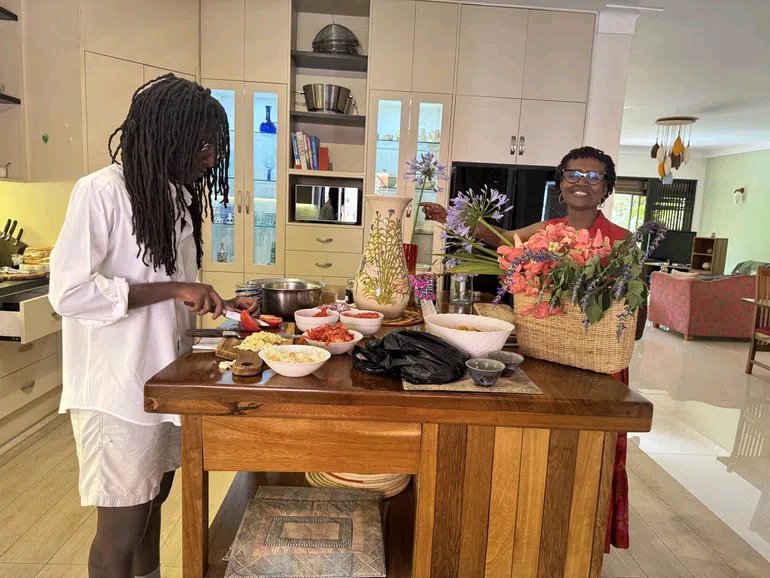
Winnie Byanyima, the widely respected Executive Director of UNAIDS and a global voice for equality and human rights, recently offered the public a rare and deeply personal glimpse into her life as a mother.
In an emotional reflection shared online, Byanyima spoke candidly about her son, Anselm Besigye, and the pain she feels over how he has been judged and treated by conservative segments of Ugandan society.
Anselm, now 26, is an accomplished academic whose achievements would ordinarily be a source of unqualified celebration. He is a second-year PhD candidate and lecturer at Columbia University in New York, a remarkable milestone that comes on the heels of earning a master’s degree from the University of Chicago.
For Byanyima, his intellectual brilliance and discipline stand as proof of his dedication and promise, yet they have not shielded him from harsh scrutiny back home.
Despite her stature on the global stage as a tireless advocate for inclusion, Byanyima acknowledged the inner tension she carries as a Ugandan mother raising a child whose self-expression openly challenges deeply rooted cultural norms. That conflict, she revealed, is not born of rejection but of love—love strained by tradition, expectation, and fear of public judgment.

Anselm, the son of Byanyima and veteran opposition leader Dr Kizza Besigye, has for years been a lightning rod for controversy on social media. His gender-fluid fashion choices—often featuring skirts, bold jewellery, and long dreadlocks—have sparked relentless debate. Conservative critics frequently question his sexuality, his upbringing, and even his parents’ values, using his appearance as a proxy for broader cultural anxieties.
In her heartfelt post, Byanyima admitted that sometimes she “wishes he embraced his Ugandan roots.”
“Our son Anselm, in his second year of PhD studies and already teaching, fills me with pride. I admire his brilliance and courage,” she wrote.
“And yes, I sometimes wish he embraced more of my faith, my community – and even cut his hair, so he might appear more “normal” to the conservative Ugandan gaze that raised me.”

These words struck a chord with many readers, capturing a universal parental struggle: the desire to protect one’s child from harm, even when that protection is tangled with societal pressure and personal upbringing. Byanyima was careful, however, to draw a line between her wishes and her principles. She framed love not as control, but as freedom.
Byanyima however, spoke of love as “a practice of letting go and trusting that our children will grow into their light in their own time.”
Her post also attracted blunt reactions from social media users who felt she should impose authority rather than understanding. One user commented, “Just act as an African parent, grab the guy and cut the hair,you shall have a different discussion later,” to which Byanyima responded, ‘No, I won’t’.
That firm response underscored her refusal to sacrifice her son’s autonomy for the comfort of societal approval.
Anselm’s life story also provides important context. He grew up largely outside Uganda after his parents took him abroad at the age of three, seeking to shield him from the trauma associated with his father’s turbulent political struggles at home. Much of his identity was therefore shaped in environments that encouraged intellectual curiosity, diversity, and self-expression.
His academic journey is marked by distinction. He graduated from Harvard University with honours in Anthropology, an achievement that filled his parents with immense pride and further cemented his reputation as a gifted thinker and scholar.

Beyond academia, Anselm has shared glimpses of his personal life online, including photos with his girlfriend Liz. These moments, often scrutinised by strangers, instead paint a picture of a family grounded in support rather than shame—one that values honesty, love, and growth over rigid conformity.
In laying bare her private reflections, Byanyima did more than defend her son. She sparked a broader conversation about parenting, culture, and the courage it takes to love openly in the face of judgment. Her message resonated not because it offered easy answers, but because it revealed the humanity behind a public figure—and the enduring bond between a mother and her child.
📩 Email us: kamunyereports@gmail.com
📲 WhatsApp us: +256705569885
Your story matters—share it with us today! 🗞️🔥