UHRC Boss Wangadya Accuses Powerful Officials of Deadly Intimidation
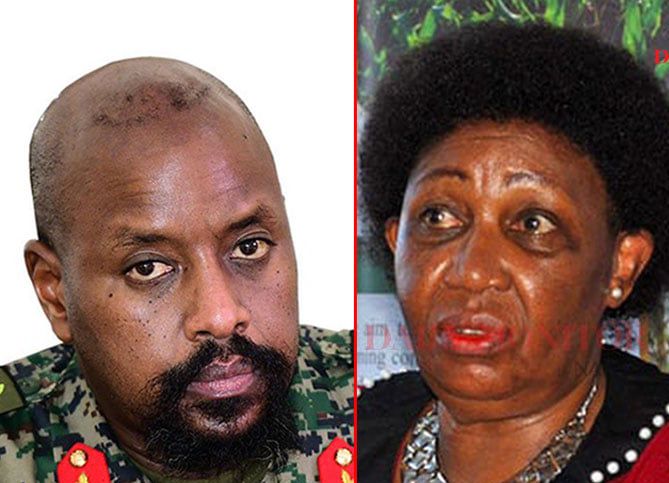
The Chairperson of the Uganda Human Rights Commission (UHRC), Mariam Wangadya, has offered an unusually open and deeply personal account of the mounting pressures and risks she encounters while heading the country’s foremost human rights oversight body.
She revealed that persistent threats, harsh criticism, and overt hostility have at times left her afraid to publicly challenge abuses committed by security agencies.
Speaking to journalists during a joint press briefing at the UHRC headquarters ahead of the upcoming International Human Rights Day celebrations, Wangadya delivered one of her most candid reflections to date. The briefing, which was intended to highlight the Commission’s work and priorities, instead evolved into a striking testimonial of the emotional and psychological cost of her leadership.
Identifying herself as “the most unpopular chairperson ever,” Wangadya painted a picture of a leader navigating an environment marked by relentless public suspicion, politically loaded accusations, and episodes of direct intimidation.
According to her, this atmosphere has steadily chipped away at her confidence, especially when the Commission is called upon to address complaints involving influential figures within the security apparatus.
Her fears are not unfounded. Earlier this year, in May, the Commission’s autonomy was sharply questioned after the Chief of Defence Forces (CDF), General Muhoozi Kainerugaba, openly cautioned Wangadya over a directive she issued calling for the release of a civilian, NUP activist Edward Rogers Ssebuufu, popularly known as Eddie Mutwe, from military detention.
At that time, Muhoozi himself had publicly acknowledged that Ssebuufu was being confined in a basement facility, where he was allegedly being taught lessons in Lunyankole. The confrontation placed the Commission’s independence under an uncomfortable spotlight and exposed the high-stakes nature of its work.
Wangadya’s bold admission underscores the profound strain of steering an institution whose neutrality is constantly interrogated, particularly in politically charged moments. It also sheds light on the intricate and often fraught process of enforcing accountability in an environment where demands for justice frequently collide with entrenched state power and institutional loyalties.
Yet despite the turbulence surrounding her tenure, Wangadya stressed that the Commission has not wavered in its commitment to its constitutional mandate. She reaffirmed that the UHRC remains resolute in pursuing investigations, receiving complaints, and ensuring that all individuals and institutions—whether state-linked or private—are held responsible for violations of human rights.
Even so, her disclosure that she has been subjected to “a campaign of threats and physical intimidation from unknown sources” adds new urgency to the national conversation about the protection of human rights defenders. It raises broader concerns about whether such pressures could compromise the Commission’s ability to operate freely, independently, and effectively.
As Uganda prepares to commemorate International Human Rights Day, Wangadya issued a heartfelt appeal for renewed public and institutional support. She urged the country to recommit itself to defending basic freedoms and protecting the bodies tasked with upholding them.
Her message was both a warning and a plea—a reminder that the struggle for human rights often exacts a personal toll, and that strong oversight institutions are indispensable to safeguarding justice, democracy, and the dignity of all citizens.
📩 Email us: kamunyereports@gmail.com
📲 WhatsApp us: +256705569885
Your story matters—share it with us today! 🗞️🔥