Let Wild Animals Vote For You!! Karamajong Elders Disown Museveni In 2026 Elections
A wave of discontent is rising among Karimojong herders in southern Karamoja, as frustration over restricted grazing rights in the Pian-Upe Wildlife Reserve boils over into political threats.
The pastoralists, whose lives revolve around cattle, have issued a stern warning: if the government continues to deny them access to grazing lands, they will overwhelmingly back opposition National Unity Platform (NUP) leader Robert Kyagulanyi Ssentamu, popularly known as Bobi Wine, in the next election.
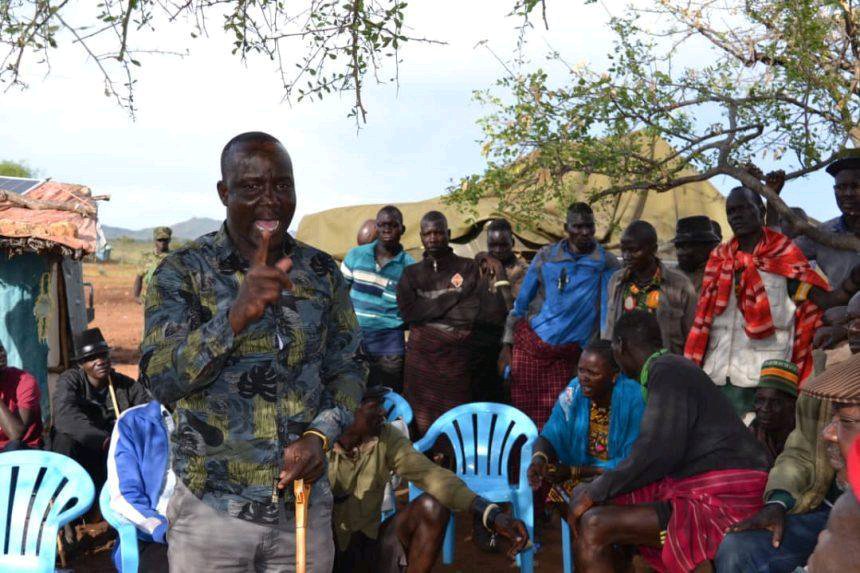
This defiant stance emerged during a heated community dialogue held on October 4 in Loreng Sub-county. The meeting, convened by kraal leader Loduk Paul Lokabaale, brought together local leaders and dozens of youthful, visibly angry herders—many of them described as disgruntled warriors—who accused the Uganda Wildlife Authority (UWA) of threatening their way of life.
The uproar stems from a recent directive by UWA banning all forms of grazing and human activity within the reserve. Since September, UWA rangers have been actively expelling cattle from the protected area, triggering resentment among the local communities who consider parts of the reserve ancestral grazing grounds.
“If Museveni and his government have chosen wild animals over our livelihoods that depend on cattle, let him be voted for by wild animals. We shall choose Bobi Wine as our leader,” one of the youth declared during the emotionally charged meeting.

The frustration runs deeper than just grazing restrictions. Another youth, identified only as Lomer, issued a grave warning that the community may take up arms if the government does not reverse the eviction orders.
“Denying us access to grazing areas like Komiriapus and Lochahar dams—built by government for livestock—is hypocritical and undermines our right to a livelihood. We shall fight to the last man,” he declared.
These dams, crucial for watering livestock especially during the dry season, are now inaccessible to the herders following the ban, further straining relations between the pastoralists and the government.
UWA Defends the Ban, Calls for Dialogue
UWA officials present at the meeting stood firm on the legality of the ban. They argued that grazing livestock in protected areas disturbs wildlife and undermines the very conservation efforts the reserve was established to promote.
Mark Tiyan Golandi, a UWA community ranger, acknowledged the community’s concerns but maintained that the reserve must remain off-limits to livestock. He suggested a more structured approach, urging the herders to engage with UWA through a formal Memorandum of Understanding (MoU) that could outline conditional access to certain areas without threatening conservation goals.

Golandi also pointed to deeper, structural problems that complicate the situation: “Illegal activities such as grazing and poaching have been worsened by insecurity from armed warriors, inadequate ranger staffing, and poor motivation—issues which are now being addressed,” he said.
Absentee Ministers and Rising Tensions
Despite the high stakes of the meeting, several key government officials who were invited failed to attend, much to the disappointment of the locals. The pastoralists had hoped to air their grievances directly to the Minister for Karamoja Affairs, Peter Lokeris, and the Minister of Tourism, Wildlife and Antiquities. Their absence was interpreted by some as a lack of seriousness about the plight of the Karimojong people.
Only one high-ranking government official was present: Nakapiripirit Woman MP and Minister of State for Labour, Employment and Industrial Relations, Esther Anyakun. She cautioned the community against politicizing UWA’s enforcement of conservation policies, urging them to follow proper channels.
“President Yoweri Museveni is the only one who can direct UWA,” she explained, assuring the locals that the President would soon be visiting Nakapiripirit as part of his campaign trail, providing an opportunity for direct engagement.
Call for Calm Amid Ongoing Insecurity
Also weighing in was Jimmy Tebanyang, the Deputy Resident District Commissioner (RDC) of Nabilatuk. He echoed the call for calm and patience, emphasizing that UWA’s actions were in line with national policy.
He reassured the pastoralists that their concerns were not falling on deaf ears, and that President Museveni’s upcoming visit to Karamoja would be an ideal platform for discussing critical issues such as communal land rights, cattle grazing zones, and the role of reserves like Pian-Upe in local livelihoods.
Tebanyang, however, issued a firm warning against any resort to violence, pointing out that southern Karamoja continues to struggle with high levels of cattle rustling—an issue that makes tensions even more volatile. “Let us not complicate an already delicate security situation,” he said.
A Community at Crossroads
The Pian-Upe Wildlife Reserve, one of Uganda’s largest and most biologically diverse protected areas, has long been a point of contention between conservationists and pastoral communities. For decades, the Karimojong herders have relied on its fertile plains and water sources, especially during droughts. However, as government conservation efforts tighten, clashes over land access have become more frequent and politically charged.
This latest standoff highlights not only the growing pressure on Uganda’s protected areas but also the deepening mistrust between the state and marginalized communities like the Karimojong. Whether through peaceful dialogue or political action at the ballot box, it is clear the herders intend to make their voices heard.
As the election season heats up, the question remains: will their warnings prompt change—or will they escalate into open defiance?
📩 Email us: kamunyereports@gmail.com
📲 WhatsApp us: +256705569885
Your story matters—share it with us today! 🗞️🔥