Weaponizing the Law!! The Silent Threat Facing Women in Ugandan Politics
By Denis Mbassa | 29th September 2025
Uganda’s political landscape is vibrant but often turbulent, and the road to elective office is rarely easy. For women, that road can be even more dangerous. Beyond the structural barriers and the everyday hurdles of campaigning lies a quieter but very damaging obstacle: the misuse of the legal system to shut out competitors.
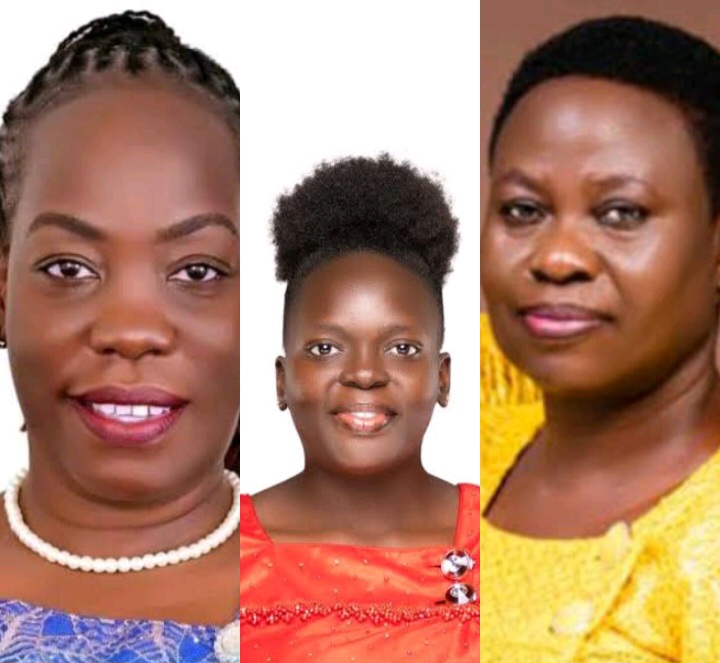
A worrying trend has emerged where court cases and injunctions are deliberately filed at critical points in the electoral calendar. Take the case of Hellen Odeke Akol, who has repeatedly been targeted each time she announces her candidacy for the Bukedea District Woman MP seat. She first faced legal battles in the 2021 general elections and again during the NRM primaries this year. In both instances, her disqualification was not the result of failing legal standards but rather because litigation was dragged out long enough to push her beyond key nomination deadlines.
More recently, Odeke has not been alone. Two other women—Susan Norma Otai and Marion Mercy Alupo—from different political parties have also been dragged into court in a case filed by the same individual, Zipporah Akol, who previously challenged Odeke’s 2021 candidacy. In all three cases, the claim is the same: that the women are not residents of the villages where they registered to vote. Shockingly, these suits rely on alleged tribunal decisions, yet none of the women were ever called to appear before such bodies.
This raises deep concerns about fairness, justice, and the integrity of Uganda’s democratic process. Courts exist to uphold the rule of law and ensure only qualified individuals contest elections. But there is a thin line between legitimate judicial oversight and the manipulation of legal processes to lock candidates out.
The Perils of Legal Engineering
The strategy is predictable: cases are filed just before nomination deadlines, temporary court orders are swiftly granted, and then hearings are adjourned until after the deadlines have passed—or the cases are quietly dropped once their political purpose has been served. In effect, candidates are sidelined not through law but through deliberate delay.
This practice takes advantage of how injunctions work. Courts issue them to preserve the status quo until a matter is resolved. Yet, when such orders are granted without solid evidence—particularly when they affect constitutional rights like the right to contest elections—they risk becoming political weapons rather than instruments of justice.
Even more disturbing is the reliance on fictitious tribunal decisions. If no hearings were ever held and no summons ever issued, then presenting such “findings” misleads the court and undermines public trust in the justice system itself.
Democracy at Risk
Article 38 of Uganda’s Constitution gives every citizen the right to participate in governance. Blocking candidates through dubious technicalities undermines that right and chips away at the foundation of inclusive democracy.
The issue becomes even more pressing when women are disproportionately affected. Women already face systemic disadvantages in politics, and using legal tricks to exclude them threatens not just individual aspirations but also the wider goal of gender equality in leadership.
The Role of the Judiciary and Political Parties
Judges must decide cases independently, but the growing trend of politically timed litigation cannot be ignored. Institutions such as the Judicial Service Commission and the Electoral Commission should examine how courts are being drawn into pre-election disputes and whether stronger safeguards are needed to protect the fairness of the process.
At the same time, political parties have a duty to strengthen internal mechanisms. Where disputes involve alleged “tribunals” or party registers, due process must not only be observed but be seen to be observed. Trust in both party primaries and national elections depends on transparency and accountability.
Conclusion: The Urgent Need for Reform
This case is not an isolated incident—it is a warning about how legal processes, if twisted, can hollow out democracy from within. If left unchecked, such tactics could set a precedent where access to the ballot is determined by political maneuvering rather than by law.
Uganda’s legal and political institutions must face this challenge directly. If courts become gatekeepers of exclusion instead of guardians of participation, the principles of free and fair democracy will be gravely undermined.
Disclaimer: This article does not comment on the merits of any ongoing legal proceedings. All individuals are presumed innocent, and all legal claims are subject to the due process of law.
(The writer is an Advocate of the High Court of Uganda and a leading Women’s Rights Activist.)
📩 Email us: kamunyereports@gmail.com
📲 WhatsApp us: +256705569885
Your story matters—share it with us today! 🗞️🔥