Nolonger Needed!! IGG Beti Kamya, Deputies Quietly Exit Office As Museveni Declines to Renew IGG Contracts
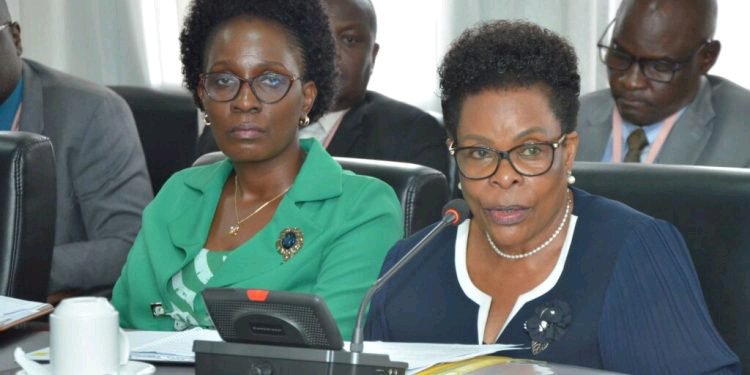
On September 23rd, Inspector General of Government (IGG) Beti Olive Namisango Kamya quietly exited office after President Yoweri Kaguta Museveni declined to renew her four-year term.
The exit also swept away her deputies, Patricia Okiria Ochan and Anne Twinomugisha Muhairwe, ending a tumultuous leadership stint that has left the Inspectorate of Government (IG) leaderless and under intense public scrutiny. Kamya, appointed in July 2021 to succeed Justice Irene Mulyagonja, reportedly lobbied vigorously for an extension, pursuing every available political channel to make her case.
Despite her efforts, Museveni remained unmoved. With her contract expiring, Kamya officially handed over office to the Director of Legal Affairs, as required by law. Her deputies—appointed under the same tenure—were also automatically relieved of their duties.
Their joint exit leaves the anti-corruption watchdog without a top leadership team at a time when its credibility is already in question.
A Watchdog Muzzled?
During her tenure, Kamya faced repeated accusations of protecting high-profile officials implicated in graft.
Critics say that under her stewardship, Uganda’s anti-corruption fight was reduced to political theatre—one in which suspects returned stolen funds in installments while facing no legal consequences, and in some cases, even receiving promotions. The Agriculture Ministry corruption case remains a defining example.
In 2020, nine billion shillings meant for Covid-19 response was diverted through fictitious food procurements and fake rehabilitation works at Bukalasa and the Fisheries Institute.
Investigations by the Auditor General and the IGG’s own Special Investigations Directorate confirmed the theft. Arrests were planned—until the operation was leaked to the suspects.

According to insider reports, then Agriculture Minister Vincent Ssempijja and Deputy Minister Bright Rwamirama intervened, asking Kamya to allow internal resolution. A deal was struck: the suspects would refund the funds in weekly installments over 28 weeks.
Years on, much of the money remains unrecovered. Worse still, several of the implicated officials were transferred and promoted—landing new posts at the Ministry of Education.
Bribes, Promotions, and Whistleblower Backlash
Kamya’s office was further marred by allegations that senior IG staff accepted bribes—including land in Entebbe—to kill sensitive cases.
Whistleblowers such as Godfrey Odong, who originally exposed the Agriculture fraud, were sidelined. Meanwhile, key investigators like Joram Magezi were demoted to poorly resourced departments.
To many observers, the IG under Kamya had lost its bite—functioning less as an anti-graft body and more as a political safe haven for well-connected officials.
Succession Wars and a Sudden Shutdown
As Kamya’s contract neared its end, fresh power struggles erupted within the Inspectorate.
Deputies Okiria and Twinomugisha were reportedly positioning themselves as successors. Their ambitions gained traction when President Museveni publicly praised Anne Twinomugisha Muhairwe, once calling her “incorruptible.”
The remark was widely interpreted as a hint that she would replace Kamya. However, in a move that surprised many, Museveni chose not to renew any of their contracts.
IGG spokesperson Munini Munira confirmed the departure of the trio, stating that any decisions made by them after September 23rd would have lacked legal legitimacy. The abrupt transition now risks exacerbating an already fragile public perception of the Inspectorate.
The Legacy of Beti Kamya
Kamya’s political journey—from opposition firebrand to a key NRM appointee—has long been marked by reinvention.
Her allies argued that her outsider status gave her the independence to reform a stagnant institution. Yet, her term will likely be remembered as a period when the anti-corruption agency suffered one of its most severe crises of legitimacy.
Billions flagged in corruption probes remain unrecovered. Investigations have stalled or been quietly buried. Meanwhile, public confidence in the IGG’s office has plummeted.
What Happens Next?
The unanswered questions now loom large:
* Who will Museveni appoint to restore the Inspectorate’s battered image?
* Can a new IGG reestablish public trust—or is the office too compromised to recover?
* Most importantly, will the next leader have the autonomy and political will to truly confront corruption, or will the cycle of impunity continue?
For now, Uganda’s anti-corruption watchdog remains without a leader, kept afloat only by its technical staff. The fight against graft hangs in the balance, awaiting direction, leadership—and accountability.
📩 Email us: kamunyereports@gmail.com
📲 WhatsApp us: +256705569885
Your story matters—share it with us today! 🗞️🔥