Museveni Admits Janet Takes His Salary — While Ugandans Struggle to Survive
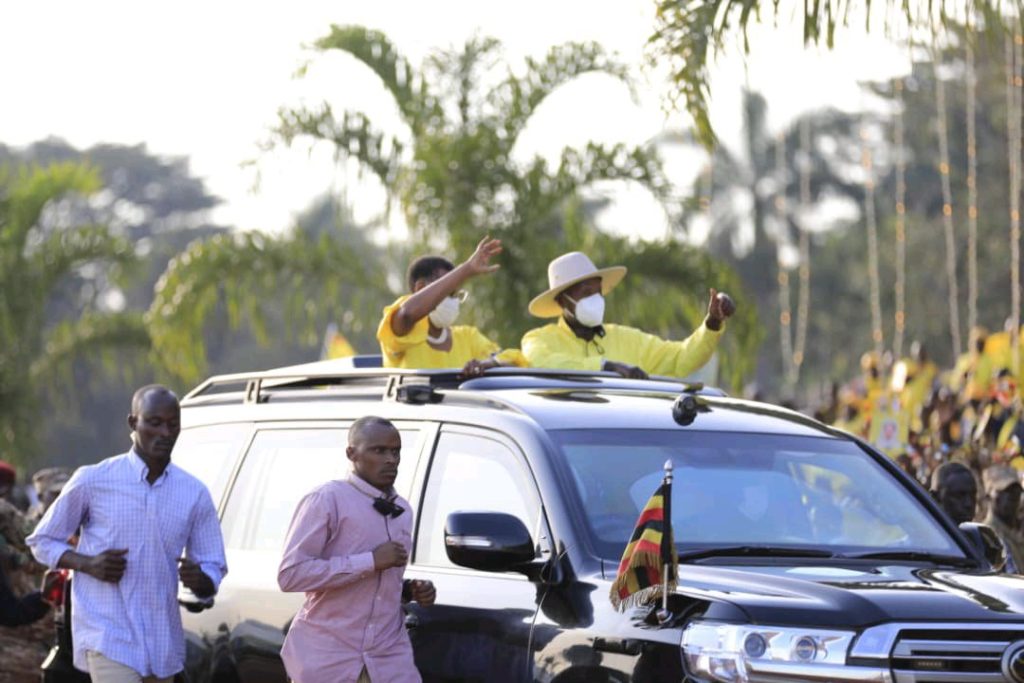
In a move that left Ugandans both amused and astonished, President Yoweri Kaguta Museveni dropped a surprising bombshell on Tuesday, September 23, 2025, revealing just how little of his presidential salary he actually keeps—and where the rest of it goes.
The revelation came shortly after he officially received his nomination papers at the Electoral Commission headquarters in Kampala, marking his bid to run once again as the National Resistance Movement (NRM)’s flag bearer in the 2026 presidential elections.
Addressing an enthusiastic crowd of supporters, Museveni didn’t hold back. In a moment that quickly captured the public’s imagination, the veteran leader posed a rhetorical question:
“Do you know how much salary I earn?” he asked, prompting murmurs among those listening.
Then came the kicker:
“They pay me UGX 3.6 million. I then deduct 20% for the NRM, and Mama Janet then remains with UGX 2.7 million to her account.”
The crowd’s reaction was instant—a mix of laughter, disbelief, and scattered applause. While some saw it as a candid and relatable gesture, others interpreted it as a well-calculated campaign moment, designed to humanize a man who has been in power since 1986.

Regardless of interpretation, Museveni’s salary confession dominated news headlines and social media chatter, quickly becoming one of the most talked-about moments of the day. Memes, hashtags, and commentary flooded platforms like X (formerly Twitter), Facebook, and TikTok, as Ugandans debated the implications of the president’s claim.
The President didn’t stop there. He elaborated on why he’s never sought to increase his salary, despite his long tenure at the helm of Uganda’s government.
“How can I increase my own salary when teachers, health workers, and other government employees are still earning so little?” Museveni said, clearly positioning himself as a leader committed to shared sacrifice.
This carefully crafted image of a selfless public servant plays directly into the narrative Museveni has long cultivated—that of a president who puts the nation before himself. His remarks on salary weren’t just personal—they served as a broader statement on leadership and responsibility, a message he hopes will resonate with both older voters and Uganda’s increasingly influential youth demographic.
He also used the platform to tout Uganda’s economic progress under his leadership. Citing World Bank data, Museveni proudly declared that the country has graduated from the “least developed” category and is now officially a lower-middle-income economy.
“Uganda has moved forward. The Gen Z are my supporters. They are my comrades,” he said, signaling a strategic shift in his campaign toward the country’s younger generation. Many of whom, ironically, were born long after Museveni first came to power.
He pointed to infrastructural and economic developments as evidence of this progress, claiming that former colonial-era coffee plantations had been transformed into modern residential zones thanks to the policies championed by his government.
Supporters of the NRM quickly rallied around the President’s statements, especially online. The hashtag #ProtectingTheGains trended within hours, as loyalists praised Museveni’s supposed personal frugality and economic stewardship.
But not everyone was convinced.
Critics wasted no time pushing back, accusing the president of being out of touch with the everyday struggles of ordinary Ugandans. With the cost of living skyrocketing, and public service delivery often underwhelming, many viewed the salary remarks as tone-deaf or even performative.
Some opposition voices described his comments as “political theater,” designed to distract from the harsh economic realities many Ugandans face—especially in the run-up to a highly contested election.
Skepticism also surrounded his middle-income economy declaration. Economists and political observers pointed out that despite such labels, Uganda continues to struggle with high levels of youth unemployment, poor public health systems, and widespread poverty—issues that paint a far less rosy picture than the one presented by Museveni.
The 2026 election is shaping up to be one of the most competitive in Uganda’s history. With over 50 presidential aspirants in the race—including nearly 10 from the tech-savvy, socially active Generation Z—Museveni is navigating a rapidly changing political landscape.
Analysts suggest his comments about his salary and economic progress are part of a larger strategy: to rebrand himself as both humble and relevant in the face of growing calls for generational change.
And while Museveni has a well-established political machine and decades of incumbency behind him, he also faces mounting pressure. Uganda’s ranking on the Human Development Index remains low, and discontent among young voters continues to rise.
Still, if his goal was to grab attention and shift the national conversation, Museveni’s salary disclosure certainly did the trick. Even after nearly four decades in power, the seasoned political tactician has once again managed to dominate headlines, spark debate, and position himself—at least for now—as the man still holding the center of Uganda’s political stage.
📩 Email us: kamunyereports@gmail.com
📲 WhatsApp us: +256705569885
Your story matters—share it with us today! 🗞️🔥