
“Get A Wife , I Pay The Bride Price” Speaker Anita Among’s Offer To King Oyo Angers Batooro, How She Messed Up
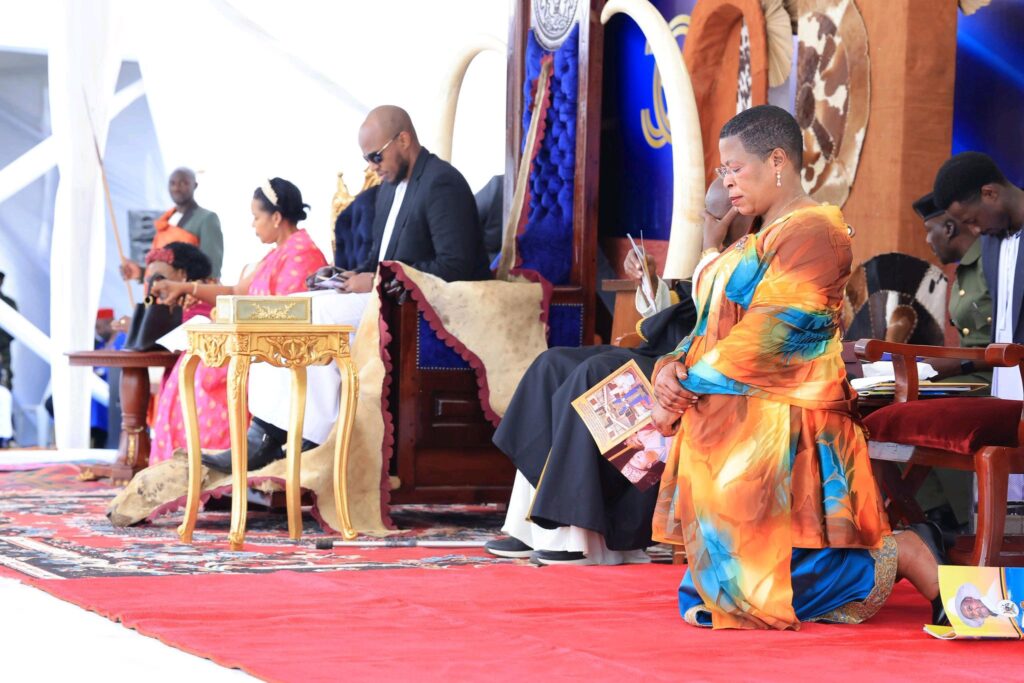
The 30th coronation anniversary of Omukama Oyo Nyimba Kabamba Iguru Rukidi IV was marked with pomp and color on Friday at Karuzika Palace in Fort Portal, drawing crowds of dignitaries, government officials, cultural leaders, and loyal subjects from across the Tooro Kingdom. The event, known as Empango, celebrated not just three decades of King Oyo’s rule but also revived intense public pressure on the monarch to marry and ensure the future of the kingdom.
However, the festive atmosphere did not come without controversy — and it wasn’t long before a wave of anger rippled through the kingdom over what many Batooro considered a deeply inappropriate gesture by Speaker of Parliament Anita Among.
Among, who was representing President Yoweri Museveni at the royal celebrations, delivered a glowing tribute to the king and commended the kingdom for its role in national development.
“I am humbled to represent His Excellency at this historic celebration. I congratulate His Highness on this milestone and extend appreciation from Government to the kingdom for its huge contribution to improving the lives of its people,” she said.
But it was her next words — intended as a light-hearted remark — that sparked outrage among many Batooro.
“Your Majesty, you know I am a cattle keeper. I am going to pay all the cattle for the bride price if you get a lady to marry,” she added, drawing loud applause from the crowd.

Though the comment received cheers from the audience at the time, it has since provoked a strong backlash among sections of the Tooro population. Cultural insiders, elders, and kingdom loyalists took offense at the implication that a government official — and a woman — could offer bride price on behalf of their king, a revered male cultural figure and custodian of centuries-old traditions.
For many Batooro, this wasn’t just a joke — it was a symbolic overstep.
“This Is Not Her Place” — A Cultural Line Crossed
According to traditional Batooro customs, the act of paying bride price is a sacred and male-dominated role, particularly for kings and clan leaders. It is the family of the groom — never an outsider, and certainly not a woman — who initiates and oversees this process.
By offering to pay bride price for Omukama Oyo, some say Anita Among disregarded the cultural protocols of the Tooro Kingdom and diminished the symbolic role of the monarch.
“We love and respect Speaker Among, but this was not her place,” said a local elder who asked not to be named.
“She may have meant well, but in our culture, it is an insult for someone — especially a woman — to offer bride price on behalf of our king. It makes our king appear weak or incapable of handling his own affairs.”
Others were more direct, calling the gesture a “humiliation” to the royal institution.
“The kingdom is not short of cattle. The king can marry when he is ready, and when the kingdom decides. Let outsiders not mock our customs in the name of generosity,” said another disgruntled subject.
The reaction reveals a deep cultural sensitivity around the symbolism of marriage within Tooro royalty. While many Batooro are indeed eager to see their king take a wife and secure the monarchy’s future, they insist that such matters must be handled with dignity, tradition, and within the cultural frameworks that have governed the kingdom for generations.
THE GROWING CALL FOR A QUEEN
Despite the controversy, the larger theme of the day remained consistent: the people of Tooro want their king to marry.
Since ascending the throne in 1995 at the tender age of three — becoming one of the world’s youngest monarchs — King Oyo has earned praise for modernizing the institution while remaining rooted in tradition. Over the years, he has launched several development initiatives, promoted education, and taken on global roles, including championing youth empowerment and environmental protection.
But now, at 33, many believe it’s time for him to settle down and raise a royal family.
“As a king, he is a father to us all. But the kingdom also needs a mother — someone who can represent our traditions, support his vision, and bring continuity to the royal line,” said a Tooro elder who attended the event.

Speaker Among was not alone in nudging the king toward matrimony. Several leaders used the platform to echo the call, arguing that the future of the cultural institution depends on it. The absence of a queen, they warned, risks weakening the symbolic authority of the monarchy in the eyes of future generations.
The anniversary was a grand affair — from vibrant traditional dances to royal parades and cultural displays of loyalty, the spirit of Tooro was on full display. There was also a strong emphasis on unity, development, and pride in cultural identity.
Yet beneath the celebratory surface, the tension around the speaker’s comments has left a lingering aftertaste. What was meant as a cheerful encouragement has instead exposed a growing concern about how traditional institutions are treated in modern political spaces.
As the sun set on Karuzika Palace and the drums of Empango faded into the Fort Portal evening, one message stood out loud and clear: The Batooro are proud of their king, but they are protective of their customs — and they expect those who engage with the kingdom to treat its cultural foundations with the utmost respect.
📩 Email us: kamunyereports@gmail.com
📲 WhatsApp us: +256705569885
Your story matters—share it with us today! 🗞️🔥