Hassan Lwabayi Mudiba Files Petition Against NRM Electoral Commission Over Alleged Workers’ League Voting Irregularities
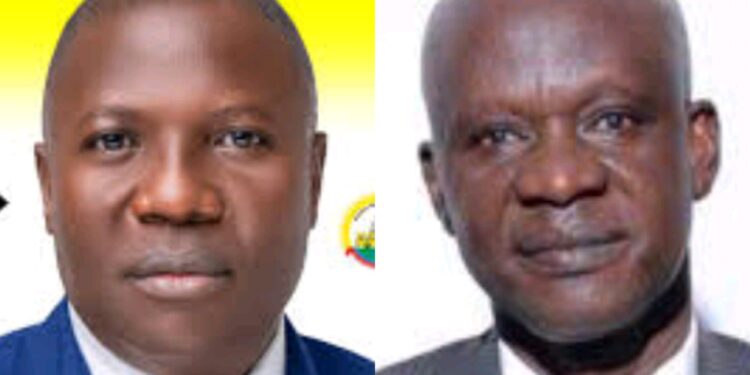
Elections are meant to uphold democracy, fairness, and transparency—but what happens when these principles are called into question? This is now playing out within Uganda’s ruling party, the National Resistance Movement (NRM), as Hassan Lwabayi Mudiba files a petition against the NRM Electoral Commission and his rival, Walela Martin, raising concerns that have ignited widespread discussion about electoral integrity.
Mudiba, a workers’ leader and unionist, was nominated to contest for Vice Chairperson of the Eastern Region Workers’ League. However, his candidacy faced challenges after he discovered that Walela Martin had allegedly been irregularly nominated and declared winner under suspicious circumstances. Central to Mudiba’s petition is a constitutional issue: Walela was reportedly still serving as a civil servant in Mbale District Local Government as a Parish Chief under Supplier No.113475. Article 80(4) of Uganda’s Constitution requires civil servants to resign before contesting elections.
Mudiba argues that this constitutional requirement was ignored by the NRM Electoral Commission. He cites a previous case where another civil servant, Madina Kiwanuka Nsegumire, was disqualified after a complaint. He contends that while rules were strictly enforced in that instance, they were overlooked in his case, suggesting selective justice and discrimination.
Beyond nomination issues, Mudiba alleges multiple irregularities during the election process. He claims the voters’ register was manipulated, delegates were misled, and at one point, the lights were deliberately switched off, causing confusion. According to Mudiba, his opponent’s supporters used the darkness to divert voters from his line, and officials reportedly dismissed his complaints, which he sees as a deliberate attempt to undermine his candidacy.
He also points out inconsistencies in how votes were conducted. While National Workers’ leaders were not voted on according to districts or sub-regions, Workers’ MPs flag bearers were. Mudiba argues that this selective application of rules disadvantaged some candidates and opened the door for manipulation.
In his petition, Mudiba seeks more than personal vindication. He calls for the entire election to be annulled and fresh elections conducted according to the Constitution and NRM guidelines. He also requests to be declared unopposed, asserting that once the irregularities are addressed, he is the rightful candidate.
The petition raises broader questions about internal democracy within the ruling party. If electoral rules can be bent or ignored depending on the candidate, what does this mean for fairness and accountability? If workers’ voices are compromised during internal elections, how meaningful is their representation at the national level?
Mudiba concludes by emphasizing that he is acting in good faith, championing democratic values, transparency, and justice. Regardless of the tribunal’s decision, his petition has already highlighted significant flaws in Uganda’s political processes.
Ultimately, the case is about more than one individual’s ambitions. It reflects the ongoing struggle for fairness in the electoral system—a struggle that resonates with workers, voters, and advocates of democracy across Uganda.
📩 Email us: kamunyereports@gmail.com
📲 WhatsApp us: +256705569885
Your story matters—share it with us today! 🗞️🔥