
Makerere’s Rasta DPC Issues Strong Warning to Bobi Wine And Opposition Ahead of 2026 Elections
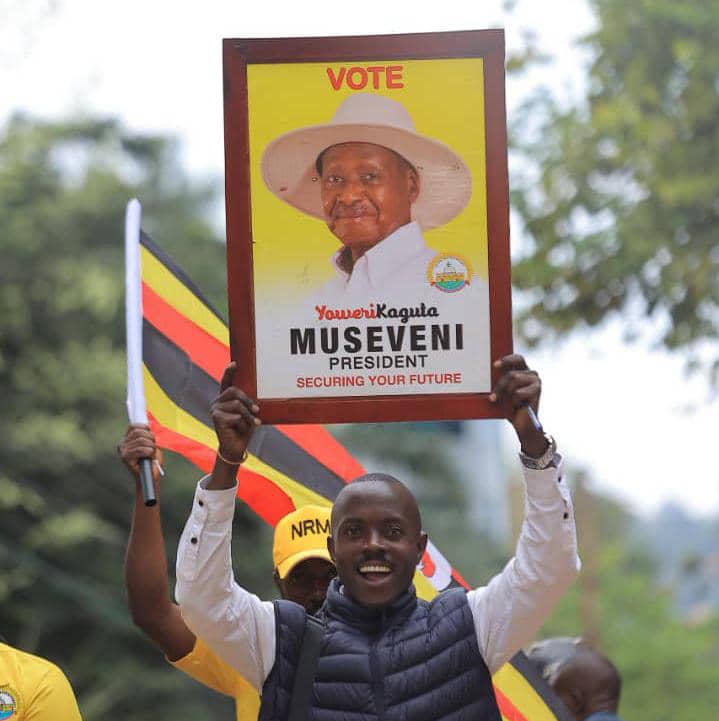
Makerere University’s “Rasta DPC,” a prominent figure within the ruling National Resistance Movement (NRM) as a staunch youth leader and mobilizer, has delivered a stern warning to opposition parties, specifically the National Unity Platform (NUP) and Forum for Democratic Change (FDC), concerning the upcoming 2026 general elections.
The Violence General DPC, who also harbors ambitions for the LC5 Councillor Makerere University seat, reportedly dispatched a formal letter to NUP leader Bobi Wine, though its contents remain confidential.
This move underscores heightened political tensions at Makerere, a historical hotbed for student activism and a barometer for national political sentiment. Given the university’s influence, the DPC’s intervention, rooted in his NRM allegiance, signals a proactive stance by the ruling party to manage the political landscape, particularly among the youth.
With Bobi Wine having already declared his intention to challenge President Museveni again in 2026, the DPC’s warning suggests an intensified political contest in the lead-up to the polls, aiming to curb any potential unrest or opposition mobilization on campus.
Below is his letter;
“Like Hitler, Goebbels practised his public speaking skills in front of a mirror. Meetings were preceded by ceremonial marches and singing, and the venues were decorated with party banners.
His entrance (almost always late) was timed for maximum emotional impact. Goebbels usually meticulously planned his speeches ahead of time, using pre-planned and choreographed inflection and gestures, but he was also able to improvise and adapt his presentation to make a good connection with his audience.” He Says
“He used loudspeakers, decorative flames, uniforms, and marches to attract attention to speeches.
Goebbels’ tactic of using provocation to bring attention to the Nazi Party, along with violence at the public party meetings and demonstrations, led the Berlin police to ban the Nazi Party from the city on 5 May 1927.
Violent incidents continued, including young Nazis randomly attacking Jews in the streets.
Goebbels was subjected to a public speaking ban until the end of October.” He Added
“During this period, he founded the newspaper Der Angriff (The Attack) as a propaganda vehicle for the Berlin area, where few supported the party. It was a modern-style newspaper with an aggressive tone; 126 libel suits were pending against Goebbels at one point. To his disappointment, circulation was initially only 2,000. Material in the paper was highly anti-communist and antisemitic.”
“Among the paper’s favourite targets was the Jewish Deputy Chief of the Berlin Police Bernhard Weiß. Goebbels gave him the derogatory nickname “Isidore” and subjected him to a relentless campaign of Jew-baiting in the hope of provoking a crackdown he could then exploit.
Goebbels continued to try to break into the literary world, with a revised version of his book Michael finally being published, and the unsuccessful production of two of his plays (Der Wanderer and Die Saat (The Seed)).”
“The latter was his final attempt at playwriting. During this period in Berlin he had relationships with many women, including his old flame Anka Stalherm, who was now married and had a small child. He was quick to fall in love, but easily tired of a relationship and moved on to someone new. He worried too about how a committed personal relationship might interfere with his career.”
📩 Email us: kamunyereports@gmail.com
📲 WhatsApp us: +256705569885
Your story matters—share it with us today! 🗞️🔥